
Injectidry Water Damage Restoration in Great Neck Plaza: A Homeowner’s Guide
Most homeowners never see the moisture trapped beneath their hardwood floors until the cupping starts, and by then the damage has been quietly spreading for weeks. Injectidry is a panel drying system that forces air through the cavity under your floor or inside your wall without tearing anything out. If you’re standing in a wet kitchen in Great Neck Plaza right now and want a straight answer, call (518) 873-4306, and a live dispatcher picks up, day or night.
An industrial air mover pointed at a wet hardwood floor pulls moisture from the surface only. The subfloor underneath can stay saturated for weeks, and a standard moisture meter held at arm’s length will miss it entirely. That’s the gap Injectidry was built to close, and it’s the gap most homeowners don’t know to ask about. This guide explains what the system actually does, why it matters for Great Neck Plaza homes specifically, and how to read the moisture log your contractor hands you so you know the drying is genuinely done, not just claimed.
What Injectidry Actually Does Beneath Your Floors
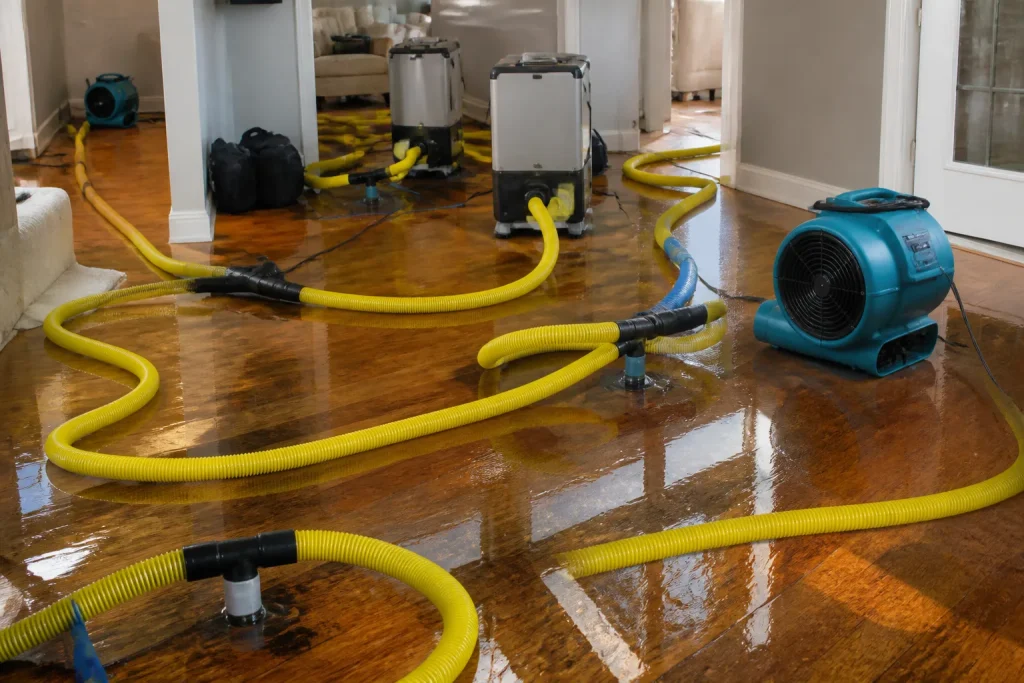
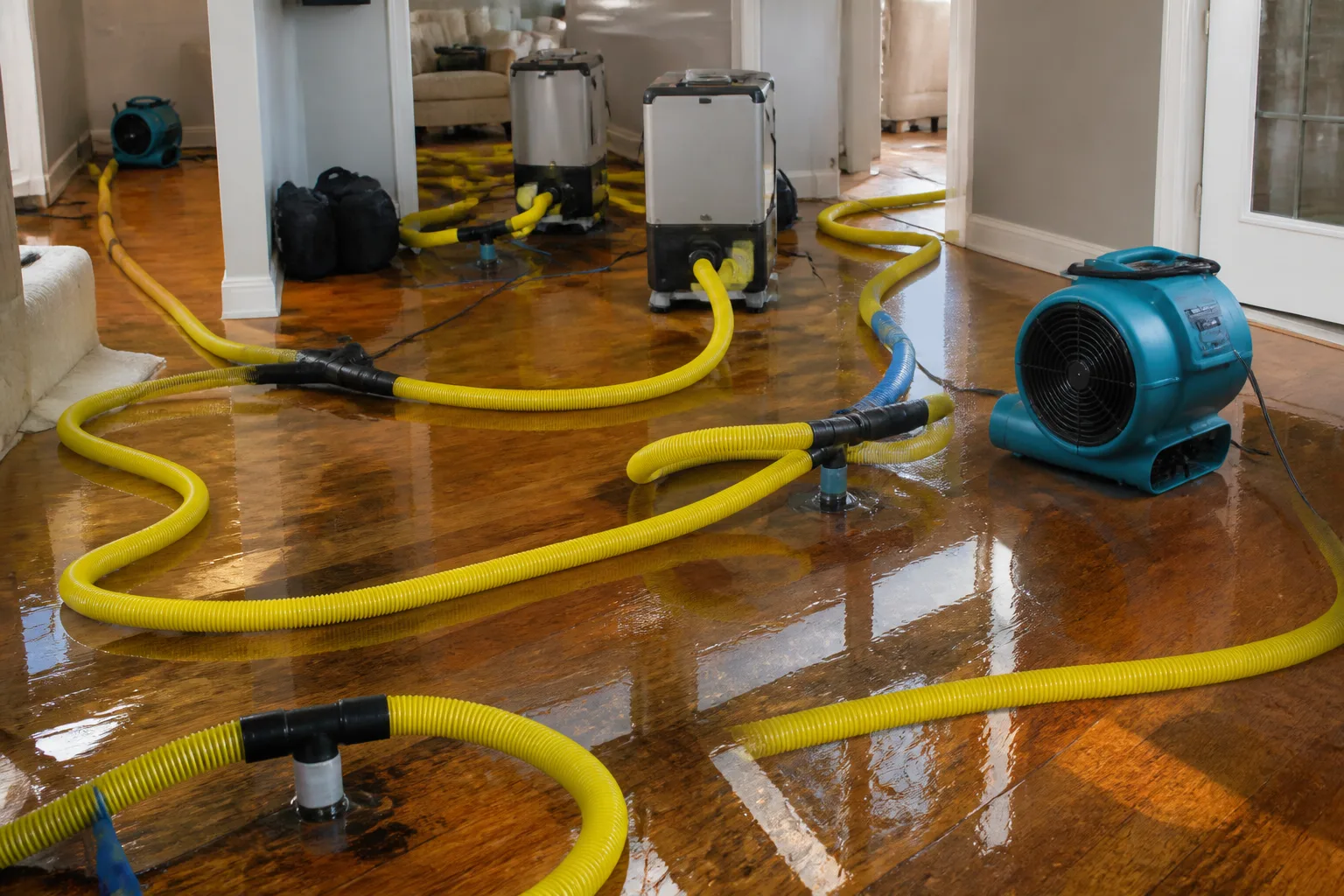
Injectidry works on a simple principle: it uses a manifold to connect small hoses to a series of panels or ports, then pushes pressurized air into a sealed cavity. That cavity might be the space between your oak flooring and the subfloor, the interior of a plaster wall, or the open bays between floor joists. The pressurized air travels through the cavity, picks up moisture, and exits through strategically placed exhaust ports into the room, where a dehumidifier pulls it from the air.
This is not a fan pointing at a puddle. It’s a closed, directed system. In an older Great Neck Plaza home with tongue-and-groove subflooring and solid plaster walls, that distinction matters more than in a new build. Plaster absorbs water differently than drywall: it wicks slowly, holds moisture deep, and will happily grow mold behind the paint where you can’t see it. Opening the wall to dry it means lath-and-plaster demo, dust, and a rebuild bill. Injectidry can often dry that cavity in place by creating airflow where no airflow exists naturally.
We’ve used this system in houses near the Long Island Rail Road station where the original 1930s floors were worth saving and the homeowner was prepared for someone to tell her they had to come out. They didn’t. The floors dried flat. That’s not always the outcome, but understanding when panel drying can work is what separates a restoration company that reads the building from one that just sets up fans and hopes.
The Gap Most Contractors Don’t Want You to Ask About
Ask any restoration company this question: what is the dry standard for the flooring assembly, and what readings are you taking at the surface versus the subfloor? The answer tells you everything.
Here’s what happens too often. A crew sets up air movers and a dehumidifier. They take a moisture reading on the top of the hardwood floor. The number drops. The equipment comes out. The invoice follows. Six months later, the floor is cupped and the baseboards are swollen, because the subfloor never actually dried. The surface reading fooled everyone.
Injectidry exists specifically because surface drying lies. The system targets the hidden layer where moisture hides.
What a Real Injectidry Moisture Log Looks Like
A legitimate drying log is not a single sheet of paper with three numbers on it. It’s a daily record that shows the progression of readings against a target dry standard, and it should include enough detail that you could hand it to your insurance adjuster and they’d sign off on it without asking for anything else.
Here’s what belongs on that log:
- Equipment serial numbers. Every Injectidry panel, every dehumidifier, every air mover gets logged. If a piece of equipment fails or gets moved, the log shows it.
- Daily moisture readings. At minimum, readings from the surface and the subfloor at the same marked locations every day. A real log shows numbers trending down.
- The target dry standard. This is the number the restoration company is trying to reach. For most wood flooring, that’s typically in the 6-9% moisture content range, depending on the species and the ambient conditions. The log should state the target, not just the current reading.
- Psychrometric readings. Temperature, relative humidity, and grains per pound of the air. These show the dehumidifier is actually doing its job, not just running.
- Daily notes. What was moved, what was checked, what the homeowner should expect tomorrow.
What Faking Progress Looks Like on Paper
If the log shows the same moisture reading for three consecutive days with no explanation, question it. If the log has surface readings but no subfloor readings, question it. If the contractor can’t tell you what dry standard they’re targeting, question it hard. We’ve seen drying logs where the contractor recorded “dry” on day three of a floor that was still reading 18% on the subfloor. That homeowner called us after the mold started.
Why Great Neck Plaza Homes Need Panel Drying More Than Most
Great Neck Plaza has a specific combination of conditions that make hidden moisture a bigger problem than it is in drier, newer communities.
The summer humidity load. Long Island summers push outdoor humidity high from June through September. A dehumidifier working in an open room with exterior doors being opened and closed fights a constant battle. An Injectidry system works inside a sealed cavity, so the air it moves is not being diluted by outdoor conditions every time the front door opens.
Older wood framing. Many homes in Great Neck Plaza were built between the 1920s and 1950s. The framing is typically old-growth lumber, which is dense and slow to dry. That’s good for the house’s bones and bad for drying time if the water gets into the joists. A directed air system pushes moisture out of that dense fiber far more effectively than a box fan on the floor.
Crawl spaces and basements. Some older homes in the area have shallow crawl spaces or basements that stay cool and damp. The subfloor assembly over a crawl space is vulnerable because moisture moves up from the ground as well as down from the spill. Injectidry can pressurize the joist bays, moving air through the entire assembly rather than just the top layer.
When Injectidry Is the Right Tool, and When It Isn’t
Panel drying systems are specialized tools, not magic. Here’s when they work, and when you should expect demolition instead.
Injectidry is typically the right call when:
- The water damage is from clean water: a supply line break, an overflowing sink, a dishwasher leak.
- The flooring is solid hardwood, engineered wood over a wood subfloor, or tile over wood (tile needs to be pulled to access the subfloor, but panel drying can save the framing).
- The walls are plaster over wood lath and the damage is contained.
- The moisture has not sat long enough to cause structural rot or delamination.
Demolition is usually unavoidable when:
- The water is sewage or otherwise contaminated. No drying system makes that safe to keep.
- The subfloor or framing is rotted, warped, or delaminating. Drying can’t reverse structural damage.
- The damage extends into insulation in exterior walls. Wet insulation almost always comes out.
- The building has been wet for weeks and mold is already established.
A restoration company that pushes Injectidry on a Category 3 sewage backup is overselling the equipment. A company that rips out a salvageable oak floor because they don’t own panel drying equipment is underselling your home. The right answer depends on an honest assessment, and you should ask enough questions to see which one you’re getting.
How Injectidry Documentation Protects Your Insurance Claim
Insurance adjusters are like anyone else: they respond to documentation, not promises. An Injectidry drying log that shows equipment serial numbers, daily subfloor readings, psychrometric data, and a progress trend is evidence that the work was done and done correctly. A missing log is a gap your carrier can use to argue the drying wasn’t completed or the claim amount should be reduced.
This is where our 42 years of carrying jobs end to end matters. We don’t hand the homeowner a sheaf of paper and tell them to have fun with the insurance company. We bill the carrier directly. We log the daily readings. We hand the log to the homeowner and the adjuster at the same time. The homeowner never plays messenger.
If you’re working through a claim in Great Neck Plaza, ask the restoration company one question: will you give me the moisture log in writing, with serial numbers, before the equipment comes out? If the answer is anything other than yes, keep looking.
When to Call a Pro
If the water came from anything other than a clean supply line, call a professional before you touch it. Same if the water has been sitting for more than 48 hours, if you smell anything musty, or if the floor feels soft underfoot. These are signs the damage has moved into the structure, and a panel drying system needs to be set up by someone who understands psychrometrics, building science, and the specific construction of your Great Neck Plaza home. This is also true for the genuinely dangerous parts of restoration: gas lines are not a homeowner job, and neither is sewage. Not ever. A trained professional with the right equipment needs to handle that.
Related services in Great Neck Plaza: Water Damage Restoration in Great Neck Plaza, Mold Remediation in Great Neck Plaza, and Fire & Smoke Damage Restoration in Great Neck Plaza are the core of what we do. Each of those pages explains the specifics of the process for that type of damage.
The Bottom Line
Injectidry is not a gadget. It’s a specific solution to a specific problem: moisture locked in building cavities where surface drying can’t reach. Homeowners in Great Neck Plaza with older floors, plaster walls, and summer humidity should understand this technology well enough to ask the right questions and read the drying log with confidence. The company that hands you a transparent, detailed log tied to equipment serial numbers is the company that actually did the work.
If you’re in Great Neck Plaza and need help with water damage, Floodline Restoration Co. offers free estimates. Call (518) 873-4306, and a live person answers, any hour, any day. We’ve been doing this since 2010, and we stand behind every job with the 90-Day Done Right Promise, in writing. That’s not a slogan. It’s the Keystone Standard, and it’s been our operating rule for every single job we’ve taken.
Frequently Asked Questions
How long does Injectidry drying take?
Most Injectidry drying jobs run 3 to 5 days, depending on the extent of the water damage, the building materials involved, the ambient humidity, and how quickly the system was set up. A slower dry is sometimes better for old hardwood floors than blasting them with heat.
Will Injectidry save my hardwood floor?
It often will, if the water was clean and the floor has not begun to rot or delaminate. Injectidry works by drying the subfloor and the underside of the flooring simultaneously, which is what prevents cupping and warping. But there are cases where the floor is too far gone, and honest restoration companies will tell you that up front rather than selling you a drying system that can’t fix structural damage.
Does insurance cover Injectidry drying?
In most cases, yes. Injectidry is a standard, documented drying method, and a detailed moisture log makes the claim straightforward. We bill the carrier directly for the work we do, and the homeowner gets the same daily log the adjuster gets. No messenger work.
How do I know the drying is actually done?
Ask for the target dry standard and the subfloor readings, not just the surface numbers. A real drying job ends when the subfloor, the flooring, and the framing all hit the target and the psychrometric readings show the air is being properly dehumidified. The log should show a clear downward trend over multiple consecutive days, tied to equipment serial numbers.
Written by Curt Bowman, Owner at Floodline Restoration Co., serving Great Neck Plaza since 2010.
Need Damage Restoration Help?
Call Floodline Restoration Co. - licensed & insured, here with fast after-hours help in Great Neck Plaza.
(518) 873-4306