
Free visual inspection and a written scope of work before any mitigation begins - photos, moisture readings, and drying logs go in your claim file
The scope we write is the scope we bill. Anything new gets shown to you, in writing, before we touch it.
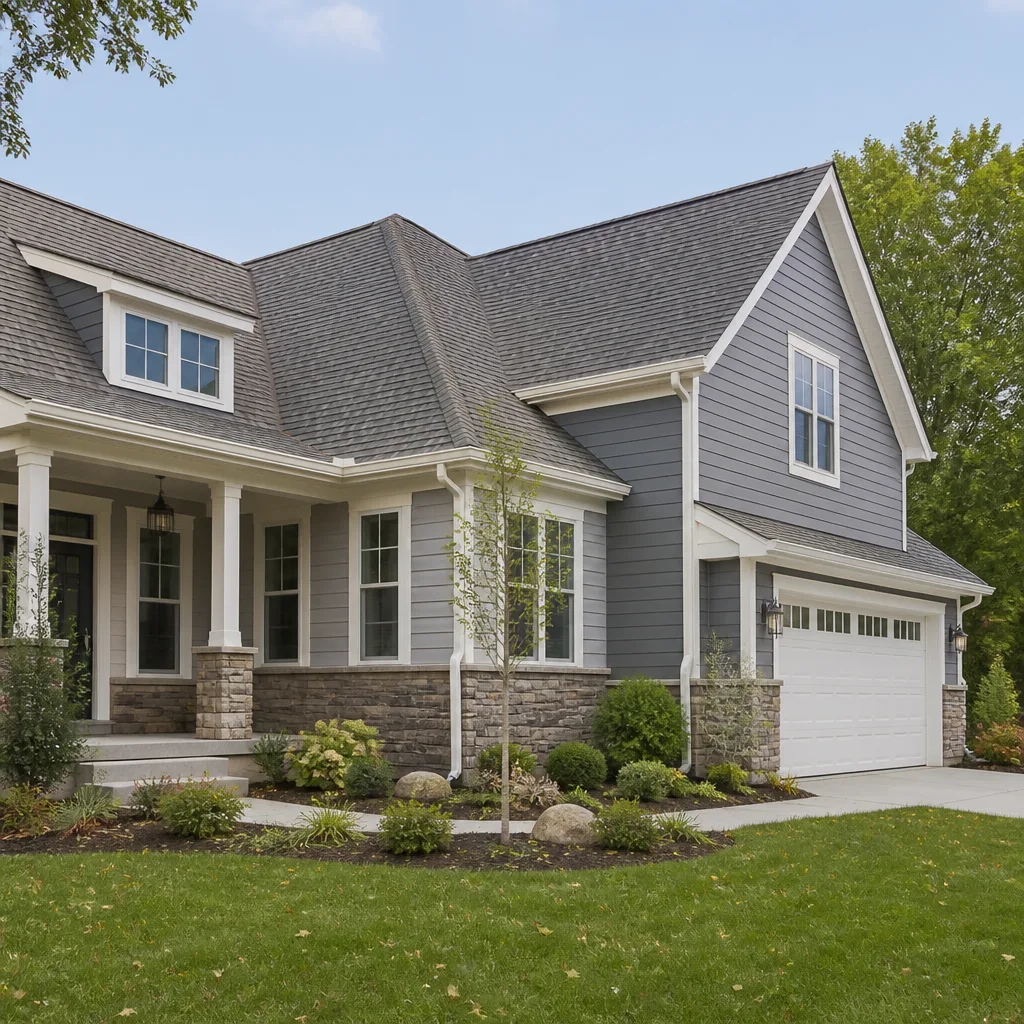
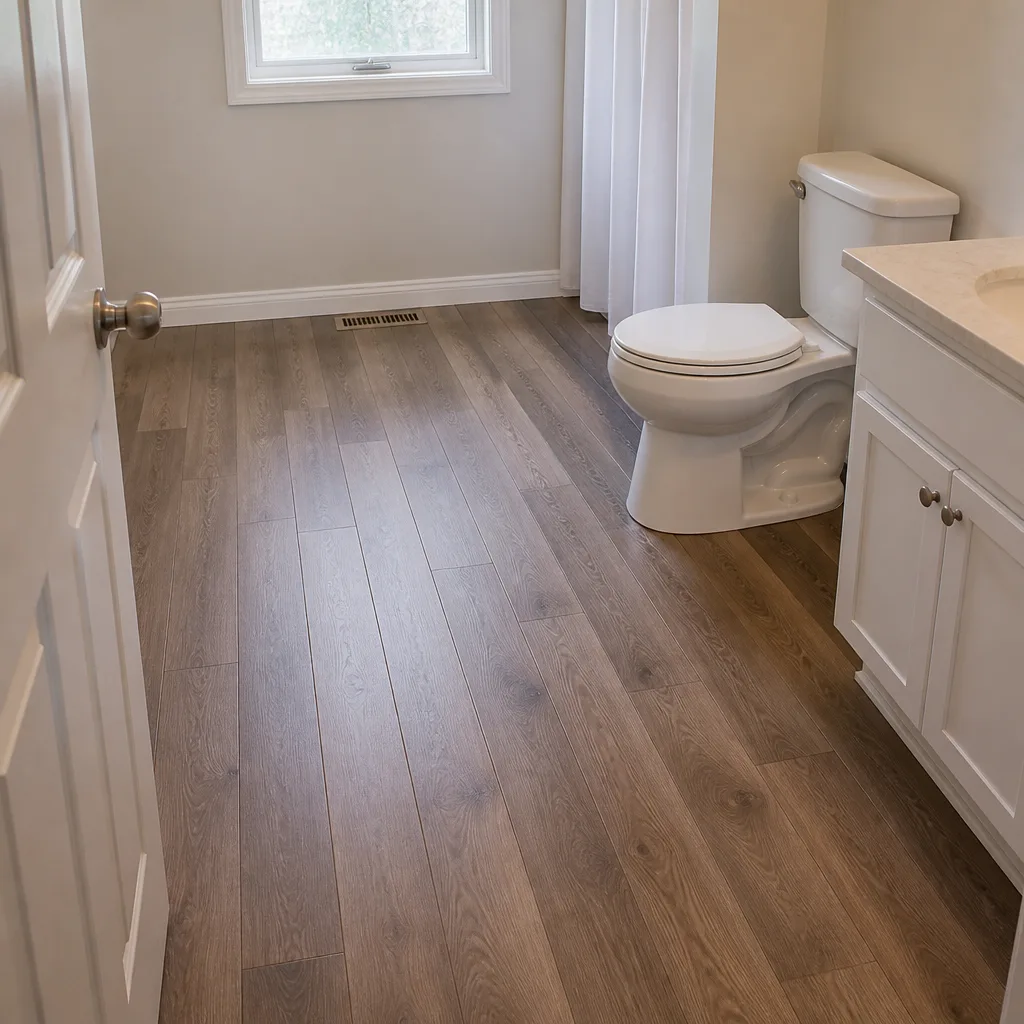
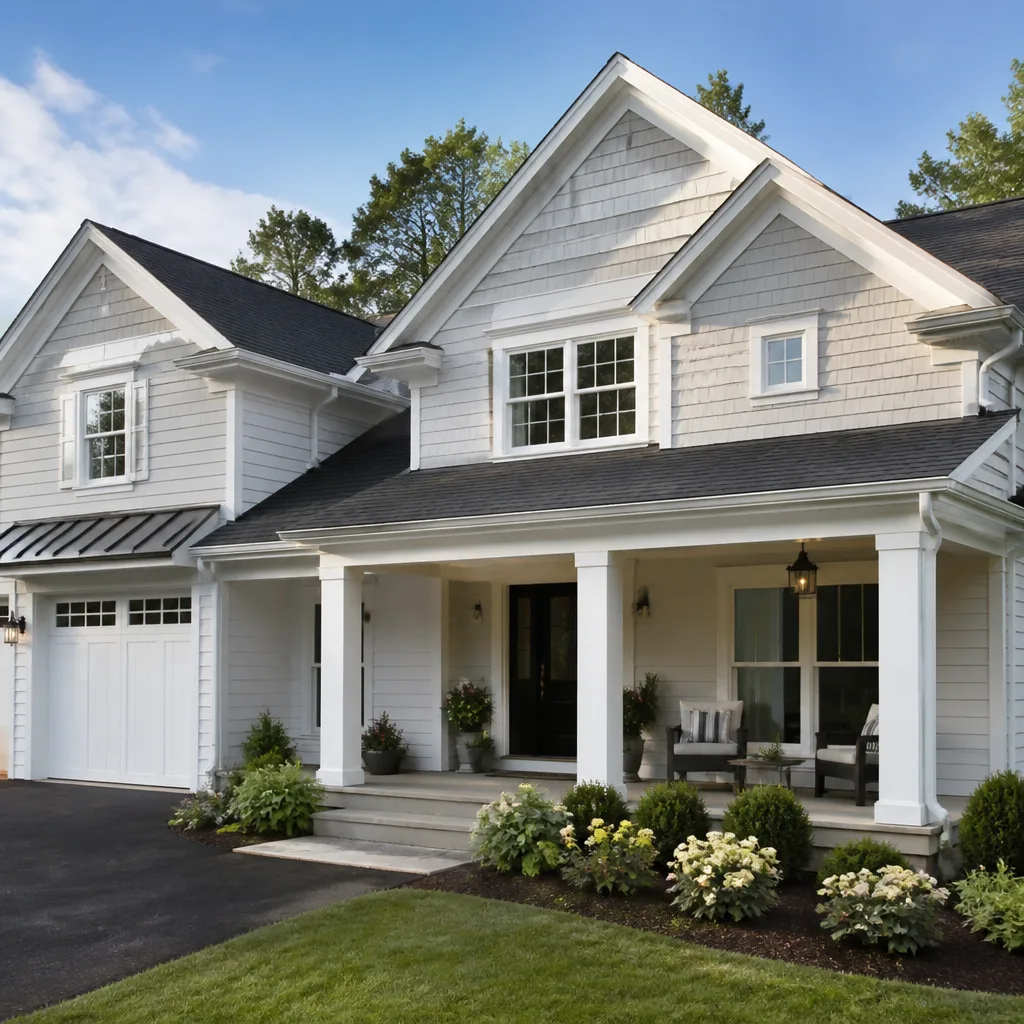
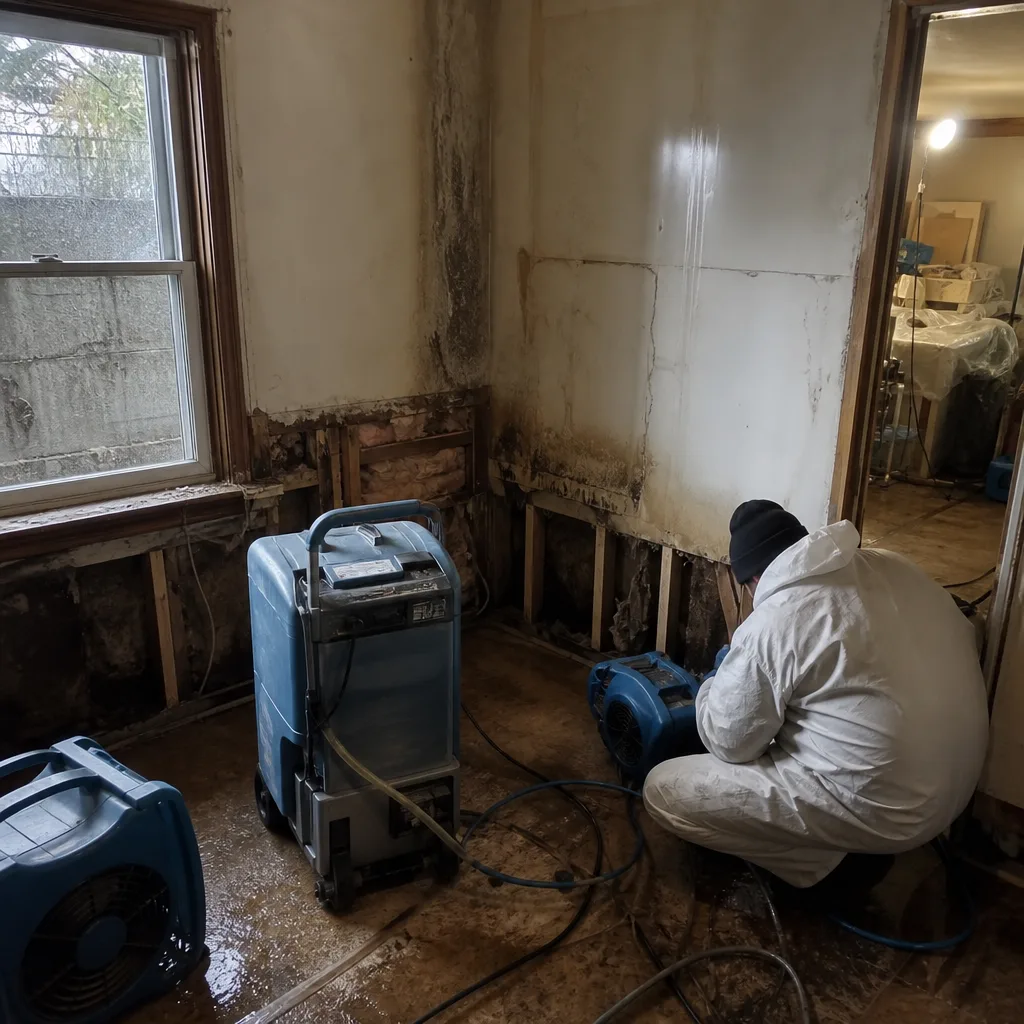 Before
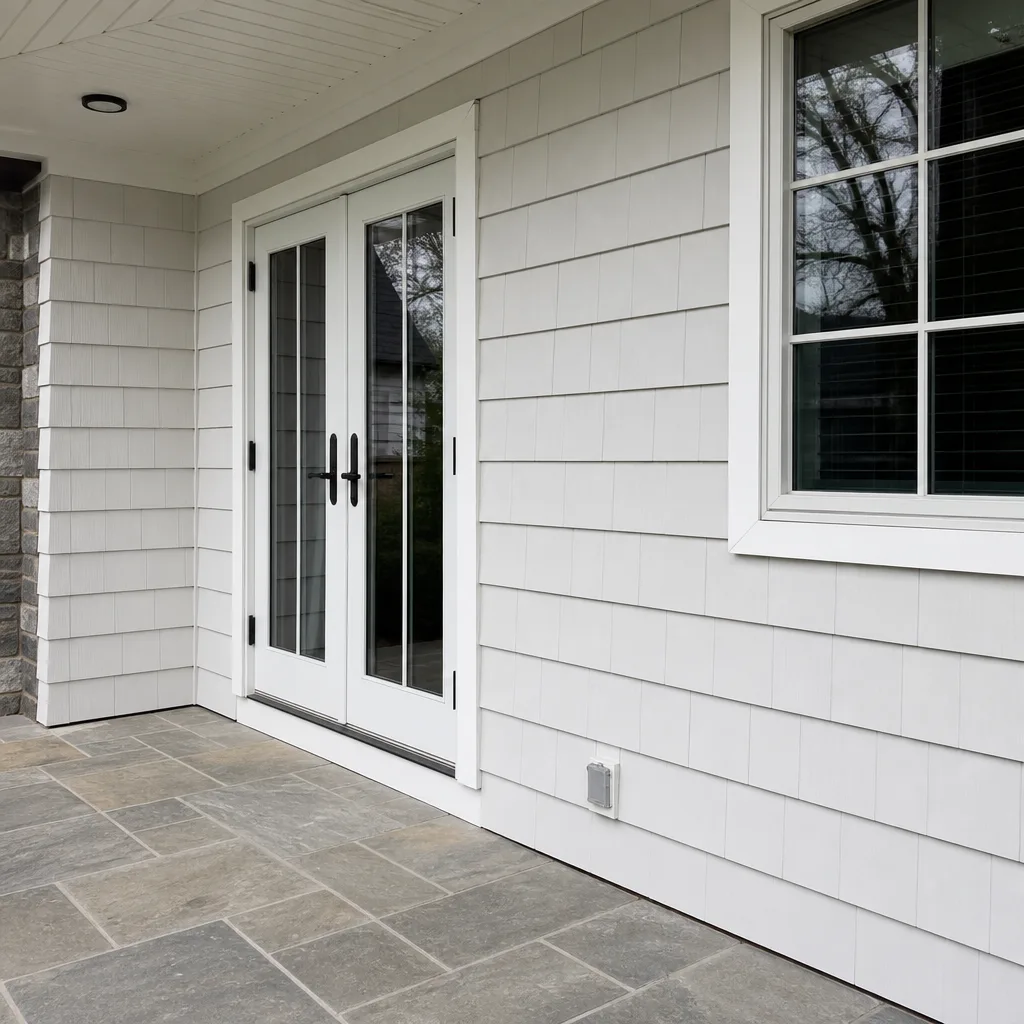 After
After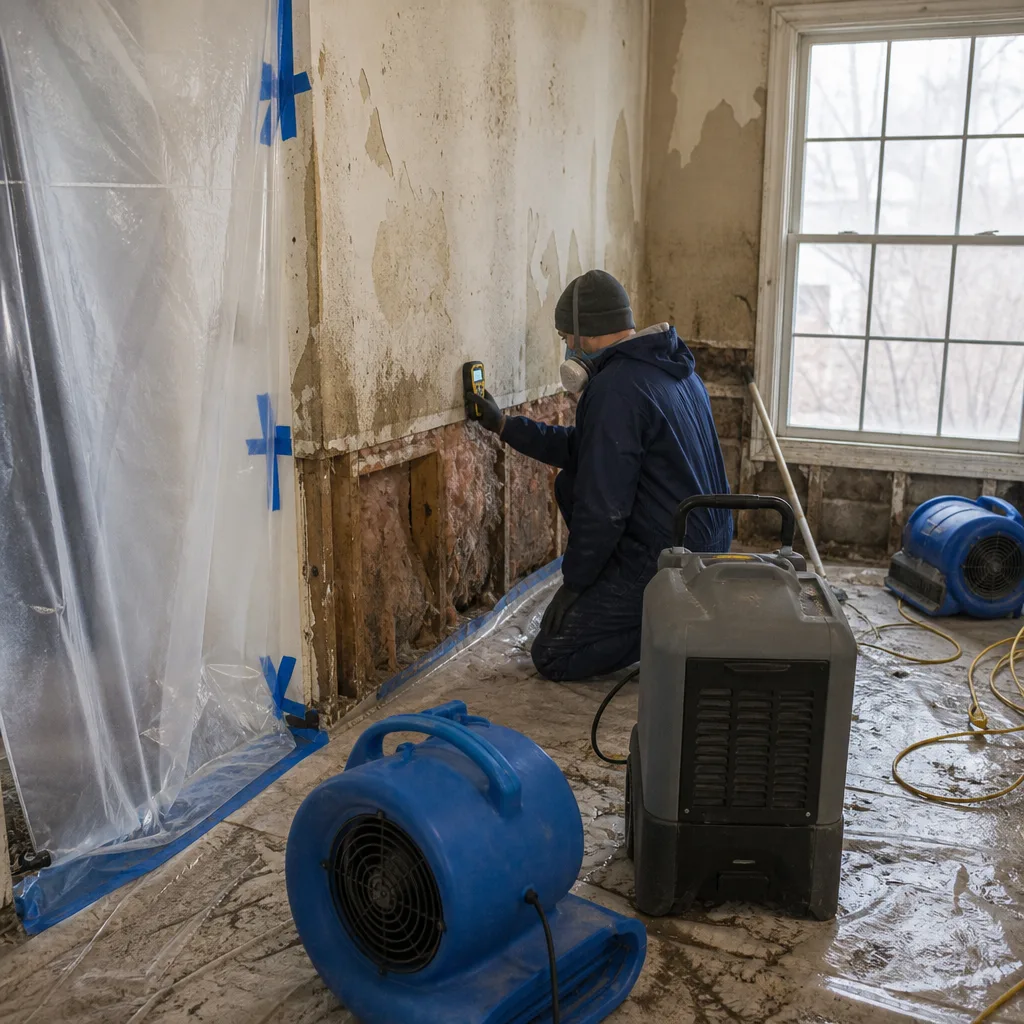 Before
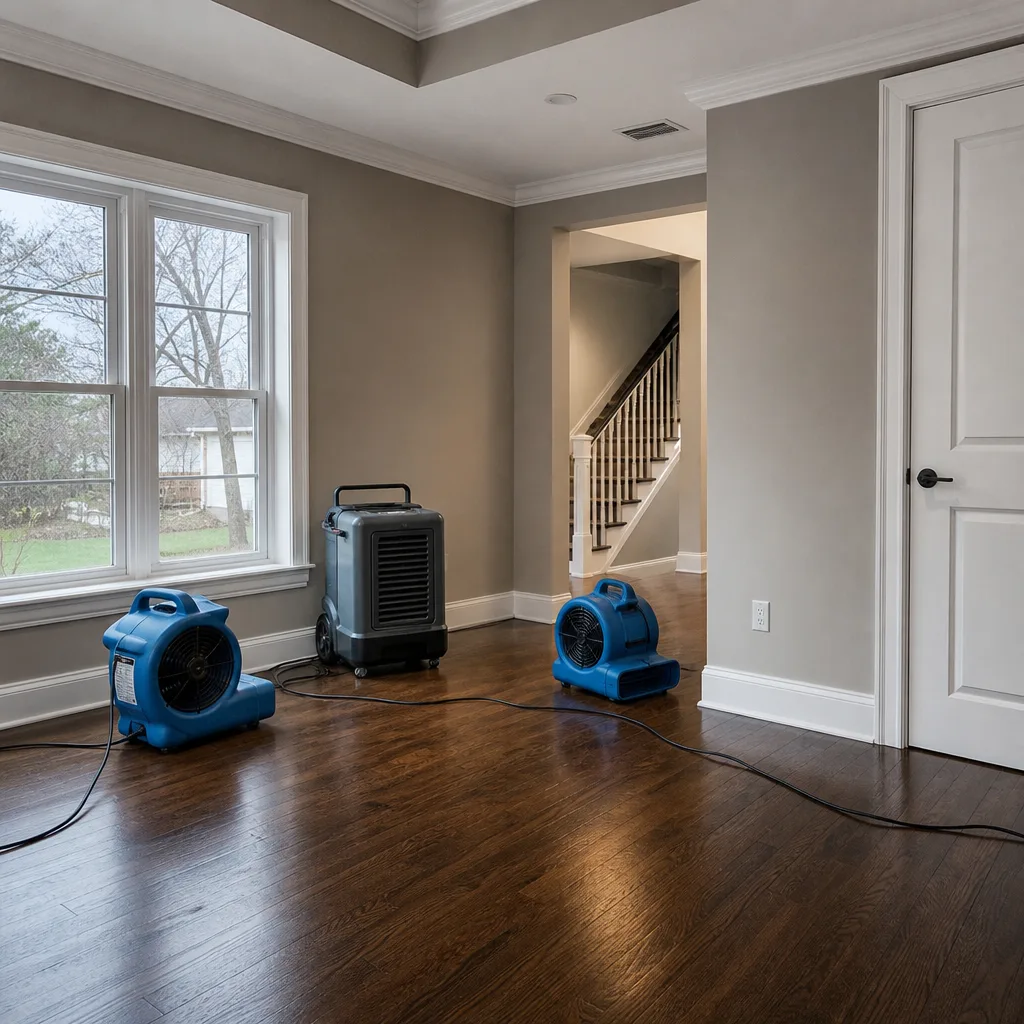 After
After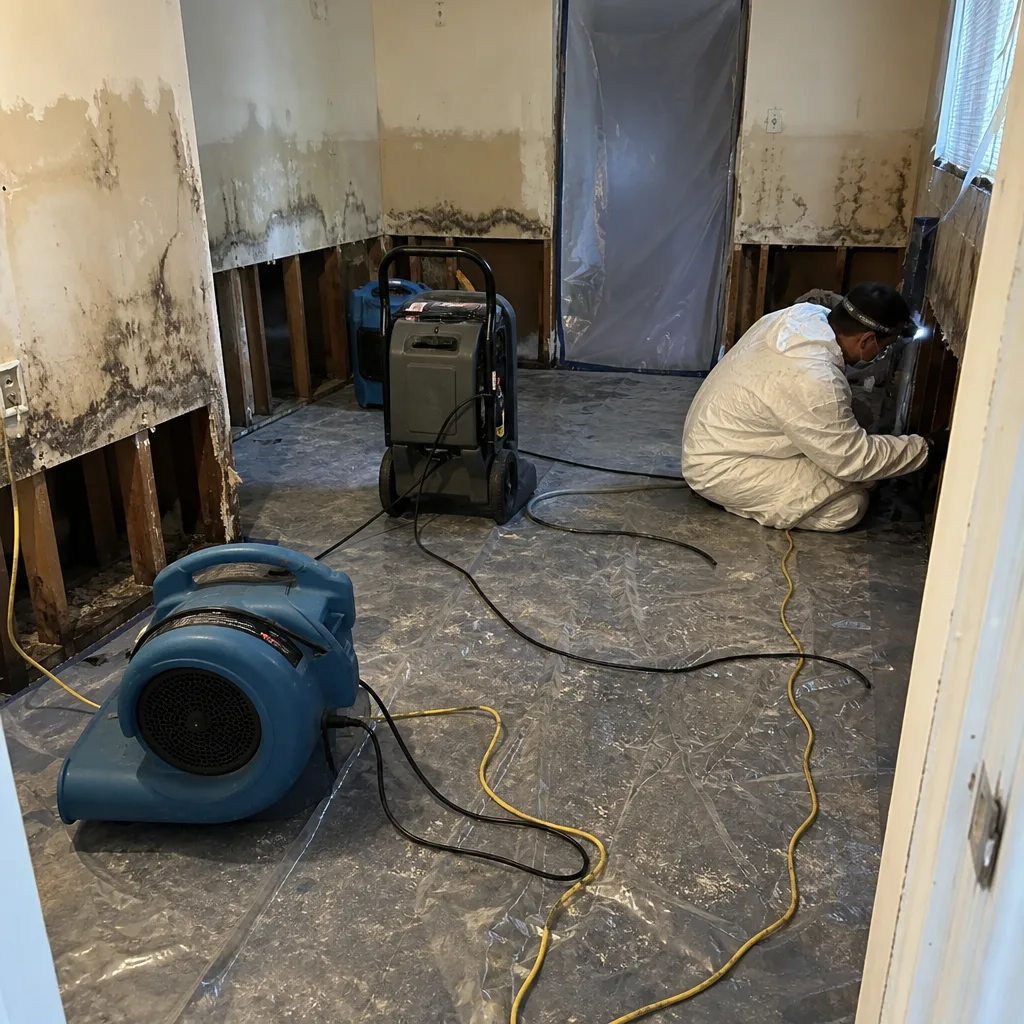 Before
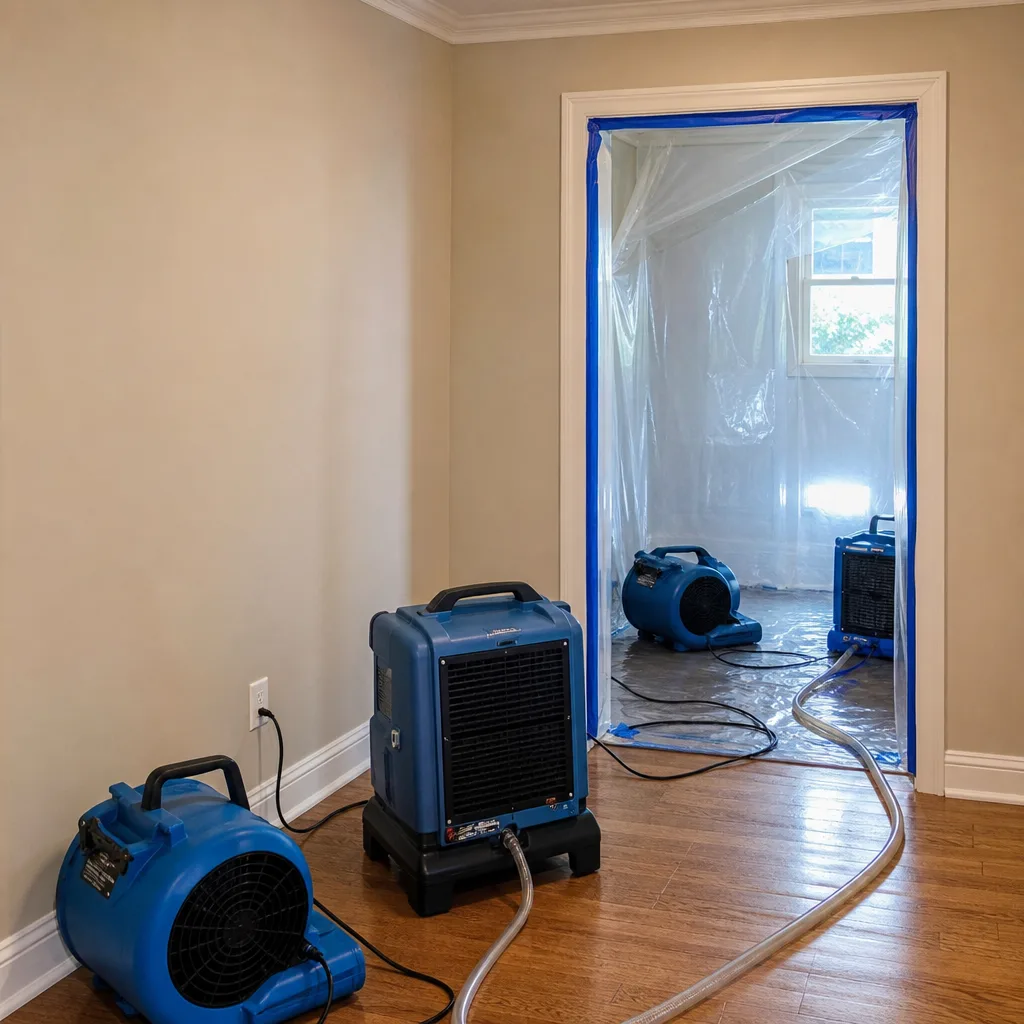 After
After24/7 Emergency Commercial Restoration in Sea Cliff
Commercial water, fire, and storm damage in Sea Cliff needs a crew that understands Victorian-era buildings, not just modern storefronts. When a pipe bursts inside a 1920s balloon-frame wall on Sea Cliff Avenue or a nor’easter drives harbor water into a Prospect Avenue shop, the first hour determines whether original plaster and millwork survive. Call (518) 873-4306 and a live dispatcher answers. We dispatch certified crews into Sea Cliff immediately, with a free visual inspection and a written scope before any work begins. The longer water sits inside an open wall cavity in one of these old buildings, the farther it travels, and the more original material you lose.
Understanding Commercial Restoration Severity in Sea Cliff Properties
Sea Cliff’s commercial buildings are not like the drywall-and-stud storefronts in neighboring flat-land Long Island towns. Most of the village’s business structures date from the 1880s through the 1920s, built with balloon-framed timber, horsehair plaster over wood lath, and original load-bearing masonry. When a Category 2 or Category 3 water event hits, those materials behave differently. Water entering an open balloon-frame cavity has no fire blocking to stop its vertical travel. It can climb three stories inside the wall, saturating plaster keys and old-growth framing before a single stain appears on the finished surface. That’s why every Sea Cliff commercial loss starts with thermal imaging and multi-point moisture mapping, not a visual walkthrough. A Category 3 sewage or storm surge loss in a harborside retail space demands full containment, HEPA air scrubbing, and clearance testing before anyone reopens. Fire losses carry a different risk profile: the soot that settles into open plaster pores and aged millwork is acidic, and it keeps eating into the original material until it’s neutralized. Severity here isn’t just about how much water or smoke you can see. It’s about what’s hiding inside walls that were built before modern building science existed.
Why Sea Cliff Property Owners Choose Floodline Restoration Co.
- 45-minute response commitment for commercial losses in Sea Cliff. We know every minute of standing water inside a balloon-frame wall expands the damage envelope, so we get crews rolling the moment you call.
- Live answer, 24 hours a day, every day. A real dispatcher picks up at 2 a.m. Not a recording. Not a call-back service. You get a person who can move a crew.
- IICRC-certified technicians holding WRT, FSRT, and AMRT credentials. Our crews train to restoration industry standards, and we background-check and uniform every technician who walks into your building.
- Free visual inspection with a written assessment. Before any drying equipment goes in, you know what we found, what we recommend, and what the scope looks like. No pressure. No surprise charges.
- Direct insurance billing. We bill your carrier directly and handle adjuster communication, so you’re not playing messenger between Floodline and the insurance company.
- One team from extraction to reconstruction. The same crew that reads the moisture map on day one handles the daily readings, the drying log, and the rebuild. No mid-job handoff. No inherited crew that doesn’t know the building.
Our Commercial Restoration Process
Inspection & Assessment
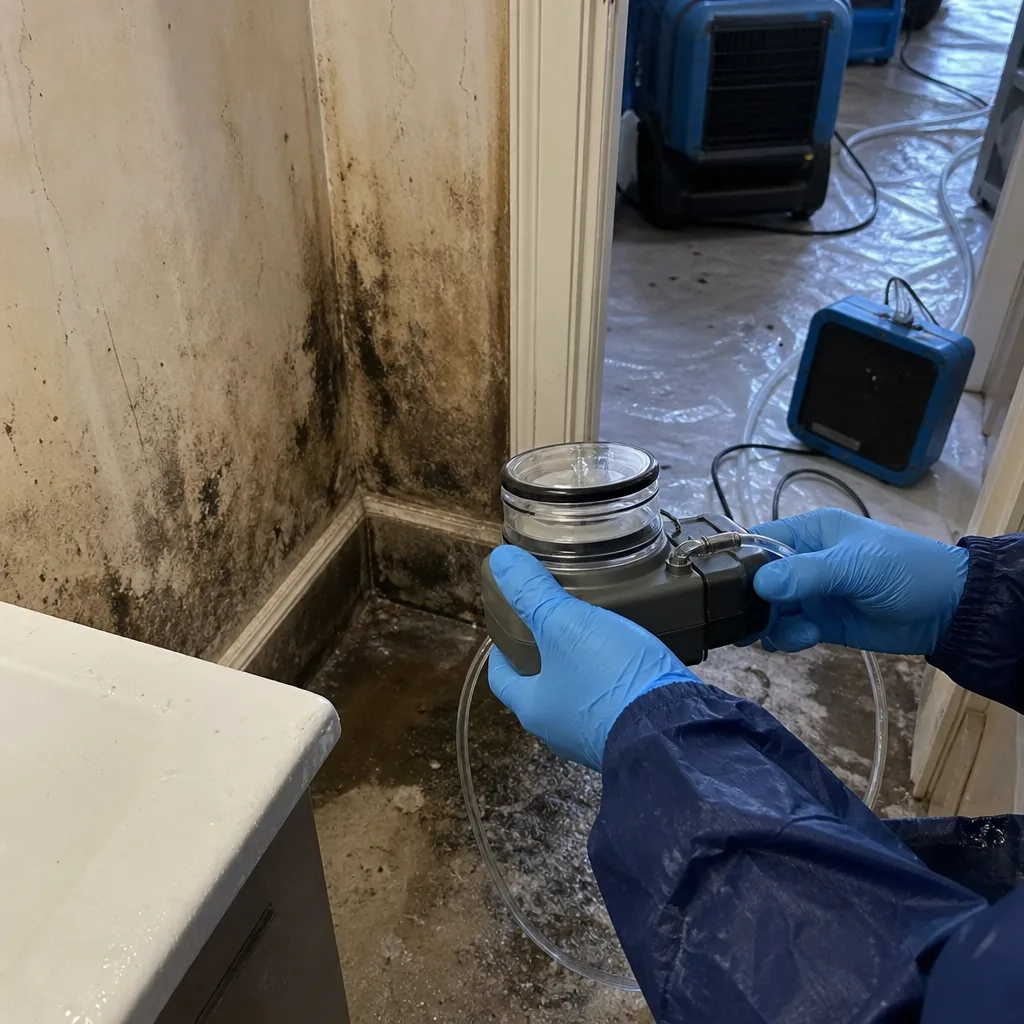
We start every Sea Cliff job with thermal imaging and multi-point moisture mapping across every wall, floor, and ceiling plane. In balloon-frame buildings, surface appearance means nothing. We trace the water path before touching anything.
Extraction & Stabilization
We remove standing water with truck-mounted and portable extraction units, then stabilize the structure. For horsehair plaster that’s waterlogged but intact, we use Injectidry systems to pull moisture out of the plaster itself rather than cutting it away.
Drying & Dehumidification
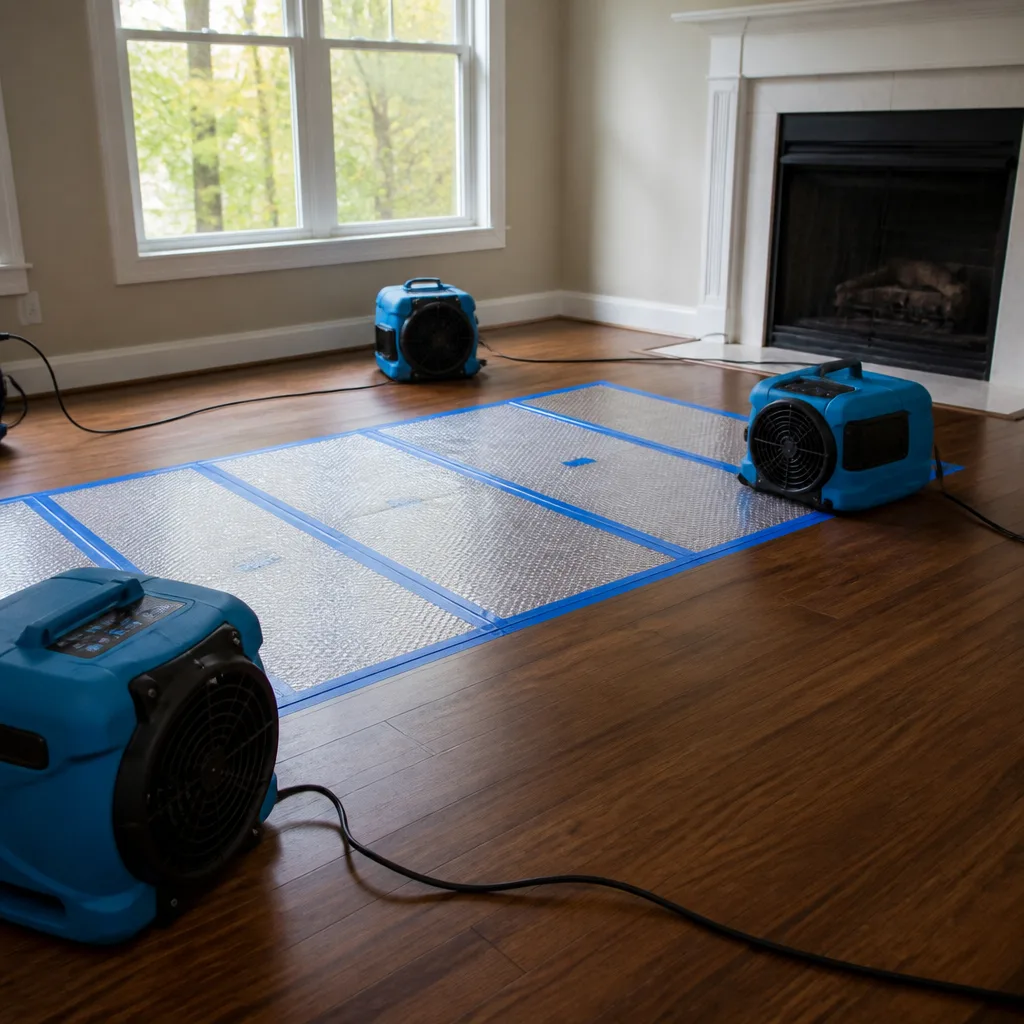
Dri-Eaz and Phoenix low-grain refrigerant dehumidifiers paired with high-volume air movers create the vapor pressure differential needed to dry old-growth timber and original plaster. Daily hygrometer readings go into a drying log you and your insurer both get.
Cleaning & Sanitization
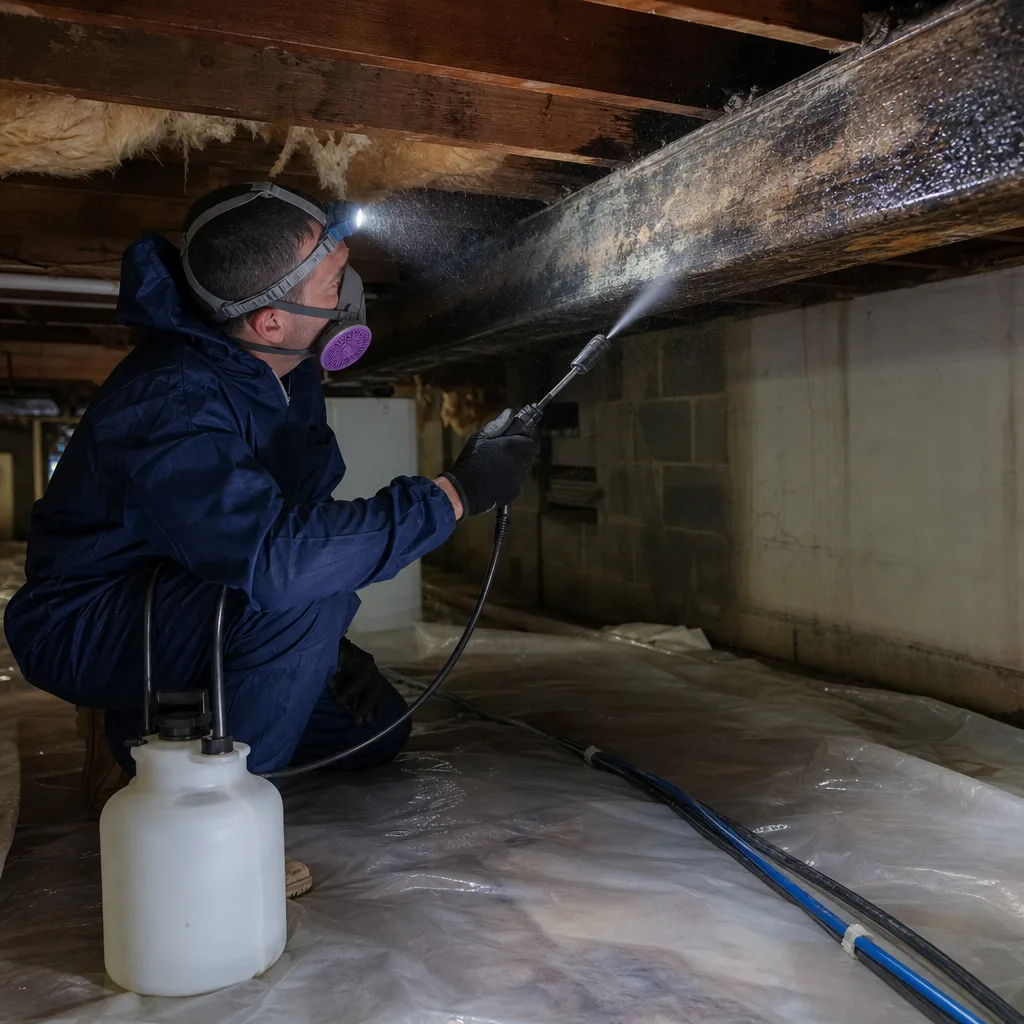
Category 2 and 3 water requires antimicrobial application to affected framing and cavities. For fire losses, we neutralize acidic soot residues on original millwork and plaster rather than just wiping surfaces.
Containment & Content Recovery
We build proper containment so drying and remediation doesn’t sabotage the rest of your business. Documents, inventory, and fixtures get packed out, inventoried, and cleaned. For retail spaces, we prioritize what you can still sell or display.
Repairs & Restoration
The same crew that dried the building rebuilds it. We replace what actually needs replacing, preserve what can be saved, and respect the original architectural material that makes your Sea Cliff property what it is. Done right, and backed in writing.
Need Emergency Commercial Restoration in Sea Cliff Now?
Crews minutes away, answering live 24 hours a day. The sooner we start, the less it costs.
Working With Your Insurance Company
Commercial restoration claims in Sea Cliff get complicated fast because the buildings are old, the materials are non-standard, and the adjuster may not understand why drying takes longer here than in a modern building two towns over. We handle that conversation for you. From the first hour on site, we document everything: the initial moisture readings, the thermal imaging results, the daily drying logs showing the dry standard being met, and a line-item scope that explains exactly why certain work is necessary in a balloon-frame, horsehair-plaster building. Our estimates follow industry-standard pricing software that adjusters recognize. We speak their language, and we don’t pad scopes. That’s the square deal.
What We Provide Your Insurer
- Thorough documentation of the loss
- Photos of all damage, room by room
- Moisture readings and drying logs
- A detailed, line-item scope of work
- Direct coordination with your carrier
Built for Sea Cliff’s Loss Calendar
Sea Cliff sits on a north-facing bluff above Hempstead Harbor, and that geography drives the village’s loss calendar. From late fall through early spring, nor’easters push moisture-laden wind up the cliff face and drive rain into aging Victorian wood-framed windows, decorative trim, and parapet details on commercial structures. January deep freezes burst supply lines inside unheated rear additions and crawl spaces. Spring thaw and heavy rain funnel storm runoff toward uphill foundations along Prospect Avenue and the slope east of Sea Cliff Avenue. Summer brings sudden thunderstorm flash flooding that overwhelms the village’s older drainage and finds every low-sill doorway on harbor-side storefronts. And for commercial properties near the water, any Long Island Sound tidal event carries real storm surge risk. The same loss calendar repeats every year, which is why we keep response routes mapped for every corner of this village.
Commercial Restoration Across Sea Cliff’s Neighborhoods
The commercial character of Sea Cliff changes block by block, and so do the restoration challenges. On Sea Cliff Avenue between the post office and the firehouse, you’ve got a tight row of 1920s storefronts sharing party walls. A water loss in one space doesn’t stay in one space, it travels through the shared wall cavity into the neighboring business. We set up containment fast and check the adjacent spaces on both sides. Down near the harbor at the foot of Sea Cliff Avenue, storm surge and tidal flooding bring Category 3 water into restaurants and retail spaces. Those jobs need full decontamination, not just drying. Along Roslyn Avenue and into the residential-adjacent commercial strips, many buildings started as Victorian houses and were converted to mixed use. Old kitchens, plumbing retrofits, and decades of layered renovations mean you never know what’s inside a wall until you map it. The Prospect Avenue slope has buildings with walk-out lower levels where surface runoff enters through old foundation walls. Clifton Avenue and the streets off Glen Cove Avenue share similar topography: downhill-facing storefronts that catch every inch of runoff. We route crews to all of them, 24 hours a day, from our dispatch center in New York City, with crews stationed to reach Sea Cliff fast.
Specialized Commercial Restoration Services We Offer in Sea Cliff
Office & Retail Restoration
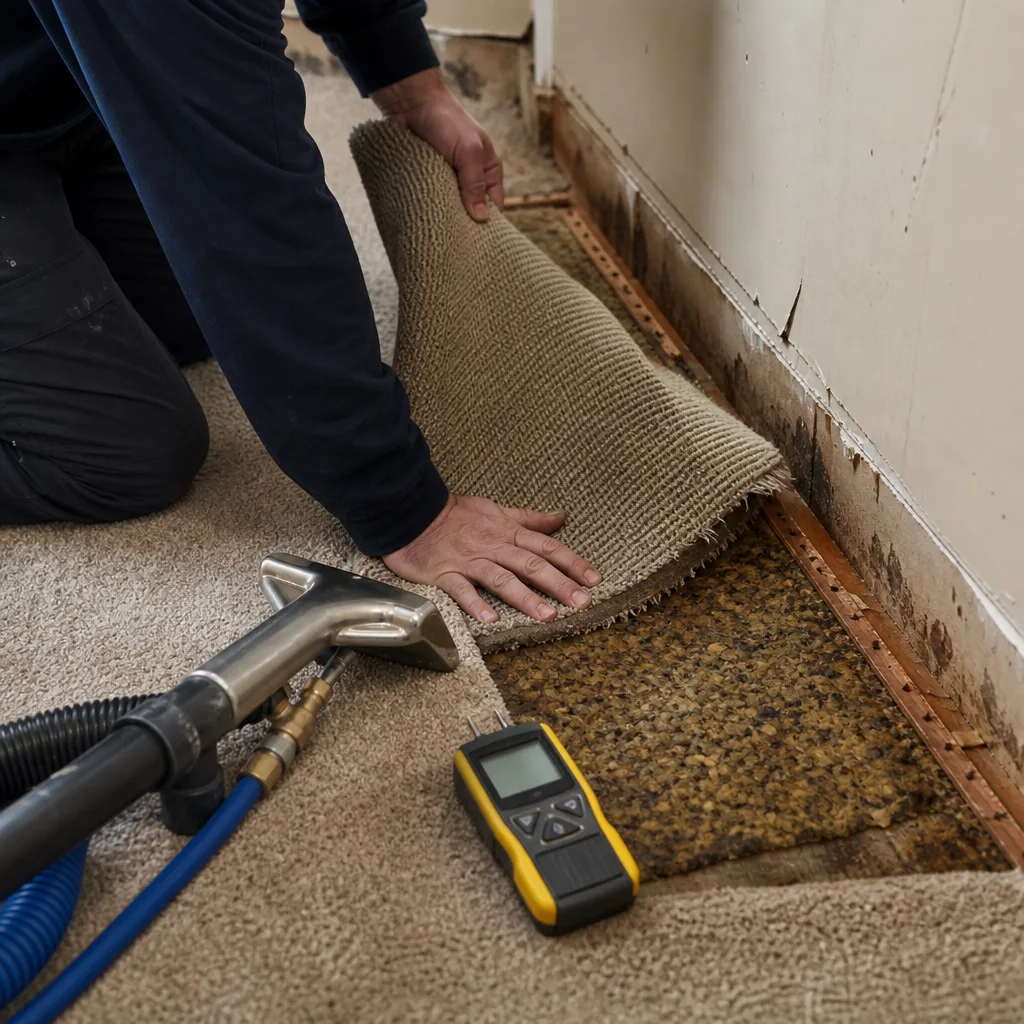
When a pipe bursts inside the original plaster wall of a Sea Cliff Avenue office or a Prospect Avenue retail shop, you can’t just gut it and hang drywall. You’d be stripping out the very material that makes the space what it is. We dry the plaster, stabilize it, clean it, and rebuild only what’s beyond saving. Your business keeps its character, and your timeline stays as short as the structure allows.
Multi-Unit & HOA Restoration
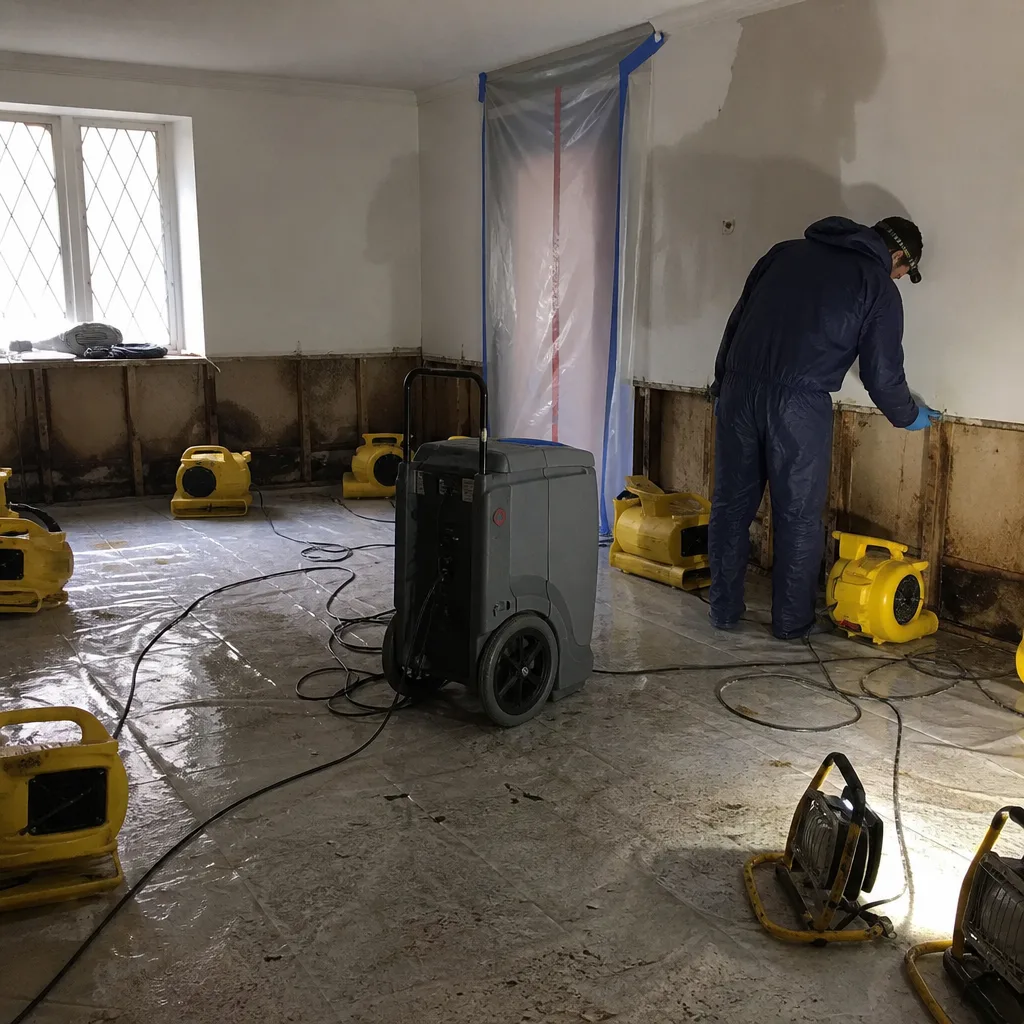
Sea Cliff’s mixed-use Victorian buildings often hold multiple storefronts under one roof, owned by different people, covered by different policies. We’ve worked with HOAs and commercial boards to separate scopes, document who owns what, and coordinate with multiple adjusters without cross-contaminating one space while drying another. The containment plan matters as much as the drying plan.
Industrial Facility Cleanup
For the industrial and workshop spaces on the village’s edges, we handle large-scale extraction, structural drying with commercial-grade Dri-Eaz and Phoenix equipment, and full decontamination. Concrete floors, old timber framing, and heavy equipment all respond differently, so we bring the right air movement and dehumidification capacity for the square footage.
Large-Loss Response
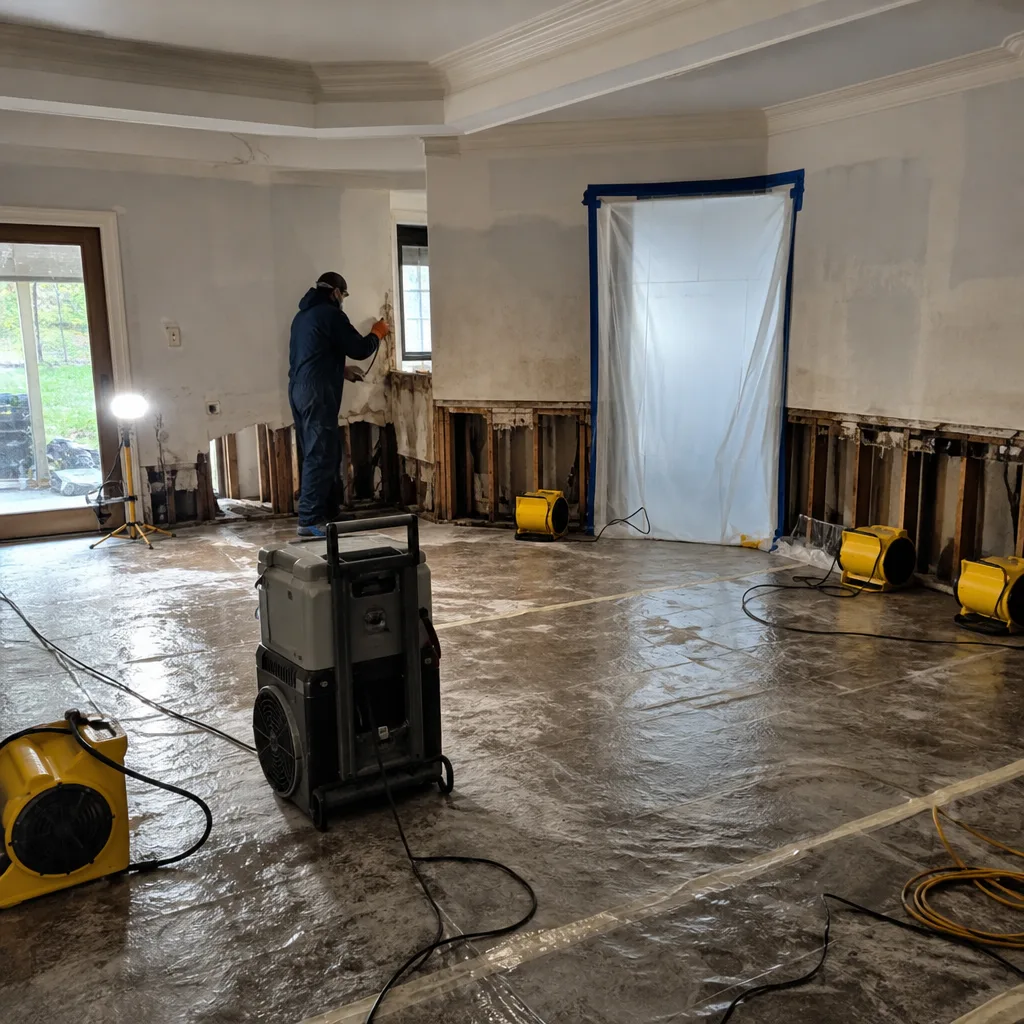
When a single event takes out multiple commercial units at once, you need more than a single crew. We run large-loss response with multiple teams, dedicated project management, and daily progress reports to the building owner, the tenants, and every carrier involved. The goal is always the shortest defensible downtime.
Business Interruption Minimization
Every day a Sea Cliff business stays closed costs real money. We sequence the work around what can reopen fastest. In many cases, that means containing one section, drying it while the rest of the floor stays operational, and scheduling noisy demolition or heavy equipment work outside business hours. A Sea Cliff Avenue shop owner we served after a burst supply line in a 1920s wall had customers back in the door inside a week, while hidden moisture was still drying behind containment on the upper floor.
What happens when you call
- 1
A real person answersNo phone trees - you reach a local pro.
- 2
You get an upfront price rangeHonest numbers before anyone is dispatched.
- 3
A background-checked tech heads outLicensed & insured, dispatched right away.
- 4
You approve before work beginsNothing starts until you say go.
Commercial Restoration Costs in Sea Cliff, NY
Here’s what commercial restoration actually costs in Sea Cliff right now. A small, contained water loss in a single retail space, say a supply line break caught within a few hours, typically runs $3,500-$7,500. A mid-size loss with water spread through two or three rooms runs $8,000-$18,000. A Category 3 event in a harborside storefront, storm surge or sewage, with full decontamination and containment, typically lands between $15,000 and $40,000 depending on square footage and how much original material can be saved. Fire and smoke restoration in a 1900s commercial space with original millwork runs $20,000-$60,000 or more, because soot remediation on aged plaster and old-growth timber is slow, meticulous work. What moves the price: how far water traveled inside balloon-frame cavities, whether horsehair plaster can be saved with Injectidry drying or must be replaced, whether asbestos or lead paint shows up in a pre-1940 structure, and how much of the building needs containment. Insurance covers most of these costs when the loss is sudden and accidental. The free inspection settles the question: we give you a written scope with line items before anything starts, not after.
We Also Serve Cities Near Sea Cliff
Floodline Restoration Co. handles commercial restoration across the North Shore. Our crews regularly respond to losses in Port Washington, Manhasset, Great Neck, and Little Neck, along with every neighborhood in Sea Cliff. Our Commercial Restoration team brings the same written-scope, direct-billing, one-crew approach to every job.
Serving Sea Cliff, NY - Our Local Coverage Area
We’re based in the Sea Cliff area and know this community well. Use the map below to see our service coverage - if you’re nearby, we can almost certainly help.
Sea Cliff Commercial Restoration Questions, Answered
Why does commercial water damage in Sea Cliff’s Victorian buildings need longer structural drying than typical Long Island storefronts?
Sea Cliff’s Victorian commercial buildings are mostly balloon-framed with horsehair plaster and old-growth timber, and those materials hold water differently than modern drywall and engineered lumber. Horsehair plaster acts like a sponge, and there’s no fire blocking inside a balloon frame to stop water from traveling vertically. Drying must be slower and more controlled to avoid cracking the original plaster or leaving hidden moisture behind. Expect structural drying to take three to seven days longer than a comparable modern storefront.
How do you keep a Sea Cliff retail shop open during restoration without tearing out all the original plaster?
We build containment to isolate the affected area, run Injectidry drying systems that pull water out of original plaster rather than cutting it away, and sequence the work so the retail floor stays functional. In many cases, you can keep operating a portion of the space while the other side dries behind poly sheeting and HEPA air scrubbers.
What’s different about a Sea Cliff restaurant vs. an office when a pipe breaks inside an old commercial building?
A restaurant has more Category 2 water risk because food prep areas introduce contaminants, and the ventilation systems in old buildings often spread moisture and odors through shared ductwork. Plus, restaurants can’t reopen until health inspection requirements are met, which means the sanitation and clearance testing paperwork matters as much as the drying itself. Offices are simpler, but in a balloon-frame building, water still travels through wall cavities into spaces that look dry.
Can a Sea Cliff HOA file one claim for water damage to multiple storefronts in a Victorian mixed-use building?
It depends on how the building’s ownership is structured and what the declarations say, but in practice, most Sea Cliff mixed-use buildings need separate scopes for the HOA’s common elements and each tenant’s unit. We document each scope separately, coordinate with every adjuster, and make sure containment keeps one unit’s drying from becoming another unit’s problem.
How quickly can you get a Sea Cliff business back open after a fire in a 1900s commercial space?
Most small commercial fire losses in Sea Cliff can be reopened in one to three weeks if the structure is sound. Soot remediation on original plaster and millwork takes time because the acidic residue has to be neutralized, not just wiped. We’ll give you a written timeline after the first assessment, and we hit it.
How fast can someone actually get to my Sea Cliff commercial property?
We commit to a 45-minute response for commercial losses in Sea Cliff. Our dispatch center in New York City keeps crews positioned for North Shore response, and the live dispatcher who answers your call starts moving a truck while you’re still on the phone. Call (518) 873-4306 and you’ll speak to a person, not a menu.
Do I really need full remediation or just a cleaning?
If water sat inside a balloon-frame wall for more than 48 hours, or if it’s Category 2 or 3 water, cleaning the surface isn’t enough. The moisture is inside the cavity, behind the original plaster, and that’s where mold starts. A free inspection with thermal imaging will show you exactly what’s going on inside the walls before anyone recommends a scope.
What should I do in the first 30 minutes after discovering water or fire damage in my Sea Cliff business?
Call (518) 873-4306 first. Then, if it’s safe, shut off the water or power at the source. Don’t open walls, don’t run fans, don’t start pulling up flooring. Every hour without professional assessment lets water travel farther inside the balloon-frame cavities. Our dispatcher will tell you exactly what to do until the crew arrives.
Written by Curt Bowman, Owner at Floodline Restoration Co., serving Sea Cliff and the North Shore with full-cycle commercial restoration from extraction through rebuild.