

Free visual inspection and a written scope of work before any mitigation begins - photos, moisture readings, and drying logs go in your claim file
The scope we write is the scope we bill. Anything new gets shown to you, in writing, before we touch it.
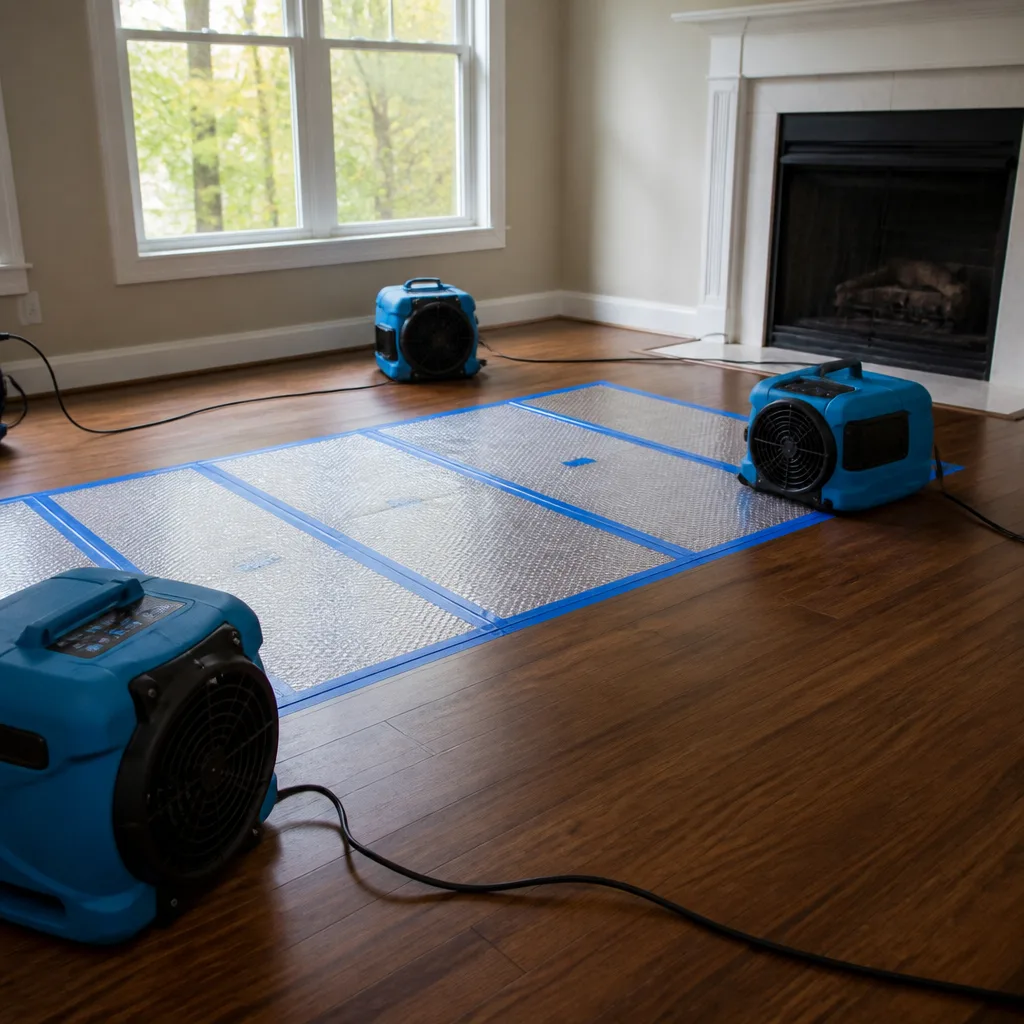


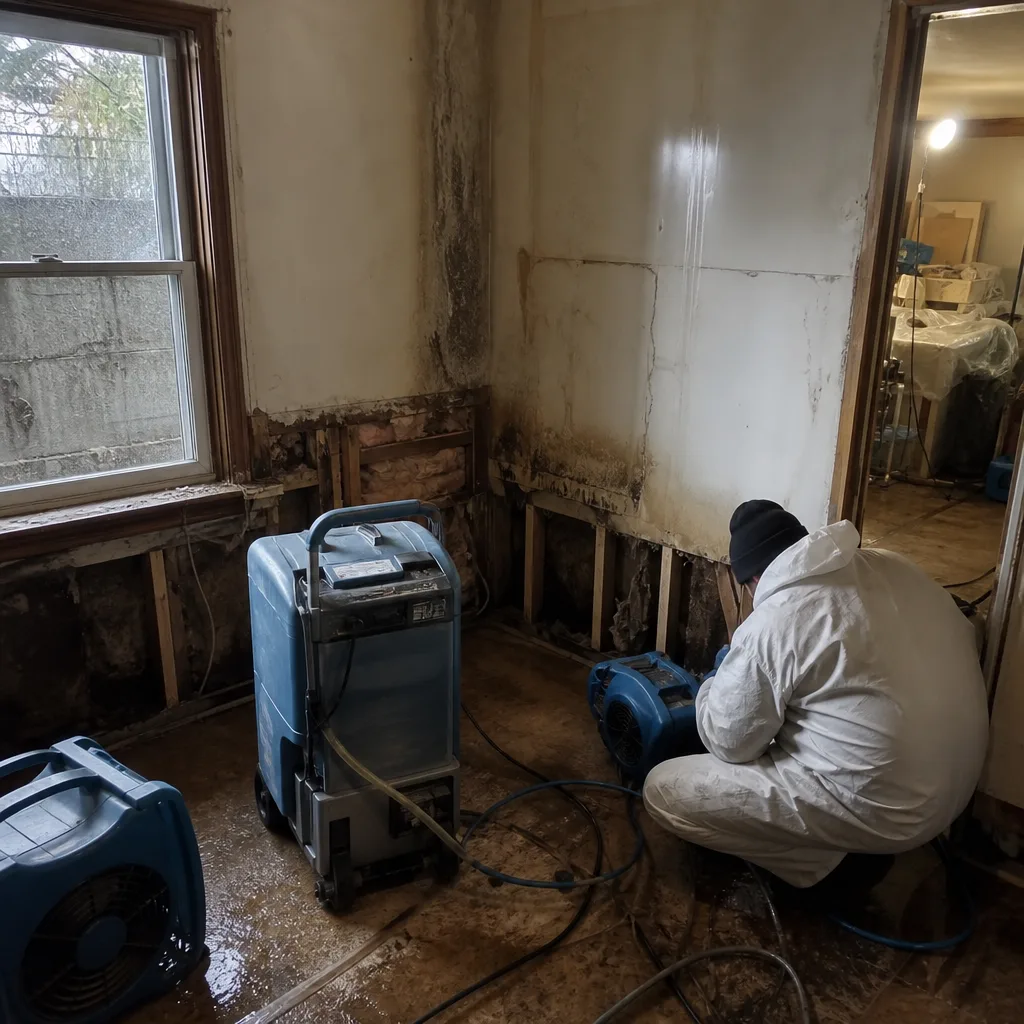 Before
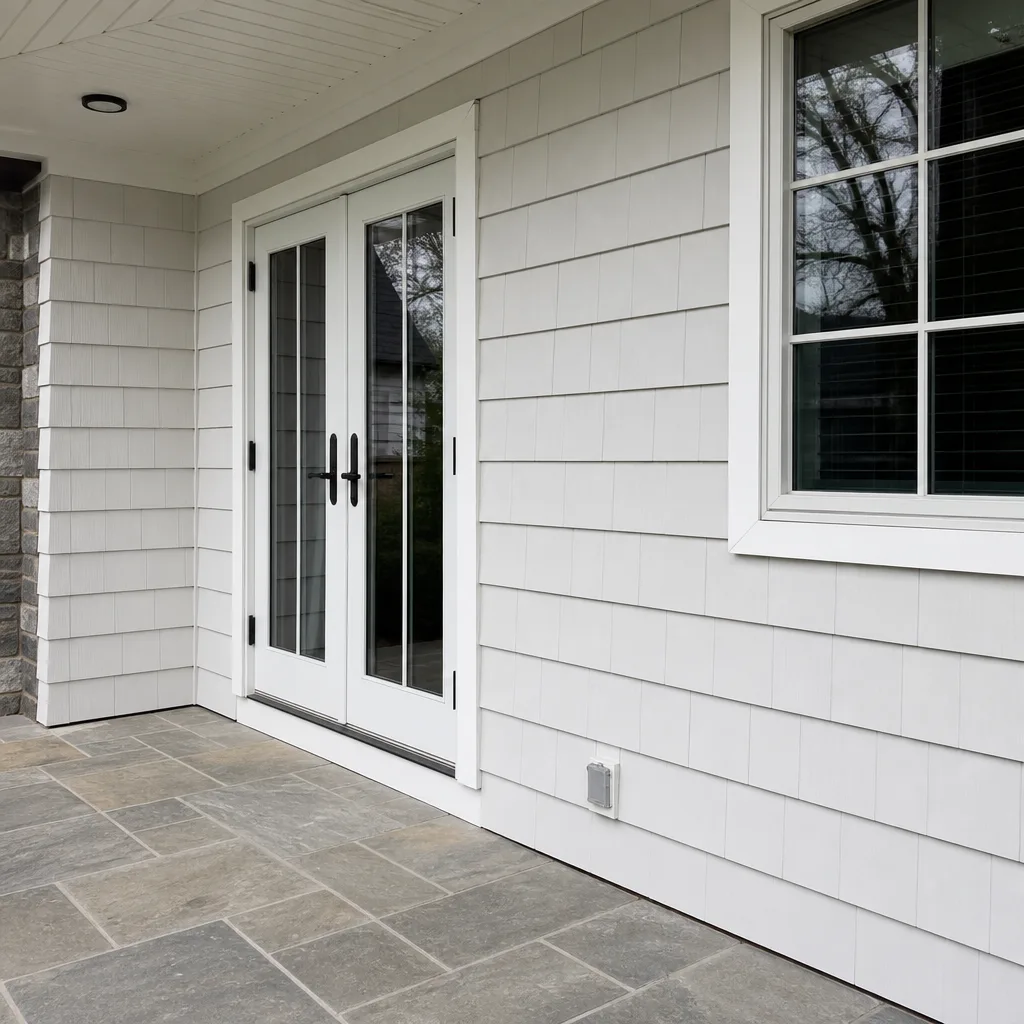 After
After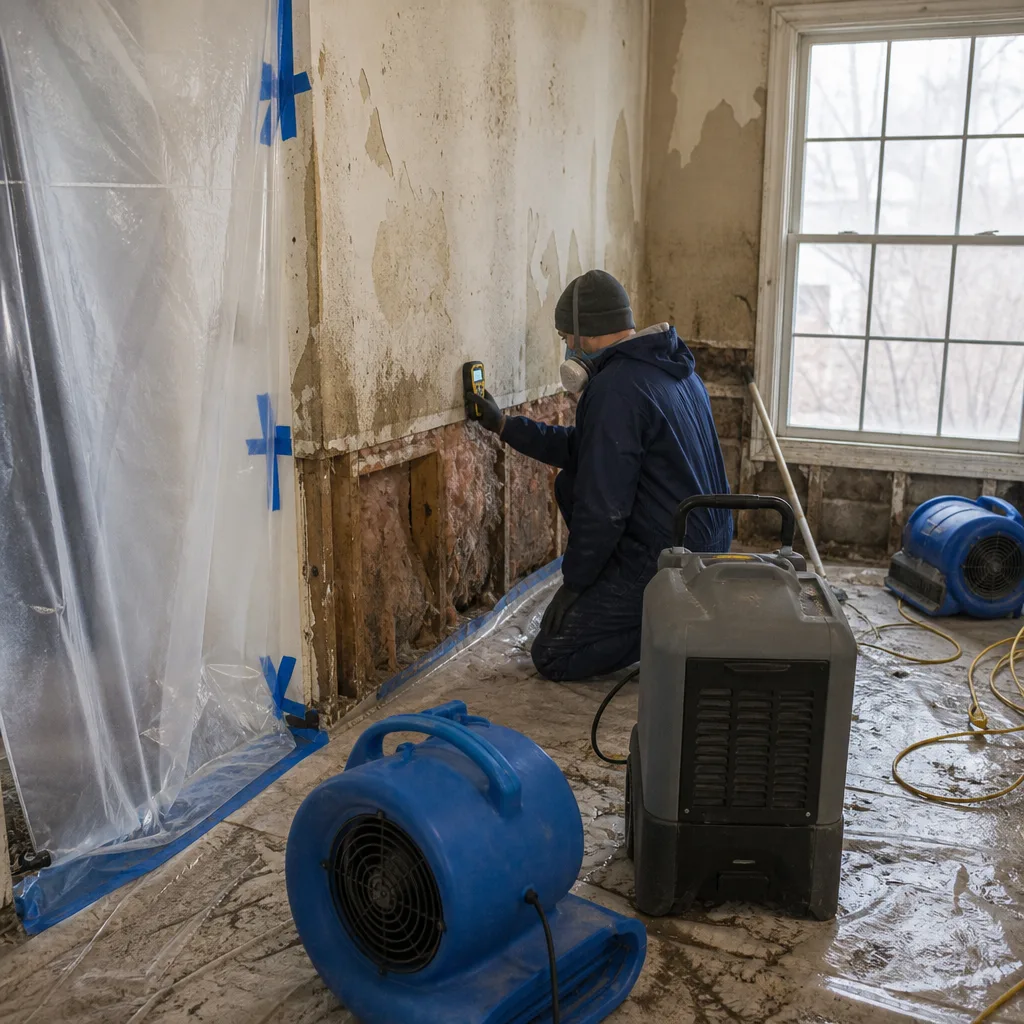 Before
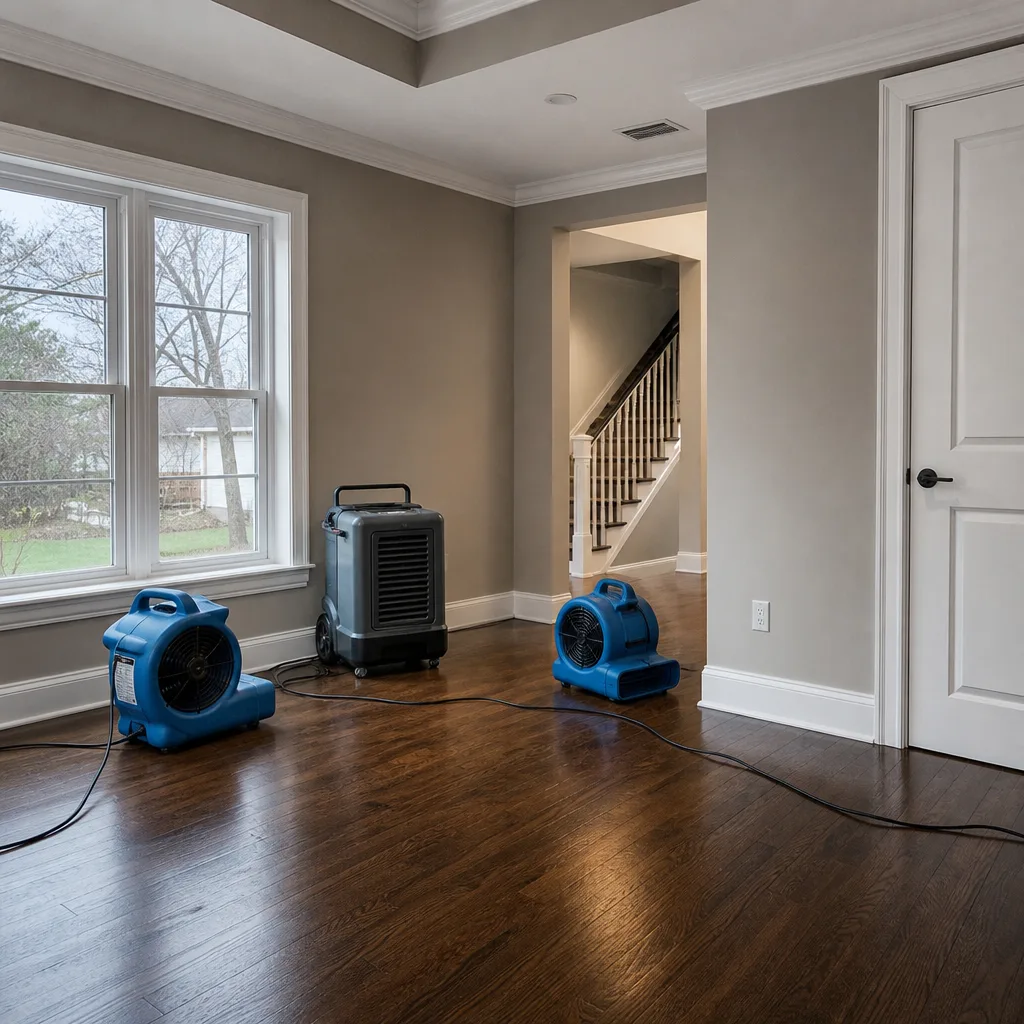 After
After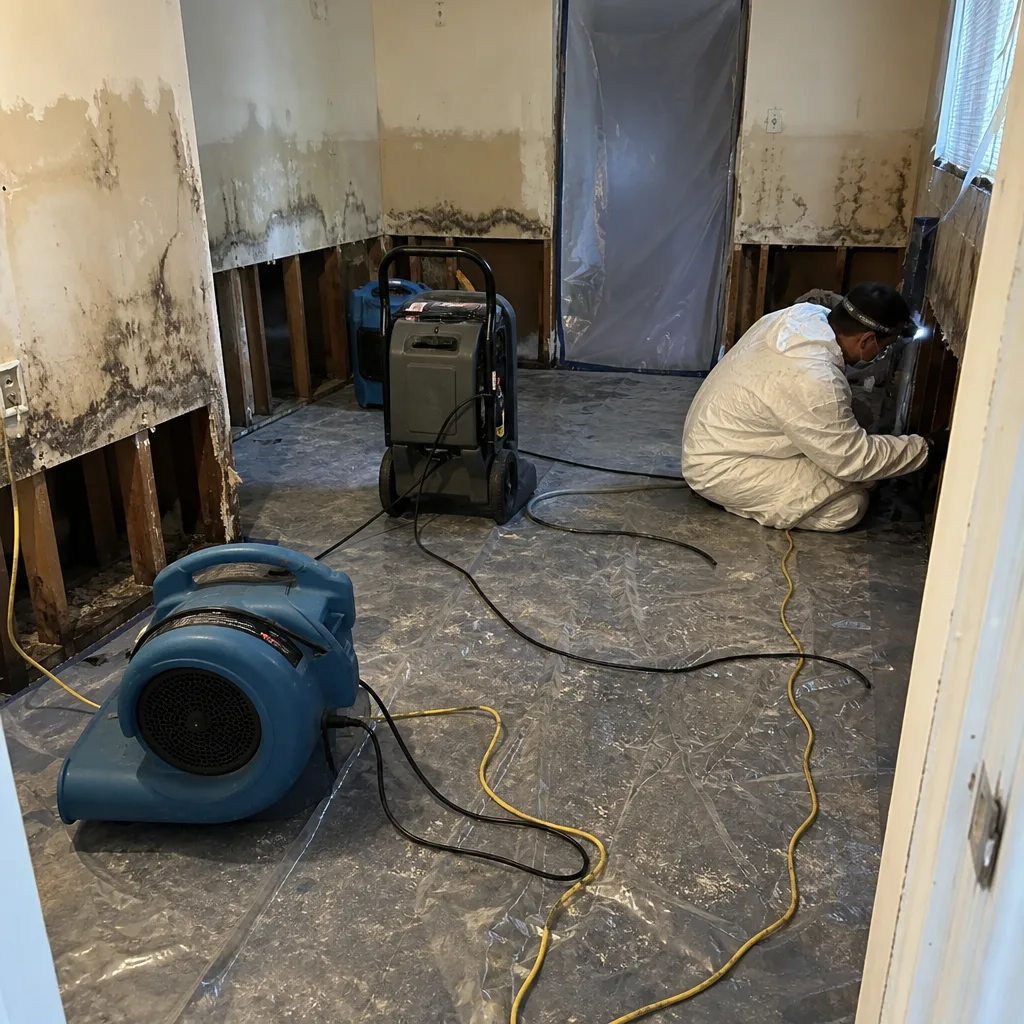 Before
 After
After24/7 Emergency Fire & Smoke Damage Restoration in Great Neck
Fire and smoke damage restoration in Great Neck costs between $2,800 and $14,500 for a typical claim, and the first call you make determines whether your plaster walls and millwork survive the cleanup. Our crews respond to Great Neck Peninsula homes within 45 minutes, board up openings the same visit, and start acid-soot mitigation before the 24 to 48 hour window where soot permanently etches original finishes. Call (518) 873-4306 now. A live dispatcher answers right away, every hour of the day. The faster smoke residue comes off plaster and period woodwork, the more of your home’s Gold Coast character stays intact. Don’t wait until the smell gets into the wall cavities.
Understanding Fire & Smoke Damage Restoration Severity in Great Neck Properties
Not all smoke damage is equal, and Great Neck’s housing stock makes the distinction matter more than in most Long Island towns. We classify fires by soot residue type: dry protein soot from kitchen fires, oily carbon soot from furnace puffbacks, and the worst, wet acidic soot from burned synthetics that etches glass, metals, and painted plaster within hours. Most Great Neck pre-war homes have plaster-and-lath walls instead of modern drywall. Plaster absorbs smoke deeply but slowly, while the lath and stud cavities behind it channel odor horizontally across entire floors. We test surfaces with dry chemical sponges first. Rushing to demo without that test throws away salvageable 1930s millwork, and Great Neck homeowners notice. Smoke migration also follows wiring chases and radiator pipe runs in these older homes, so containment and negative air pressure in finished attics and basement rec rooms are not optional. Add fire department hose line water, and you have a combined smoke and moisture event. In Great Neck’s low-lying lots near Manhasset Bay and Little Neck Bay, that water wicks into original hardwood flooring and raised basement framing. Secondary mold becomes the second claim in the same loss unless drying starts within hours, not days.
Why Great Neck Property Owners Choose Floodline Restoration Co.
- 45-minute response commitment for Great Neck Peninsula homes. We dispatch from our New York City office to Great Neck zip codes immediately, not from a call center in another state. A real crew rolls through Great Neck Plaza and the perimeter neighborhoods fast.
- Live answer, 24/7, every call. No automated routing, no voicemail at 2 a.m. A person picks up the phone, logs your address, and puts a certified crew on the road. That matters at midnight on Steamboat Road.
- IICRC-certified technicians on every job. Our crews train to FSRT (Fire and Smoke Restoration Technician), WRT (Water Restoration Technician), and AMRT (Applied Microbial Remediation Technician) standards. Background-checked, uniformed, and accountable by name.
- Free visual inspection with a written scope. No charge to assess the damage. You get a line-item scope of work before any demo, drying, or cleaning starts. You approve it in writing. No surprises mid-job.
- Direct insurance billing, done correctly. We document from hour one, submit the estimate to your carrier, and talk to the adjuster directly. You don’t carry messages between our crew and the insurance company.
- One team from first extraction to finished rebuild. Floodline Restoration Co. does not hand your job to a subcontractor after mitigation. The same certified crew reads moisture maps day one, logs daily readings, and rebuilds what needs rebuilding under our Fire & Smoke Damage Restoration team. The 90-Day Done Right Promise stays with the same name.
Our Fire & Smoke Damage Restoration Process
Inspection & Assessment
We trace smoke paths through the home, map moisture from hose lines, and test soot type on plaster, millwork, and textiles. Thermal imaging finds hidden heat migration. You get a written scope and a straight answer on what can be cleaned versus what needs replacement.
Stabilization: Board-Up & Tarping
We secure openings on day one, including storm-damaged roof sections if fire compromised the structure. Board-up and tarping stop weather, animals, and further smoke spread before cleanup begins.
Containment & Air Scrubbing
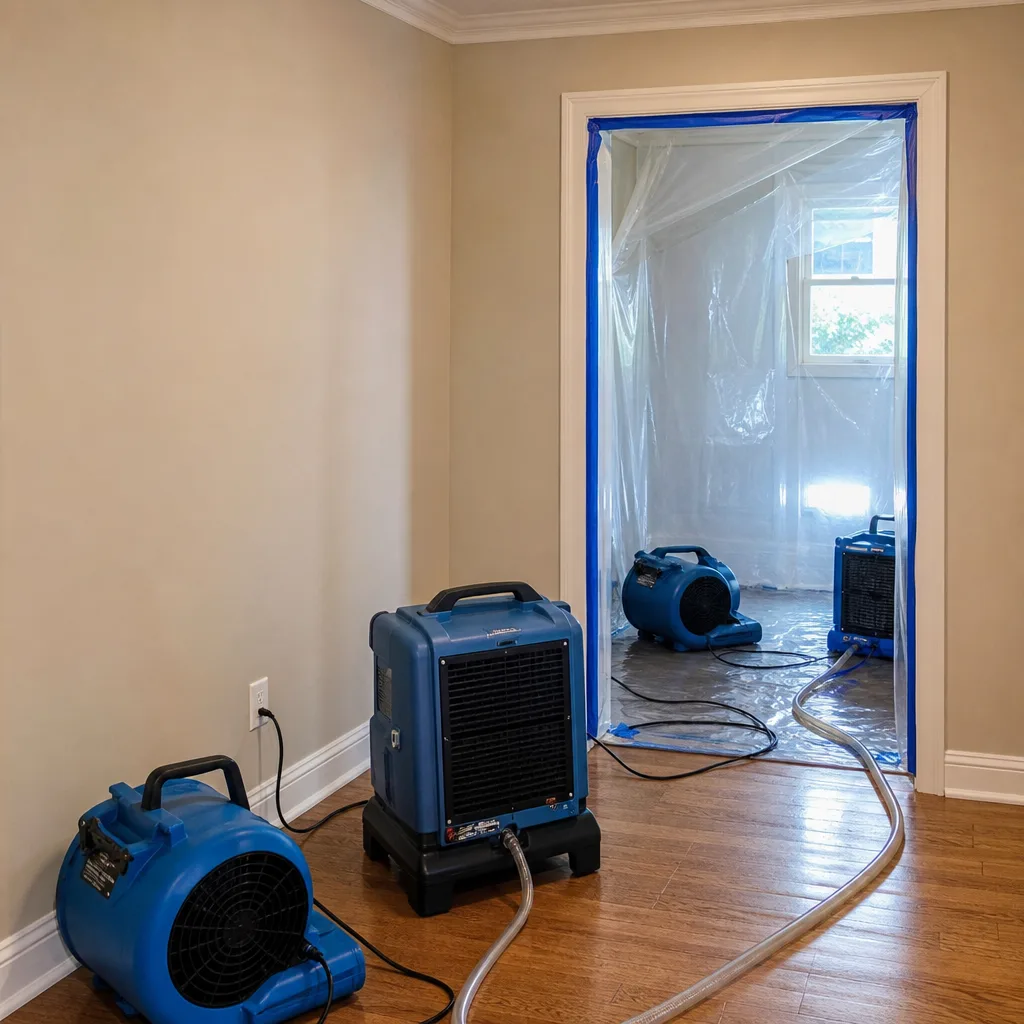
Negative air pressure and HEPA air scrubbers isolate affected zones. In tight pre-war Great Neck homes, this is where we stop soot and odor from migrating through original lath cavities into finished attic bedrooms and upstairs hallways.
Water Extraction & Structural Drying
Fire department hose lines saturate floors, walls, and basement framing. We extract with truck-mounted systems, then set Dri-Eaz dehumidifiers and Phoenix air movers. Daily hygrometer and moisture readings logged until the structure hits dry standard. Near Manhasset Bay’s high water table, this step is non-negotiable.
Smoke, Soot & Odor Removal
Dry sponge cleaning, wet cleaning, and media blasting for heavy carbon deposits. For the deep smoke odor in Great Neck’s old plaster, we run thermal fogging and ozone or hydroxyl treatments sequenced to the soot type, then seal where needed. The clock starts the moment the fire is out; acid soot etches within 48 hours.
Structural Repair & Restoration
We repair, refinish, and rebuild. Original hardwood floors get sanded and refinished where salvageable. Plaster gets patched, not replaced, where the lath is sound. Period millwork gets custom fabricated when it must. The same crew finishes what they started, backed in writing by the 90-Day Done Right Promise.
Need Emergency Fire & Smoke Damage Restoration in Great Neck Now?
Crews minutes away, answering live 24 hours a day. The sooner we start, the less it costs.
Working With Your Insurance Company
Your Great Neck fire loss triggers a claim, and the way that claim is documented in the first three days controls what gets covered. We handle the paperwork from hour one: photographs of every affected room, a written scope of work, itemized contents loss, and daily moisture logs if hose line water is involved. Our estimators write to the same standards Nassau County adjusters use, because we do this work across Long Island every week, not once a season. We talk to your carrier directly. You get copies of everything. If the adjuster questions a preservation approach on your plaster or knotty-pine paneling, we make the case with documentation. The goal is a square deal for you, not a fight over line items.
What We Provide Your Insurer
- Thorough documentation of the loss
- Photos of all damage, room by room
- Moisture readings and drying logs
- A detailed, line-item scope of work
- Direct coordination with your carrier
Built for Great Neck’s Loss Calendar
Fire in Great Neck follows a seasonal rhythm, and it’s not the same rhythm as inland Nassau. Winter brings heating system failures in 1920s boilers and cracked heat exchangers, plus space heater fires in drafty pre-war Colonials. Spring and fall nor’easters knock trees into power lines, overloading knob-and-tube circuits still present in original sections of older homes. Lightning strikes summer thunderstorms on peninsula properties near Saddle Rock and Kings Point, where homes sit closer to open water. Basement fires in finished rec rooms are year-round, often from dehumidifiers and sump pumps running against the high water table. The fire department’s hose line then floods the same finished basement, doubling the damage. Every one of these losses leaves soot in plaster walls and odor in original millwork. The sooner we get to it, the more you keep. That’s the working reality for Fire & Smoke Damage Restoration in Great Neck, and we built our entire response around it.
Fire & Smoke Damage Restoration Across Great Neck’s Neighborhoods
Kings Point homes along Steamboat Road and Red Brook Road tend to be larger Gold Coast estates with wide plaster wall runs and original paneled libraries. Smoke from an electrical fire or a chimney event spreads through those rooms fast, and the paneling absorbs odor deeply. In Great Neck Estates, we see mid-century additions behind pre-war facades. The 1950s rec room knotty-pine paneling and terrazzo floors are exactly what adjusters want to stud out after a basement fire. Our team fights to preserve those surfaces where cleaning can hit the standard. Saddle Rock and the homes near Udalls Mill Pond have finished basements close to the water table, so hose line water mitigation is often the heavier half of the fire job. Around Great Neck Plaza, older apartment buildings and attached homes share wall cavities, so containment and odor control must account for adjoining units. Baker Hill and Allenwood have Tudor and Colonial homes where original oak floors run wall to wall. That wood takes smoke and water differently than modern engineered flooring. We know these difference because we’ve worked every one of these neighborhoods. The routing matters, and so does the building type.
Specialized Fire & Smoke Damage Restoration Services We Offer in Great Neck
Each fire leaves a different signature, and each surface in your Great Neck home needs a specific cleaning approach. These are the services our crews run most on the peninsula.
Fire Damage Cleanup
Charred framing, collapsed ceiling sections, and destroyed contents get cut out and hauled once the adjuster signs off. But in Great Neck’s older homes, we cut surgically. A scab patch in original plaster is cheaper and better than a full room gut. We clean what can be cleaned and replace only what cannot.
Smoke & Soot Removal
Dry sponge cleaning on flat plaster, wet cleaning on semigloss and oil paint, foam cleaning on porous stone and textured surfaces. For heavy carbon deposits on brick fireplace surrounds and masonry, we use media blasting with controlled pressure. Acid soot from burned synthetics gets addressed within the first day, because after 48 hours it etches window glass and bathroom fixtures permanently.
Odor Removal & Deodorization
Ozone, thermal fogging, and hydroxyl generators work in sequence depending on the soot type and location. Odor doesn’t just sit on the surface. It moves through original lath cavities and radiator pipe chases. We seal treated cavities where that odor persists. The real test is when the house sits closed for 24 hours and you walk back in. We don’t call it done until Great Neck noses agree it’s gone.
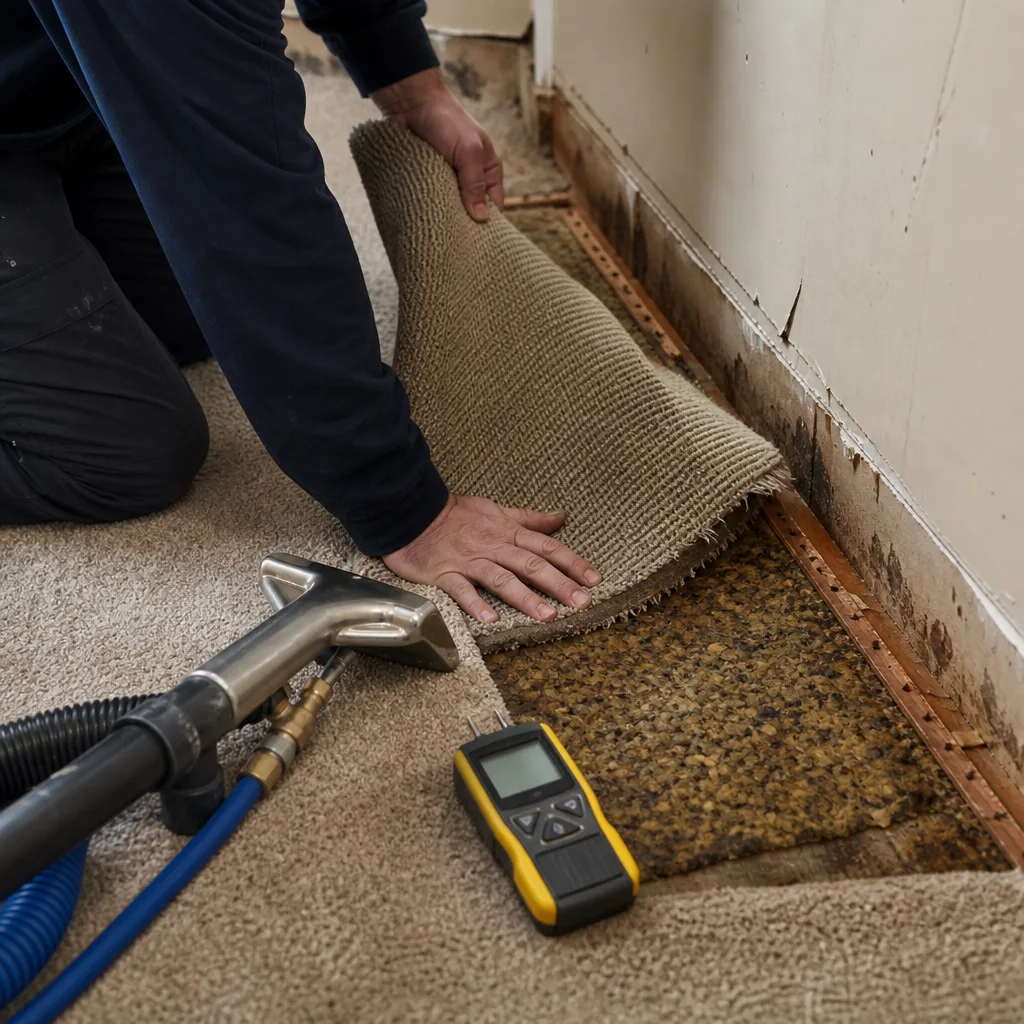
Contents Cleaning & Pack-Out
Books, clothing, china, artwork, and upholstery get inventoried, packed, and cleaned at our facility. Items too far gone are documented for replacement. Items that can be restored come back to your home only after the structure passes final cleaning. You see the inventory before anything moves.
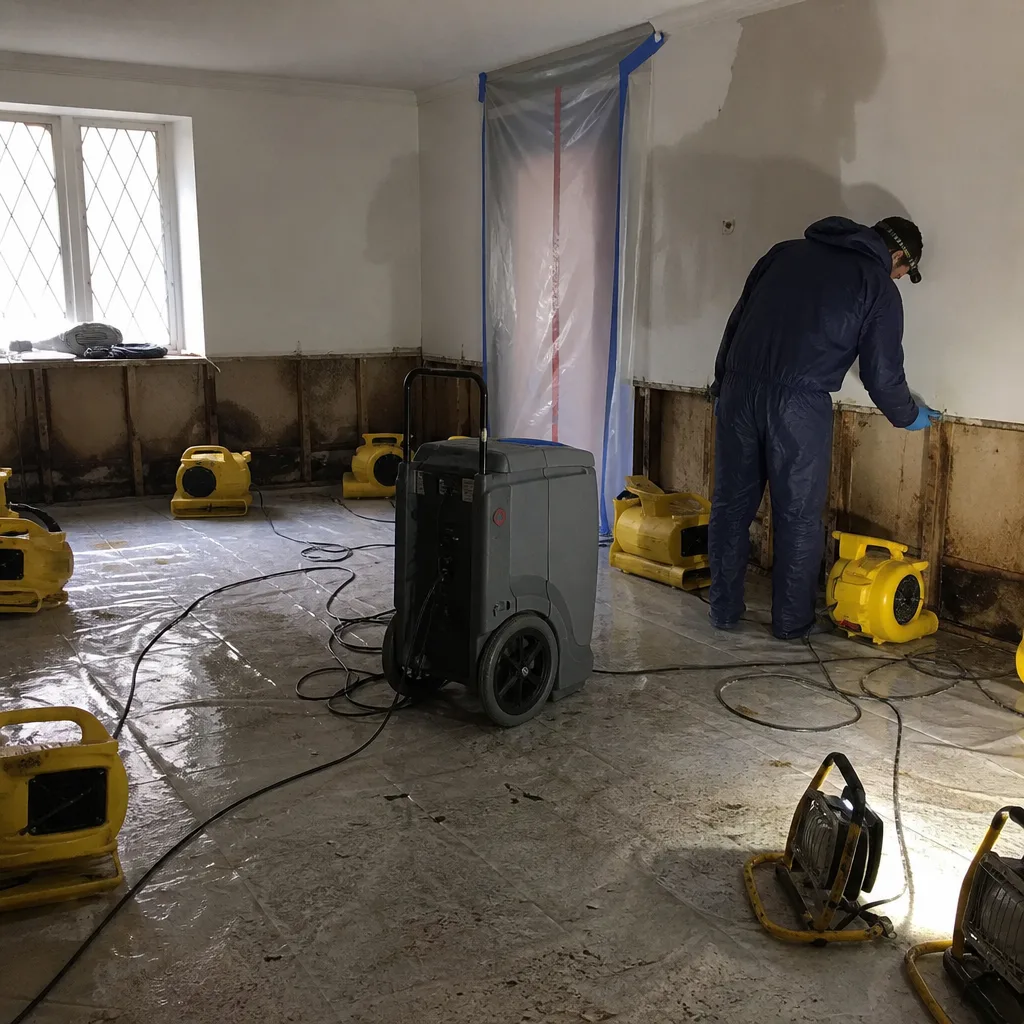
Emergency Board-Up & Tarping
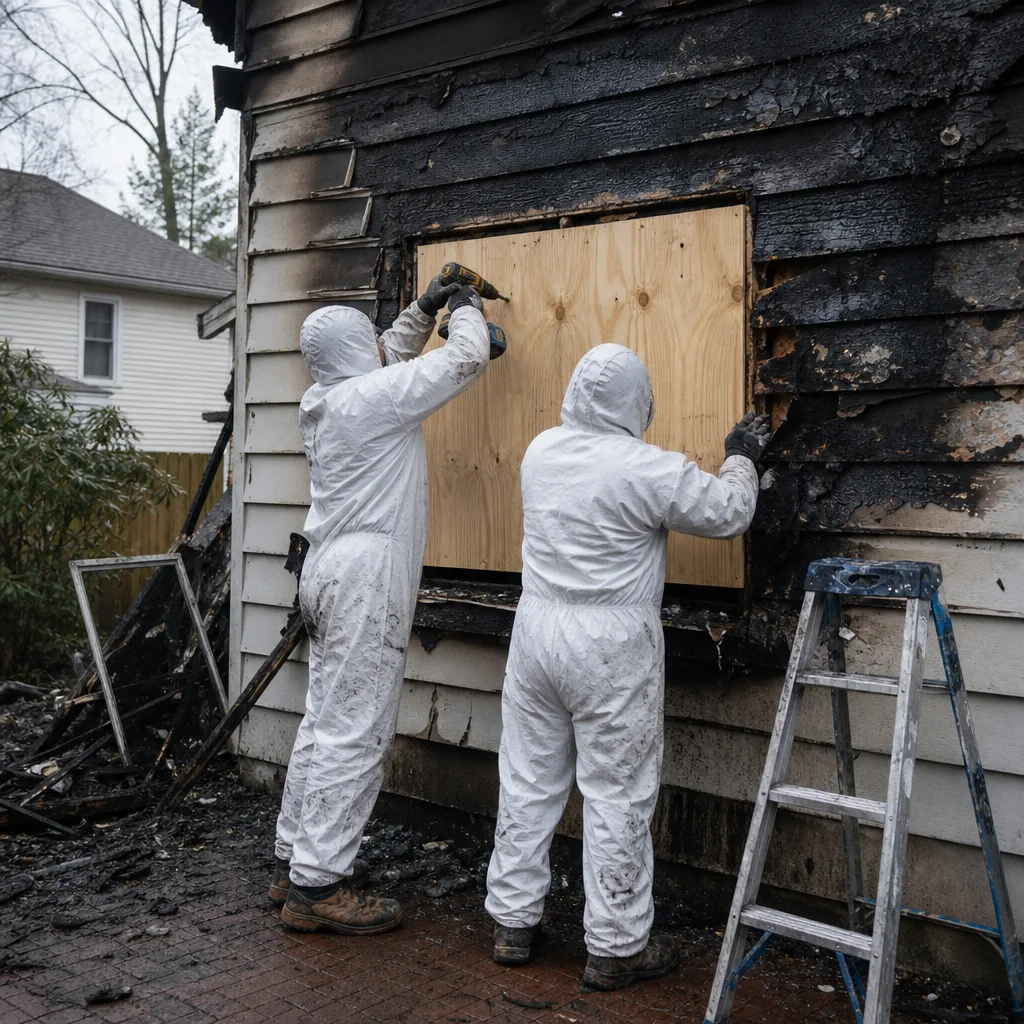
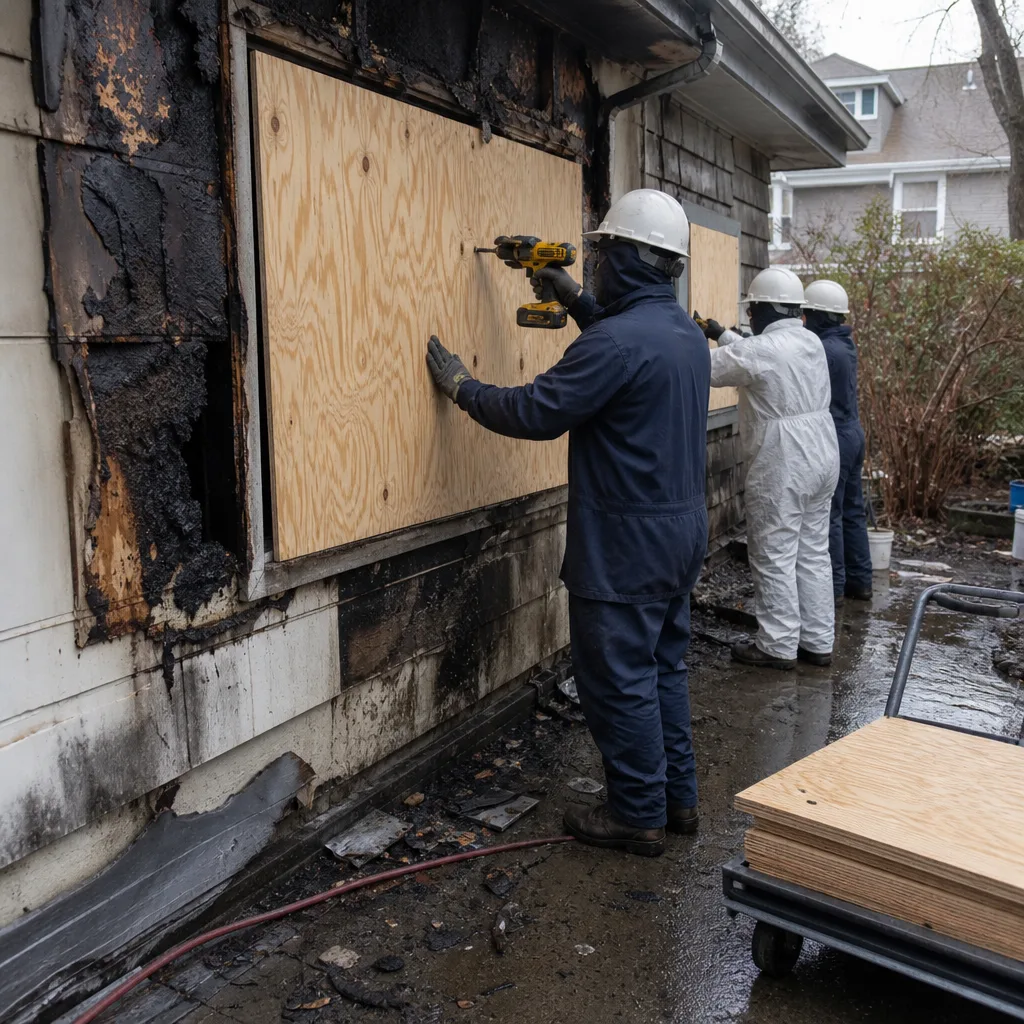
After a fire, your windows, doors, and roof openings invite weather, animals, and trespassers. On a peninsula like Great Neck, a nor’easter can arrive within hours of a fire. We board and tarp the same visit, with fire-rated plywood where required by local code. It’s the difference between a contained loss and a compounding one.
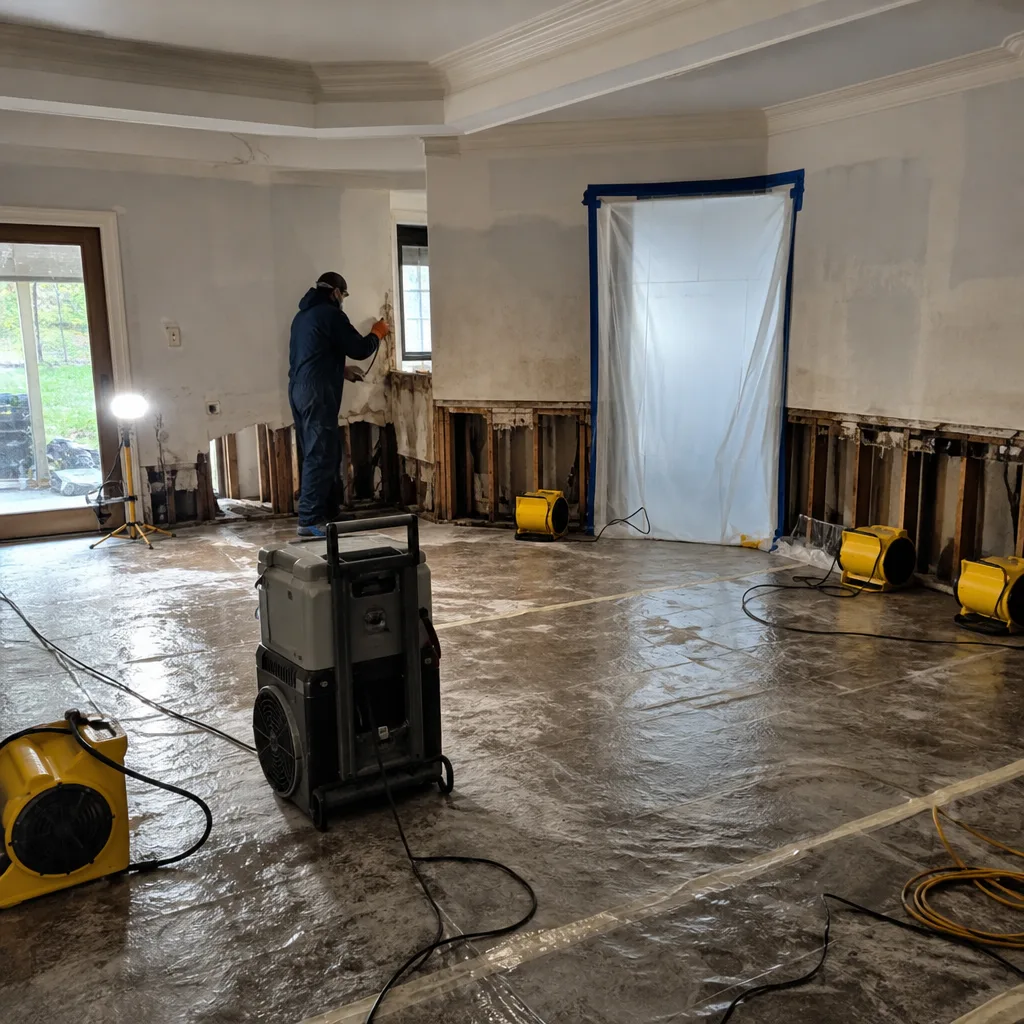
Structural Fire Repair
Charred joists get sistered or replaced to code. Smoke-weakened studs and rafters get inspected, not assumed sound. We hold Nassau County permit requirements in mind, and our rebuild work gets inspected like any other structural job. The difference is this team already knows every inch of your home from mitigation day one.
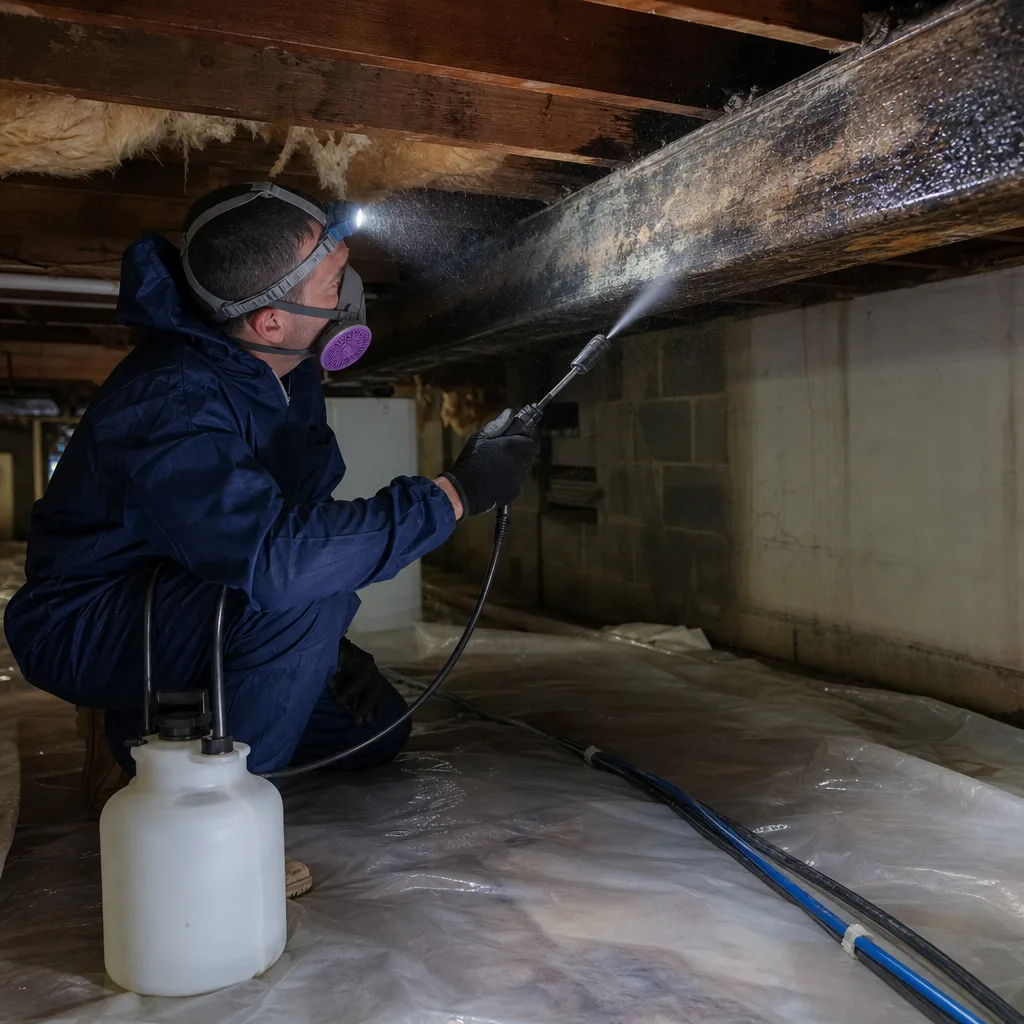
What happens when you call
- 1
A real person answersNo phone trees - you reach a local pro.
- 2
You get an upfront price rangeHonest numbers before anyone is dispatched.
- 3
A background-checked tech heads outLicensed & insured, dispatched right away.
- 4
You approve before work beginsNothing starts until you say go.
Fire & Smoke Damage Restoration Costs in Great Neck, NY
Every fire is different, so here’s what we actually see on the peninsula. Kitchen grease fire cleanup in a Great Neck condo or apartment runs $1,800 to $4,500. A furnace puffback that coats two floors of a Colonial in oily soot runs $5,000 to $11,000 because of the square footage and the depth of cleaning required. A basement electrical fire with hose line water, smoke through the plaster, and contents pack-out runs $12,000 to $28,000. Structural fire repair and rebuild after a serious burn pushes higher, and that’s where direct insurance billing becomes the critical piece. If your policy covers it, we bill your carrier directly. You pay your deductible and see the full scope in writing before any work starts. Call (518) 873-4306 for a free visual inspection and a firm written estimate.
We Also Serve Cities Near Great Neck
Our crews cover the whole North Shore perimeter. We regularly handle fire and smoke damage restoration in Little Neck, Manhasset, Oakland Gardens, and Bayside, as well as the full Great Neck Peninsula. Same live dispatch, same certified crews, same written scope before any work begins.
Serving Great Neck, NY - Our Local Coverage Area
We’re based in the Great Neck area and know this community well. Use the map below to see our service coverage - if you’re nearby, we can almost certainly help.
Great Neck Fire & Smoke Damage Restoration Questions, Answered
How quickly do I need to start smoke and soot removal after a fire in my Great Neck pre-war home?
Within 24 to 48 hours, because acidic soot from burned synthetics begins etching plaster, glass, and fixtures inside that window. Great Neck’s plaster-and-lath walls hold smoke longer than drywall, but they can also be cleaned and restored if we get to them before the soot has time to bond. Call us the same hour the fire department clears the scene.
Will my fire-damaged plaster walls in Great Neck need to be completely demolished?
Usually not. Plaster absorbs smoke but is often restorable with dry sponge cleaning, wet cleaning, and sealing. We test first and pull only what cannot be cleaned. A standard gut-renovation approach destroys salvageable 1930s material. We don’t do that here.
My finished basement in Great Neck caught fire and the adjuster says full stud-out is required. Can you help me avoid losing my knotty-pine paneling?
Yes, in many cases we can. Adjusters default to replacement because it’s the easiest call. We document the cleaning process, run air scrubbers, and demonstrate that the paneling can hit the dry standard. If the material can be cleaned and sealed to code, we make that case with your carrier in writing.
Do Great Neck’s coastal flood zones affect how you handle fire and smoke damage restoration?
They do. Fire department hose line water runs into basements in FEMA Special Flood Hazard Areas near Manhasset Bay and Little Neck Bay. The high water table means that water doesn’t drain the way it does inland. We run longer structural drying cycles and monitor with daily moisture logs to prevent secondary mold, because secondary mold after a fire loss is a claim your insurer will try to deny.
Can you board up and tarp my fire-damaged Great Neck home immediately, even on a peninsula during a storm?
Yes. Board-up and tarping happen the same visit, regardless of weather. Peninsula homes take wind off both bays, and an unsecured roof opening turns a contained fire loss into a wind and water event within hours. We use fire-rated plywood and storm-rated fastening.
How fast can a crew actually reach my Great Neck home?
We commit to 45 minutes for most Great Neck addresses, from Kings Point to Great Neck Plaza. A live dispatcher takes your call, identifies your location, and sends the nearest certified crew. If it’s 3 a.m. in Saddle Rock, you still talk to a person, and you still get a crew.
Will my insurance cover fire and smoke restoration, or do I pay out of pocket?
Most Great Neck homeowners policies cover fire, smoke, and the water used to fight the fire. Your coverage depends on your policy limits and the cause. We bill directly to your carrier and provide all the documentation adjusters require. You see the full written scope before work begins.
What should I do in the first 30 minutes after a fire in my Great Neck home?
Call your insurance company to file the claim, then call us. Do not enter the home until the fire department says it’s safe. Do not wipe soot off walls or woodwork, because dry wiping drives acid soot deeper into plaster and millwork. Do not turn on the HVAC system. Open windows and exterior doors if it’s safe, and let our crew take over from there.
Written by Curt Bowman, Owner at Floodline Restoration Co., serving Great Neck and the North Shore since 2010.