

Free visual inspection and a written scope of work before any mitigation begins - photos, moisture readings, and drying logs go in your claim file
The scope we write is the scope we bill. Anything new gets shown to you, in writing, before we touch it.


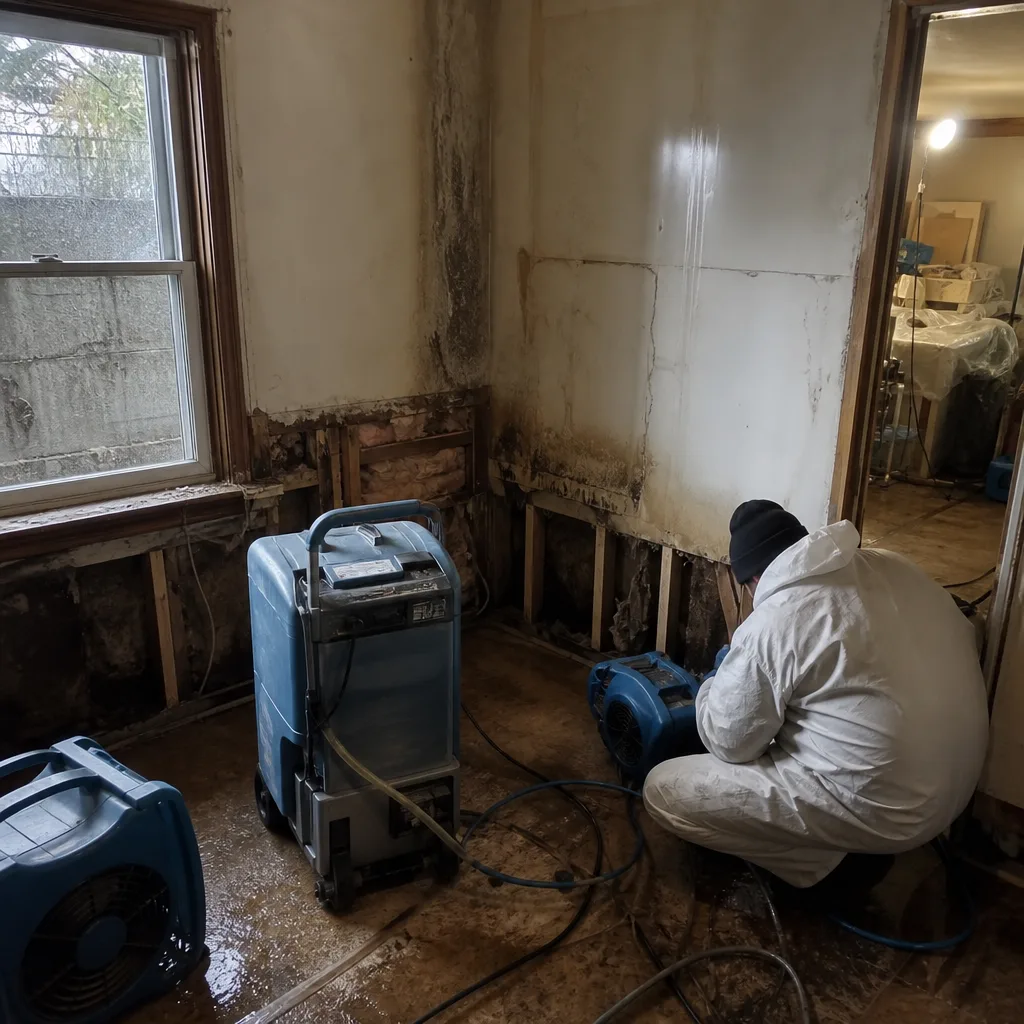 Before
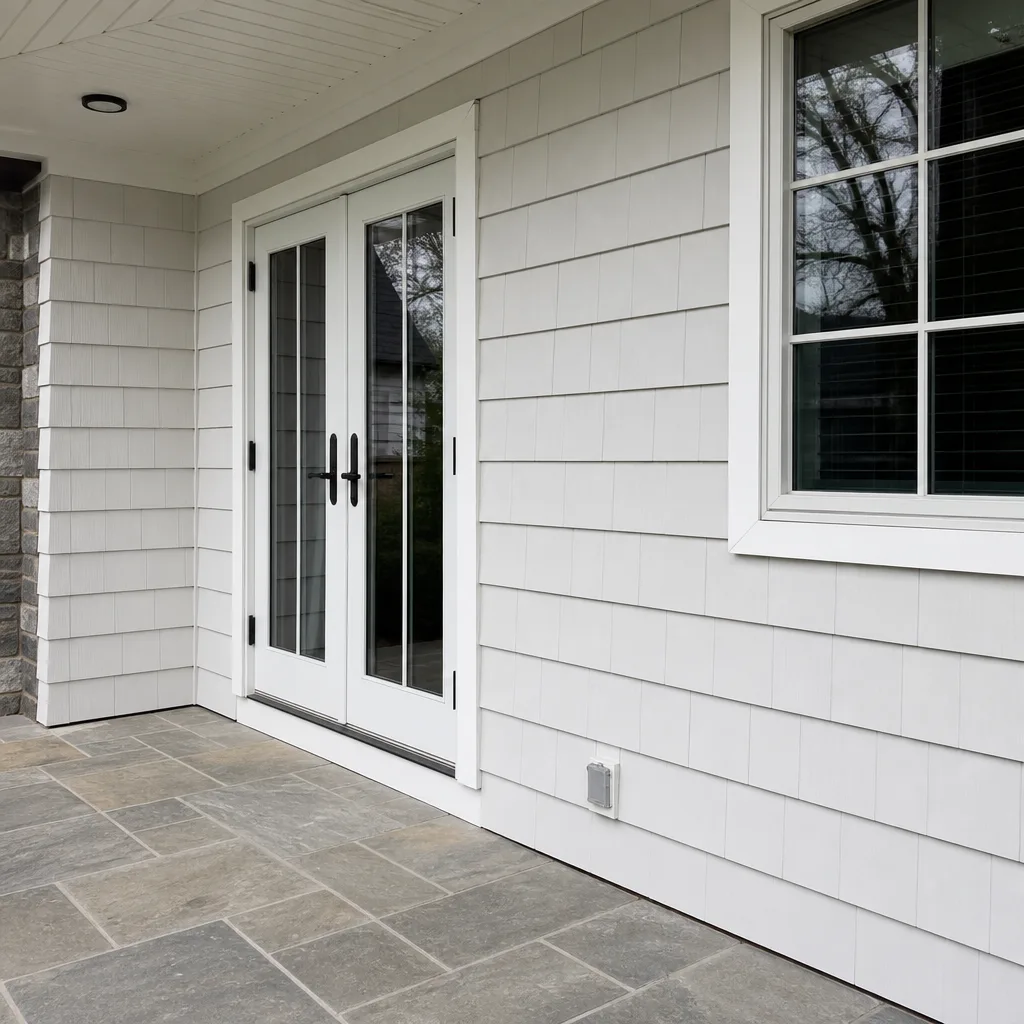 After
After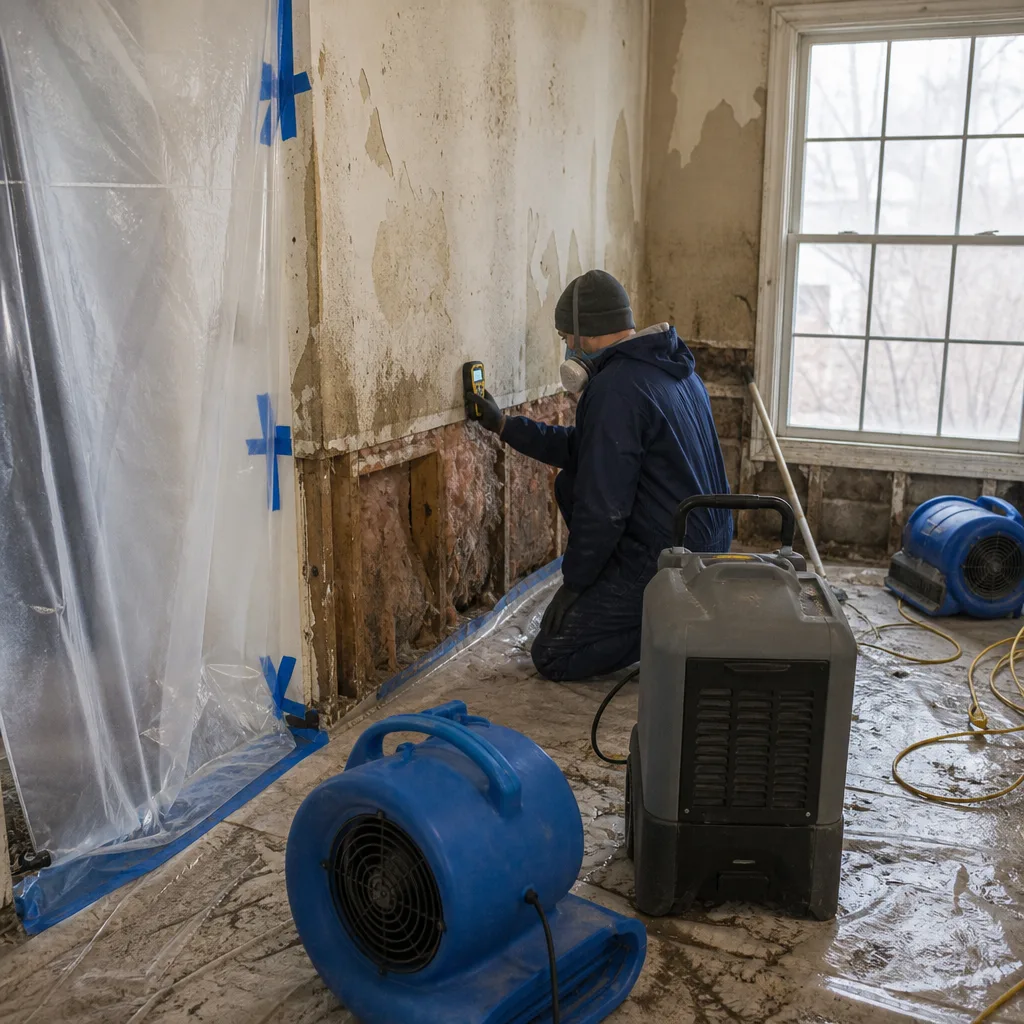 Before
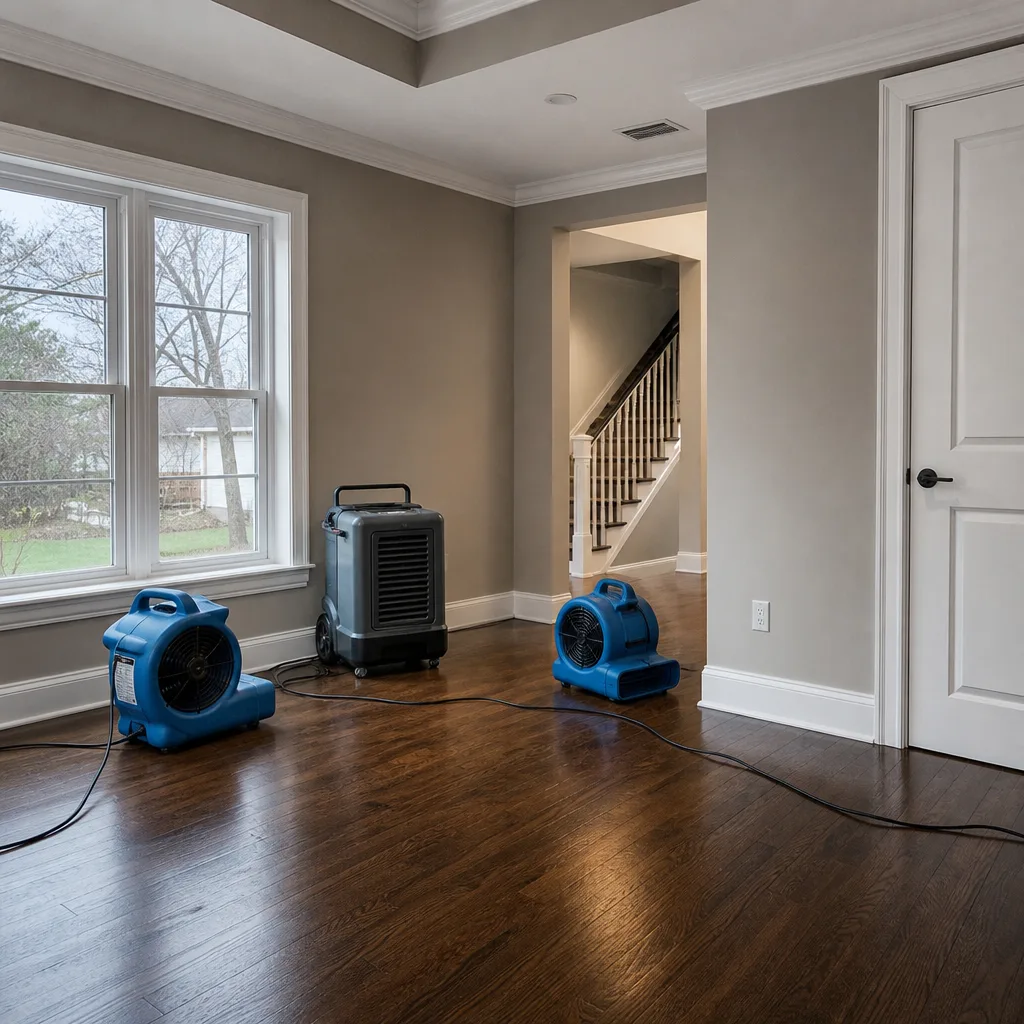 After
After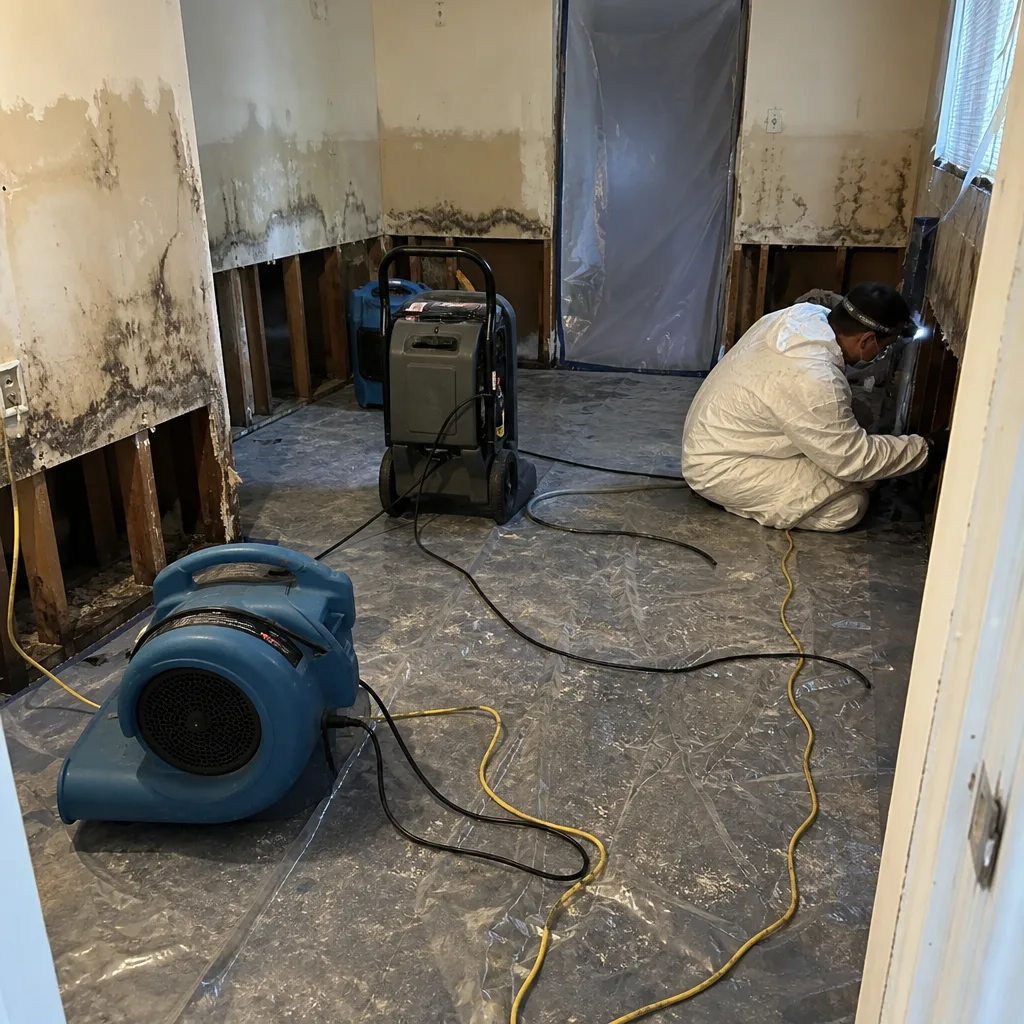 Before
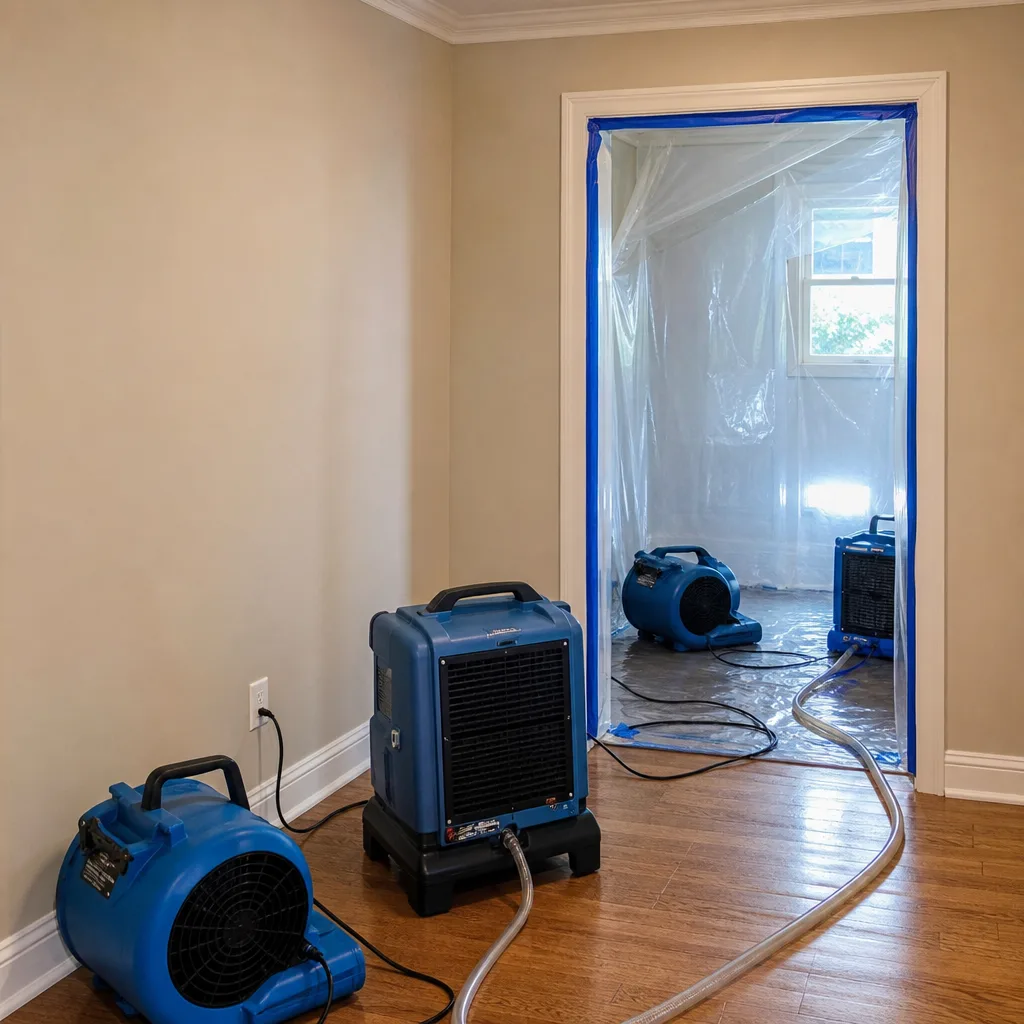 After
After24/7 Emergency Mold Remediation in Great Neck
Mold remediation in Great Neck typically costs $1,800-$6,500 depending on containment area, surface type, and whether structural drying is required, and most jobs are completed within 3-7 days. If you’ve spotted discoloration on a basement wall or caught that musty smell in a first-floor closet, the sooner we can contain it, the less it spreads. Call (518) 873-4306 and a live person answers, day or night. Not a recording. Not a call center. A dispatcher who can have a background-checked, certified crew at your door inside the hour, with a free visual inspection before you commit to anything.
In Great Neck, mold doesn’t wait politely. Coastal moisture, a seasonally high water table, and 1920s-era plaster walls that hold water longer than modern drywall mean a small patch behind a baseboard can become a full containment project in two weeks. The first hour matters because airborne spores move through forced-air systems into rooms that were never wet. We start with containment, not demolition. That’s the difference between a $2,000 scope and a $12,000 rebuild.
Understanding Mold Remediation Severity in Great Neck Properties
Mold growth in a Great Neck Colonial built in 1929 behaves differently than mold in a 2010 sheetrock-and-vinyl subdivision in Little Neck. Plaster-and-lath walls absorb water slowly, wick it upward, and hide moisture behind layers that thermal imaging can spot but the naked eye misses. What looks like a four-inch stain on the baseboard may trace back to a two-foot vertical migration inside the wall cavity. Without moisture mapping and daily drying-log readings, a contractor is guessing. Guessing costs you original plaster keys, crown molding, and thousands in millwork replication.
We classify every Great Neck job by surface type and moisture load before we touch a wall. That means knowing whether we’re dealing with interior finishes on historic plaster (dry slowly, salvage aggressively), 1950s finished basements (knotty-pine paneling, terrazzo floors, often below FEMA-revised flood elevation), or crawlspaces over a high water table (encapsulation and dehumidification before any antimicrobial treatment). Each one gets a different sequence of containment, structural drying, and clearance testing. A company that treats them all the same is the reason mold comes back nine months later.
Why Great Neck Property Owners Choose Floodline Restoration Co.
- 45-minute response commitment to Great Neck addresses. We stage crews near Northern Boulevard and Middle Neck Road, so when someone in Saddle Rock or University Gardens calls at 2 p.m. or 2 a.m., we’re not driving in from Suffolk.
- A live person answers, 24/7. You call, a dispatcher picks up. No automated tree, no “leave a message and we’ll get back to you.” When there’s water migrating through original oak flooring, you don’t have time for a callback.
- IICRC-certified crews trained to WRT and AMRT standards. Water damage and mold remediation are two different disciplines. Our technicians hold the applied microbial remediation credential, not just a general restoration one.
- Free visual inspection with moisture mapping. We show you the readings on a thermal camera and a pin-type meter before we quote a dollar. You see what we see.
- Direct insurance billing and adjuster coordination. We speak the carrier’s language: line-item scopes, photo documentation, moisture logs. You don’t relay messages between us and your insurer.
- One crew from first cut to final coat. Floodline Restoration Co. doesn’t hand your house to a subcontractor after remediation. The same team that sets containment also handles the rebuild, so nobody inherits a half-documented job.
Our Mold Remediation Process
Inspection & Assessment
We document the affected area with photography and thermal imaging, take moisture readings from plaster, hardwood, and subfloor, and identify the moisture source. In Great Neck’s pre-war homes, this almost always includes checking basement foundation walls and sill plates for seepage.
Extraction & Stabilization
Any standing water comes out first. We stabilize the source of moisture, whether that’s a failed sump pump, a pipe inside a wall cavity, or groundwater intrusion through a stone foundation.
Drying & Dehumidification
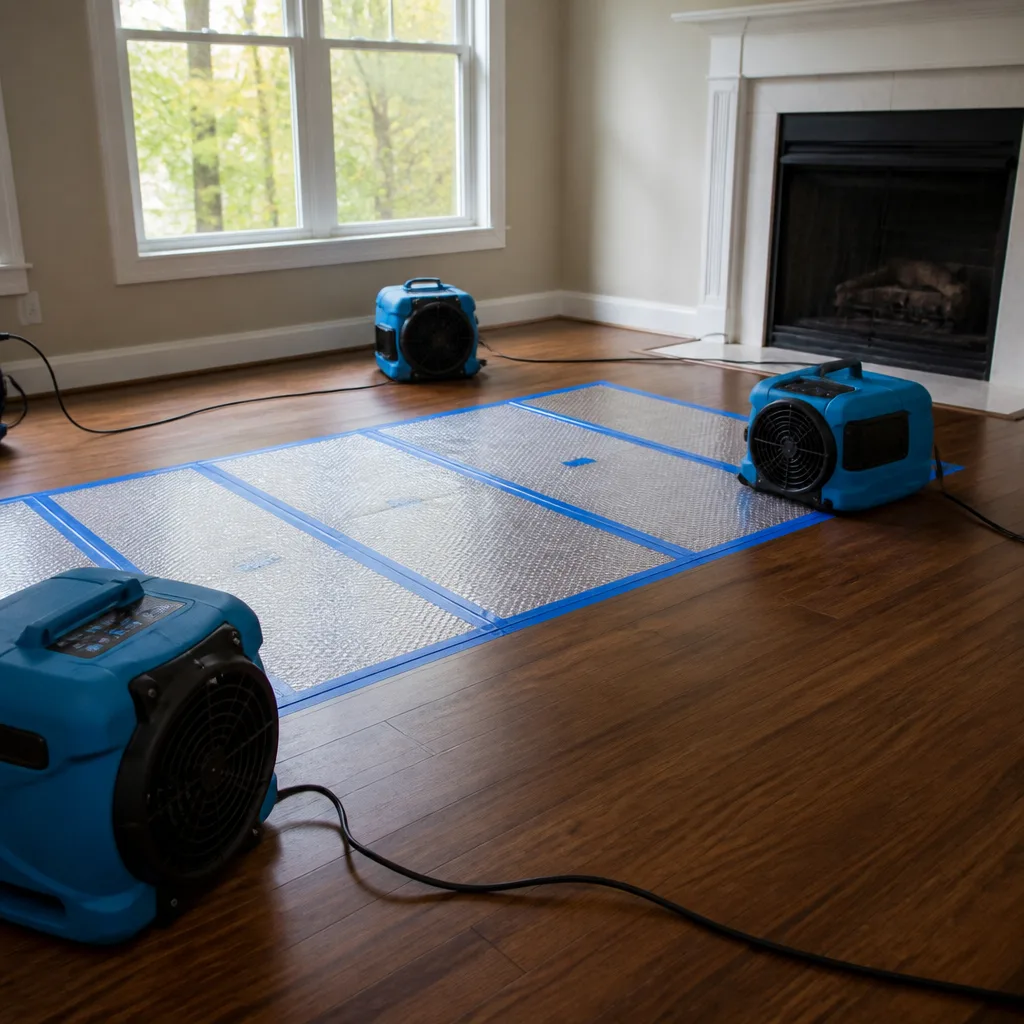
We install containment barriers and run Dri-Eaz dehumidifiers and Phoenix air movers on a schedule built around your home’s construction. Plaster dries slower than drywall; we run the equipment longer at lower heat to avoid cracking.
Cleaning & Sanitization
HEPA air scrubbers run throughout the job. We clean salvageable surfaces with antimicrobial agents appropriate for the material type, and remove porous materials that cannot be dried to standard.
Specialty Treatment
For crawlspaces, we often install vapor barriers and schedule seasonal dehumidifier service. For finished basements from the 1950s, we separate pre-loss trim and paneling before demolition so those features are preserved, not thrown in a dumpster.
Repairs & Restoration
The same Floodline crew rebuilds what was removed. We match trim profiles, source period-appropriate materials, and leave you with a moisture log showing every reading from day one to clearance.
Need Emergency Mold Remediation in Great Neck Now?
Crews minutes away, answering live 24 hours a day. The sooner we start, the less it costs.
Working With Your Insurance Company
Mold claims on Great Neck’s peninsula homes are scrutinized harder than almost anywhere else in Nassau County. FEMA flood-zone revisions after Hurricane Sandy changed what insurers will and won’t cover, and adjusters know exactly which questions to ask about pre-existing conditions. We’ve worked hundreds of these files. What protects you is documentation from the first hour: photos before anyone moves a piece of furniture, moisture readings taken before and after drying, and a line-item scope that separates mold remediation from water damage repair. We handle the adjuster communication directly, so you’re never the one arguing about whether a 1958 knotty-pine panel was salvageable.
What We Provide Your Insurer
- Thorough documentation of the loss
- Photos of all damage, room by room
- Moisture readings and drying logs
- A detailed, line-item scope of work
- Direct coordination with your carrier
Built for Great Neck’s Loss Calendar
The mold season in Great Neck doesn’t start in spring. It starts the first week a nor’easter pushes storm surge into the low-lying streets around Manhasset Bay and Little Neck Bay, and it runs steady through every heavy rainfall when the water table rises under mid-block homes. Here’s what the year actually looks like. January and February bring frozen supply lines in unheated crawlspaces, and the thaw sends water straight into foundation walls. March through May, basement seepage is a near-weekly call as snowmelt and spring rain hit a peninsula that’s already saturated. Summer thunderstorms dump two inches in an hour, overwhelming storm drains on Middle Neck Road and sending runoff into below-grade garages. Then fall nor’easters repeat the cycle, and every event pushes moisture deeper into plaster walls that never fully dried from the last one. Great Neck homeowners deal with recurring mold pressure, not isolated incidents. That’s why our crawlspace treatments and humidity control plans are built for a seasonal reality, not a one-time fix.
Mold Remediation Across Great Neck’s Neighborhoods
We respond differently to a call in Kings Point than we do to one in Great Neck Plaza, and that’s not about distance. Kings Point waterfront estates tend to be 1920s brick-and-stone exteriors with finished basements built in the 1950s and 60s, often with original terrazzo floors and custom millwork. Remediation there frequently involves pack-outs of antique furniture and careful sequencing so demolition doesn’t destroy what insurance won’t pay to replicate. In the Great Neck Plaza and Kensington sections, we see more mid-century Capes and split-levels where basement seepage runs under wall-to-wall carpet and behind paneling. The University Gardens and Lake Success corridor deals with a different pressure: high seasonal groundwater that keeps crawlspaces damp even when the foundation is sound. We know that a house on Middle Neck Road near the LIRR tracks has drainage realities a house on a quiet lane off Steamboat Road doesn’t. Our crews route through Northern Boulevard, not around it, and we know which intersections flood first during a storm.
Specialized Mold Remediation Services We Offer in Great Neck
Mold Inspection & Testing
Before any remediation begins, we identify exactly what’s growing and where. In Great Neck’s older homes, that means air sampling in the living spaces and behind walls, plus moisture readings at the sill plate level where 1920s construction meets the ground. We coordinate with an independent lab for species identification when needed. If it’s a common surface mold versus stachybotrys, the remediation protocol changes, and you should know which one you’re dealing with before a wall comes open.
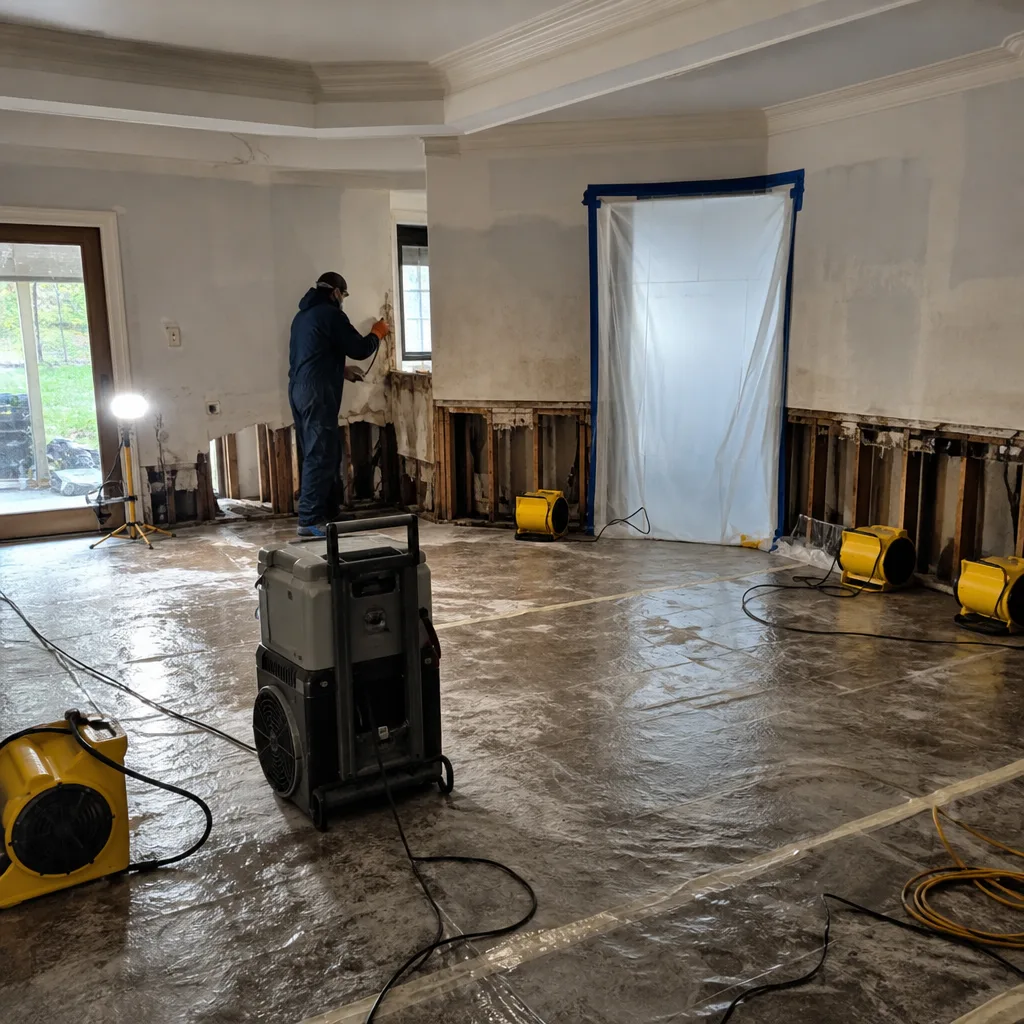
Mold Removal
Our Mold Remediation team handles full containment and removal on every Great Neck job, whether it’s a single bathroom wall above a tub or a finished basement with mold running behind 1950s paneling. We remove what can’t be dried, treat what can be saved, and document every step for your insurer. No shortcuts on plaster and lath; fast-drying a 1930s wall is how you lose the original crown molding forever.
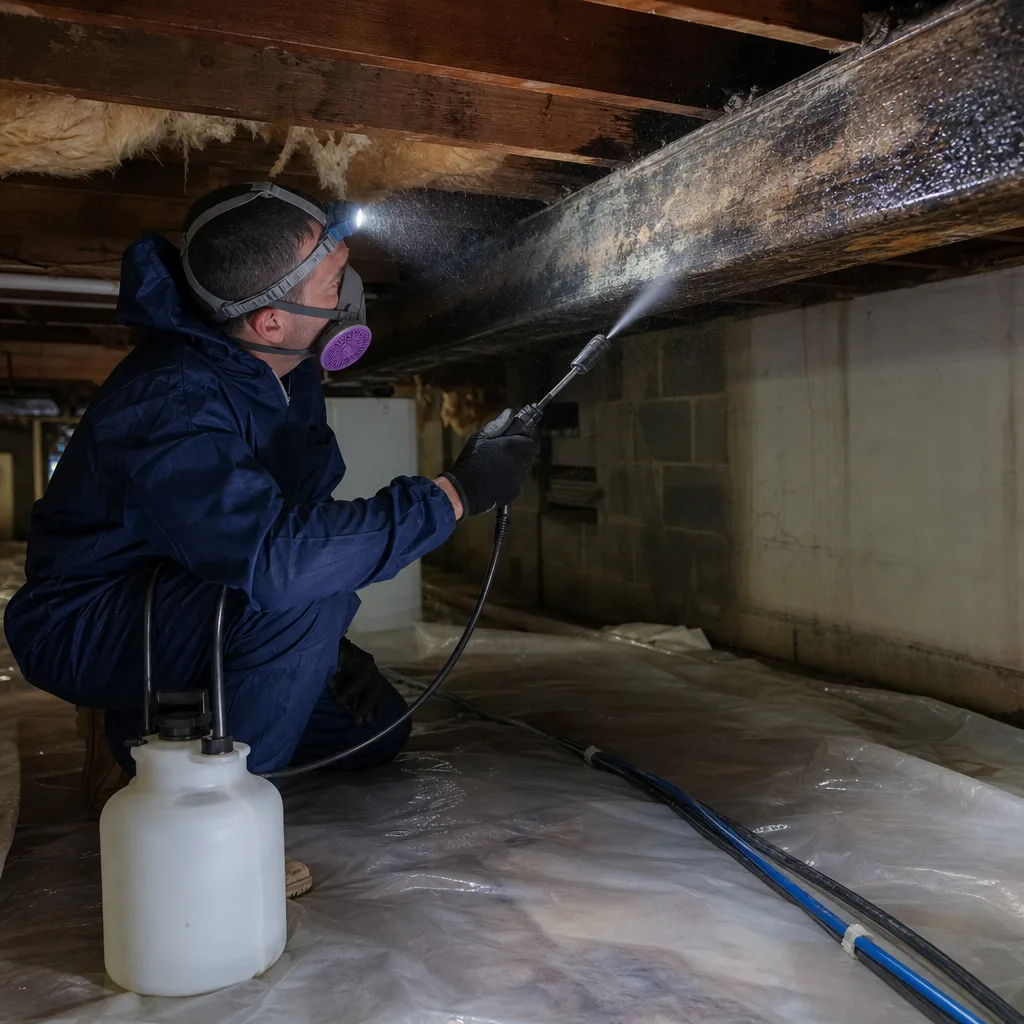
Black Mold Remediation
Black mold in a Great Neck home usually traces back to a long-term moisture source: a foundation crack, a slow plumbing leak inside a wall, or a crawlspace that’s been damp for years. We contain the area under negative air pressure, run HEPA air scrubbers throughout the job, and remove contaminated porous materials in sealed bags. Clearance testing is done by a third party, not by us, so you’re not taking our word that the air is safe.
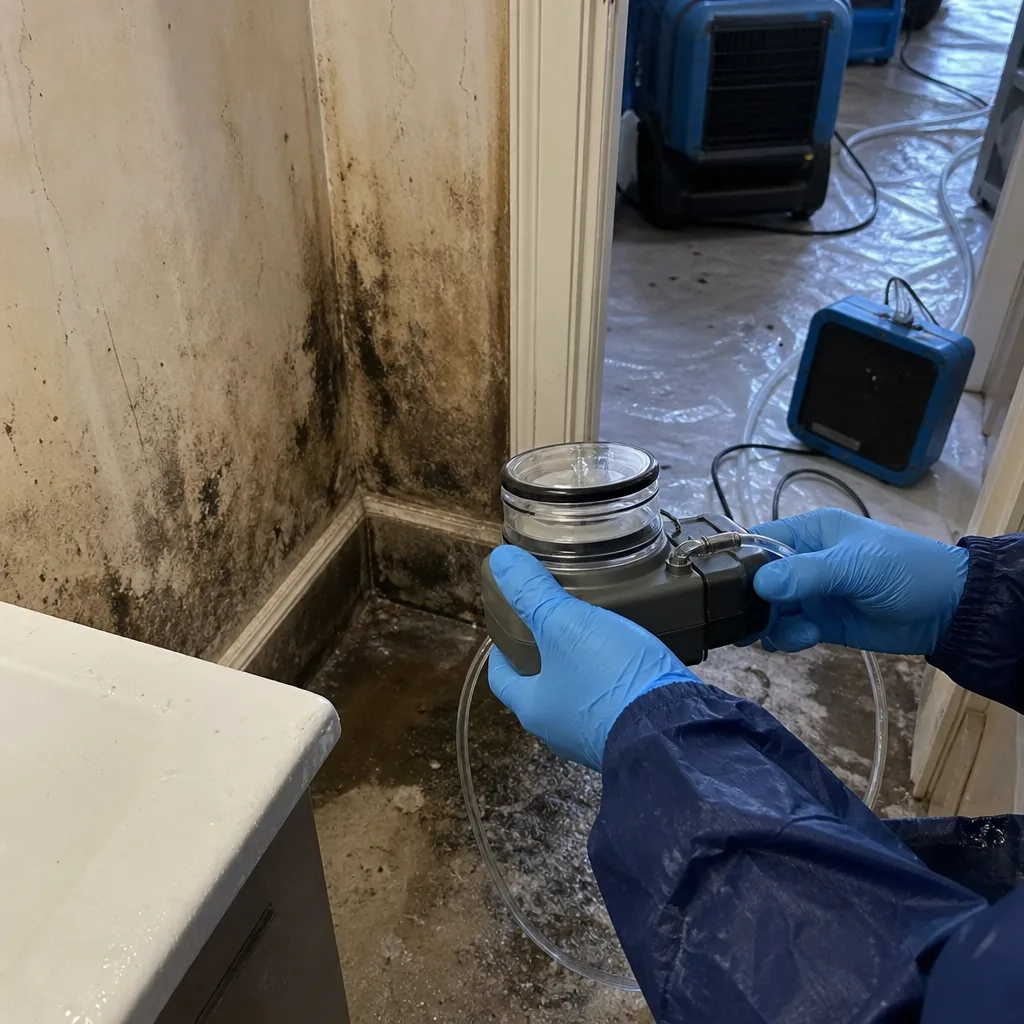
Air Quality Restoration
Once remediation is complete, the air inside the house has to be right. We run air scrubbers during the job and perform post-remediation air sampling. For Great Neck homes with original plaster walls and closed-up ventilation, we often recommend adding mechanical dehumidification in the basement to keep relative humidity below 55% year-round. That’s the number where mold stops growing.
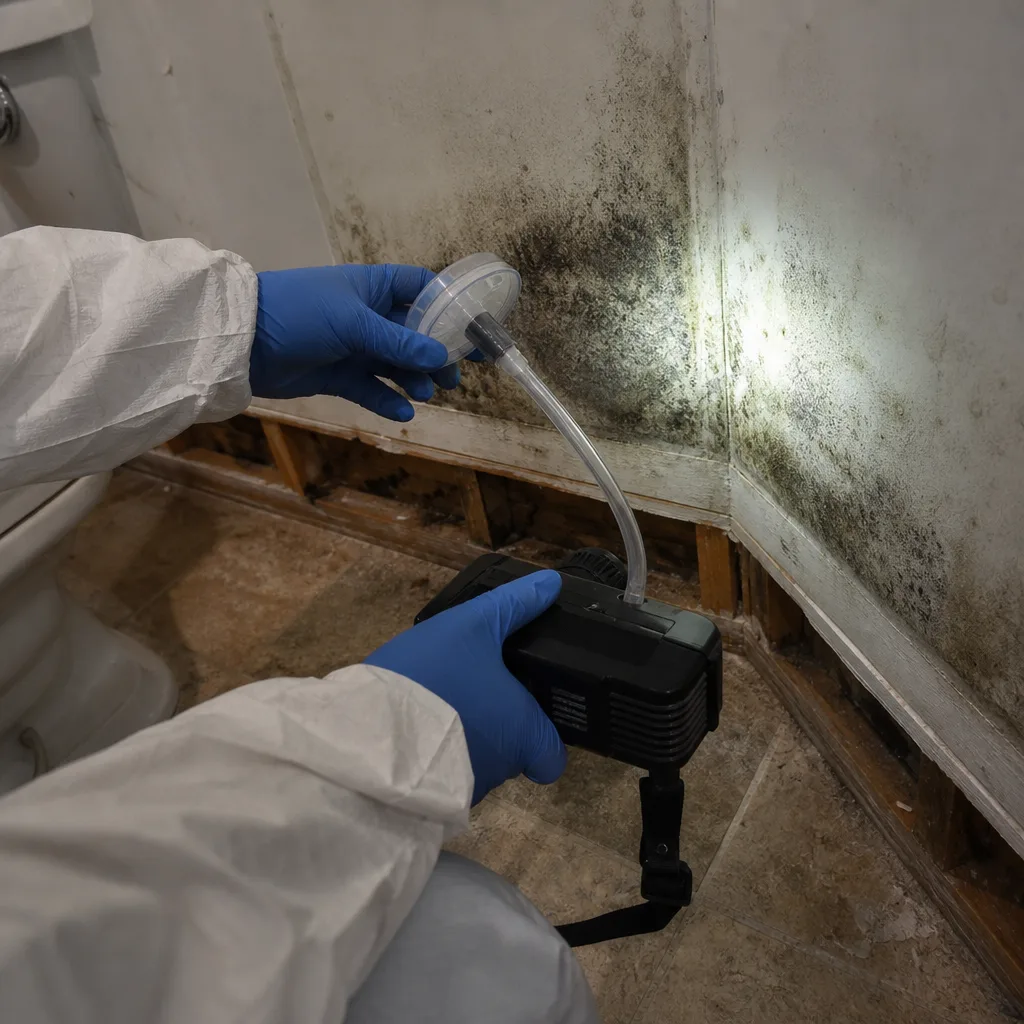
Crawl Space Treatment
Great Neck’s seasonally high water table means crawlspaces are the most overlooked mold source on the peninsula. We install vapor barriers, seal rim joists, and set up dehumidification sized for the square footage. If the foundation is original stone from the 1920s, we work around it carefully. You don’t need a new foundation; you need someone who knows how to dry an old one without disturbing it. Call (518) 873-4306 and we’ll walk the crawlspace with you free.
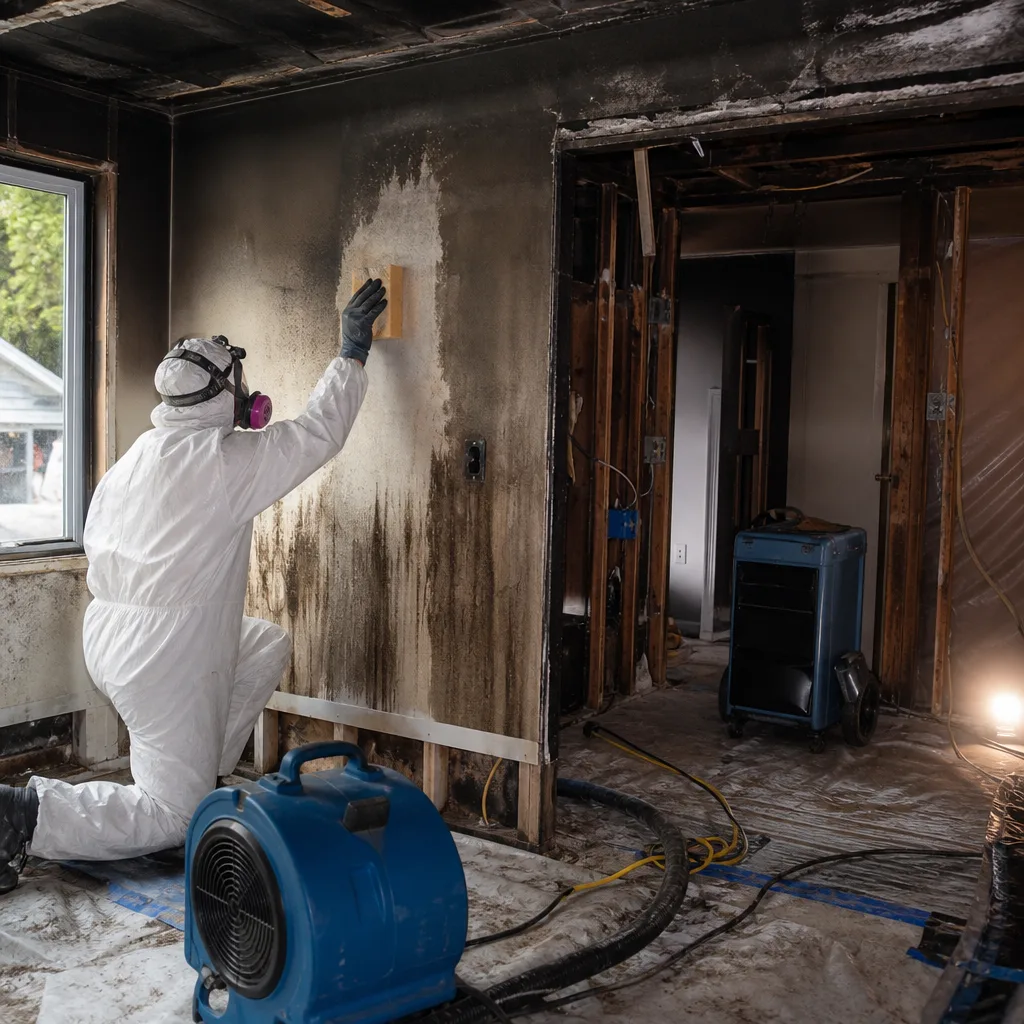
What happens when you call
- 1
A real person answersNo phone trees - you reach a local pro.
- 2
You get an upfront price rangeHonest numbers before anyone is dispatched.
- 3
A background-checked tech heads outLicensed & insured, dispatched right away.
- 4
You approve before work beginsNothing starts until you say go.
Mold Remediation Costs in Great Neck, NY
Here are honest numbers for Great Neck’s market. A simple, contained bathroom mold removal runs $1,800-$3,200. A finished basement with mold behind paneling and carpet typically lands at $4,500-$6,500. Full crawlspace encapsulation with vapor barrier and dehumidification starts around $5,000 and can reach $9,000 depending on square footage. What moves the price: whether containment is full-room or localized, how much original material must be removed versus dried in place, and whether the insurer requires full stud-out demolition of a below-grade space under post-Sandy FEMA guidelines. Most Great Neck mold jobs are covered at least partially by homeowner’s insurance when tied to a covered water event like a burst pipe or storm surge. A mold inspection alone runs $350-$650. The free visual inspection we offer gives you a firm scope before you spend anything, so you know the number going in. That’s a square deal. Senior and veteran discounts: 5% off, always. Mold Remediation in Great Neck projects get a written scope before work starts. No surprises on the bill.
We Also Serve Cities Near Great Neck
Our crews respond daily across the surrounding North Shore communities. We cover Little Neck and Oakland Gardens across the Queens border, Manhasset to the east, and Bayside to the south. Same 45-minute response commitment, same live dispatcher at (518) 873-4306.
Great Neck Mold Remediation Questions, Answered
Does mold remediation in a 1920s Great Neck home require removing all original plaster walls?
No, and any contractor who tells you otherwise is trying to widen the scope. Original plaster-and-lath walls can almost always be dried in place with the right sequencing: slow drying at lower heat, daily moisture readings, and patience. We save plaster walls in Great Neck’s pre-war homes on the majority of jobs. Only when the plaster has delaminated from the lath or is saturated beyond the dry standard do we remove a section, and we do it surgically, preserving the surrounding wall and any crown molding. Call (518) 873-4306 for a free inspection of your specific situation.
How do FEMA flood elevation lines from after Hurricane Sandy affect mold remediation in Great Neck?
FEMA’s revised flood maps put many Great Neck basements, particularly 1950s finished rec rooms, below the Base Flood Elevation. After a flood event, insurers often require full stud-out demolition of anything below that line, regardless of whether the materials could be dried. We mediate between adjuster requirements and homeowner expectations, documenting salvageable features like knotty-pine paneling or terrazzo floors before demolition so you have leverage for a partial pack-out or cash settlement to replicate them.
Is black mold more common in Great Neck’s pre-war homes than in newer construction?
Not necessarily more common, but it tends to hide longer. The plaster-and-lath walls in 1920s and 1930s homes absorb moisture slowly and release it slowly, which means mold can grow inside a wall cavity for months before it shows on the surface. Newer drywall fails faster and shows stains sooner. Older homes also have more below-grade finished spaces and stone foundations that wick groundwater, both of which create the kind of long-term damp conditions black mold prefers.
Can you remediate mold in a Great Neck crawlspace without disturbing the original stone foundation?
Yes. Our Crawl Space Treatment for older homes works around the existing foundation rather than through it. We seal rim joists, install vapor barrier over the dirt floor, and set dehumidification without bolting anything into the stone or pouring new footings. The goal is to dry the space and keep it dry, not to rebuild what a 1928 mason already built correctly.
Does your mold remediation process for Great Neck homes include a pack-out of antique furniture or period fixtures?
Yes, and it’s often the difference between a clean claim and a fight with the adjuster. We document pre-loss condition, photograph every piece, and work with a professional pack-out company when needed. In Kings Point and other waterfront sections, we’ve moved entire dining rooms of 1920s mahogany before demolition began. Your furniture gets inventoried, stored, and returned, and the documentation goes straight to your insurer.
How fast can you get to a Great Neck address for a mold emergency?
Forty-five minutes or less for addresses on the peninsula, day or night. We keep crews staged near Northern Boulevard, and our dispatch is live around the clock. Call (518) 873-4306 and a person picks up. Not a service.
Will my homeowner’s insurance cover mold remediation in Great Neck?
It depends on the cause. Mold tied to a covered water event like a burst pipe, storm surge, or sudden appliance failure is typically covered, at least in part. Mold that developed gradually over years from seepage or high humidity is usually not. What changes the outcome is documentation: photos from day one, moisture logs, and a line-item scope that ties the mold to the covered event. We handle that paper trail for you and bill your carrier directly.
What should I do in the first 30 minutes after I find mold in my Great Neck home?
Turn off the HVAC fan if it’s running, close the door to the affected room, and don’t disturb the mold by touching or wiping it. Disturbing mold releases spores into the air, and your forced-air system will carry them through the house. Then call (518) 873-4306. We’ll tell you over the phone what to do next and have a crew on the way if it’s spreading.
Serving Great Neck, NY - Our Local Coverage Area
We’re based in the Great Neck area and know this community well. Use the map below to see our service coverage - if you’re nearby, we can almost certainly help.
Floodline Restoration Co. in Great Neck
We’ve done full-cycle restoration work on Great Neck’s Gold Coast homes for years, and Floodline Restoration Co., led by Curt Bowman, handles every phase from first extraction to finished rebuild. The company was founded in 2010 around a dispatch board and a simple rule: answer the phone with a person, show up when we say, and stand behind the work with the 90-Day Done Right Promise in writing. On a peninsula where every other house needs a different approach depending on its foundation, its flood zone, and its millwork, we’ve never found a reason to cut corners. The line the water left is where we start. Done right, and backed in writing.
Call (518) 873-4306 for a free visual inspection and a written estimate. Live answer, 24 hours a day, 7 days a week. Senior and veteran discounts available. $50 off any repair over $250, and the $89 seasonal tune-up applies to dehumidification service on Great Neck crawlspaces.
Written by Curt Bowman, Owner at Floodline Restoration Co., providing mold remediation and full-cycle restoration across New York.