

Free visual inspection and a written scope of work before any mitigation begins - photos, moisture readings, and drying logs go in your claim file
The scope we write is the scope we bill. Anything new gets shown to you, in writing, before we touch it.
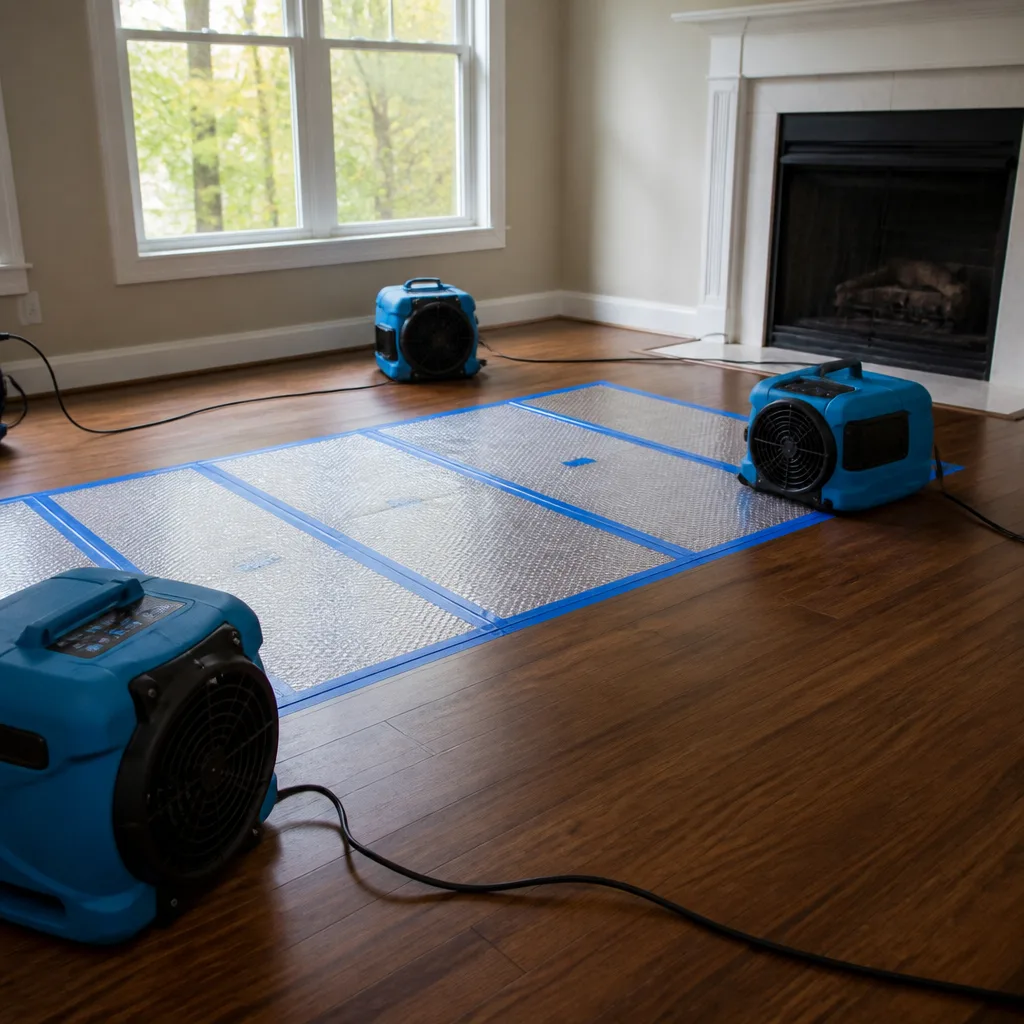


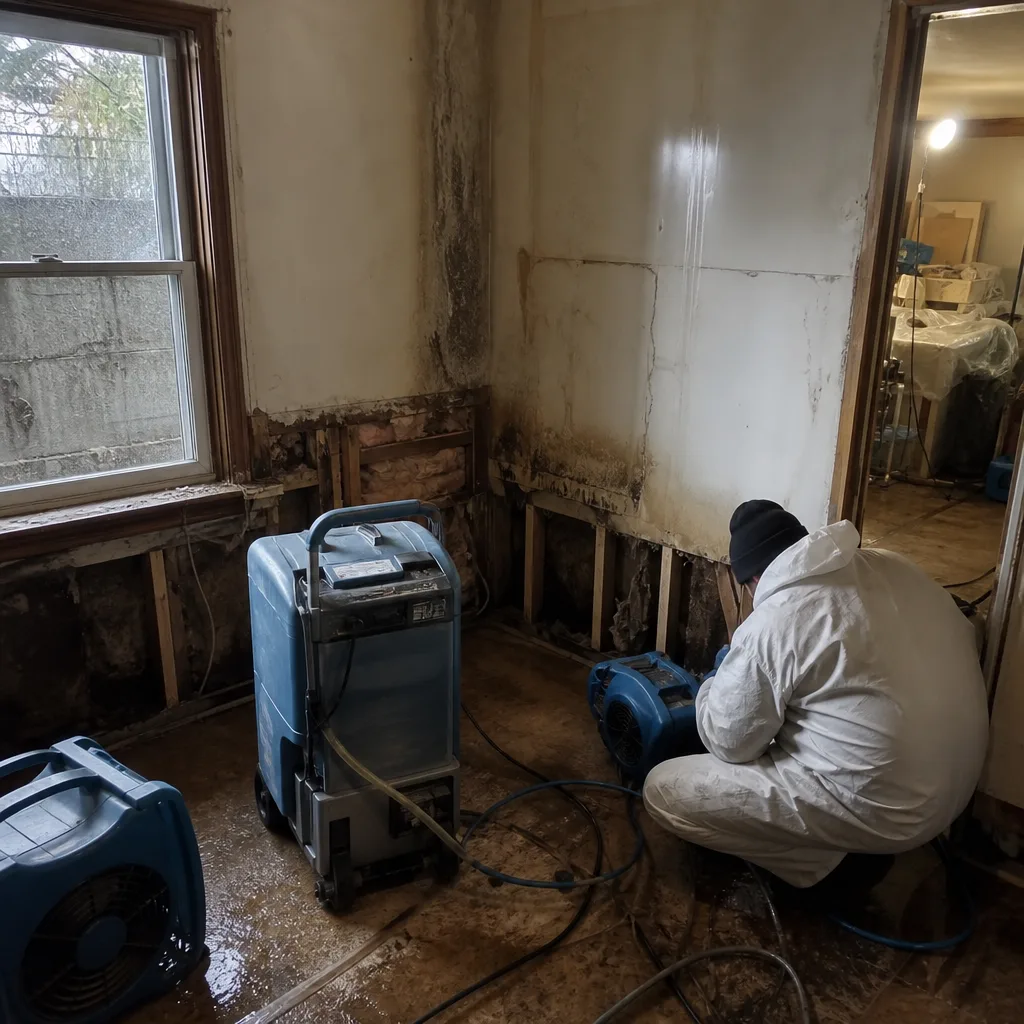 Before
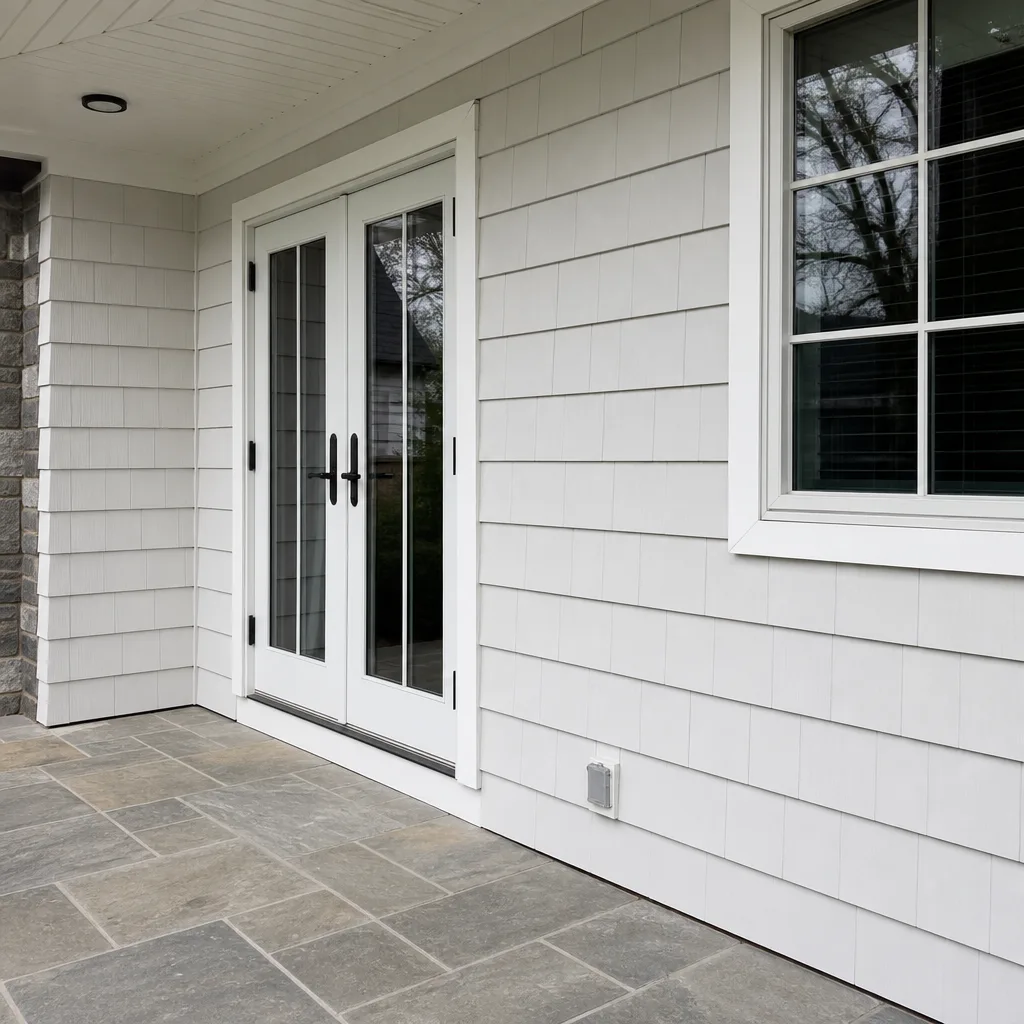 After
After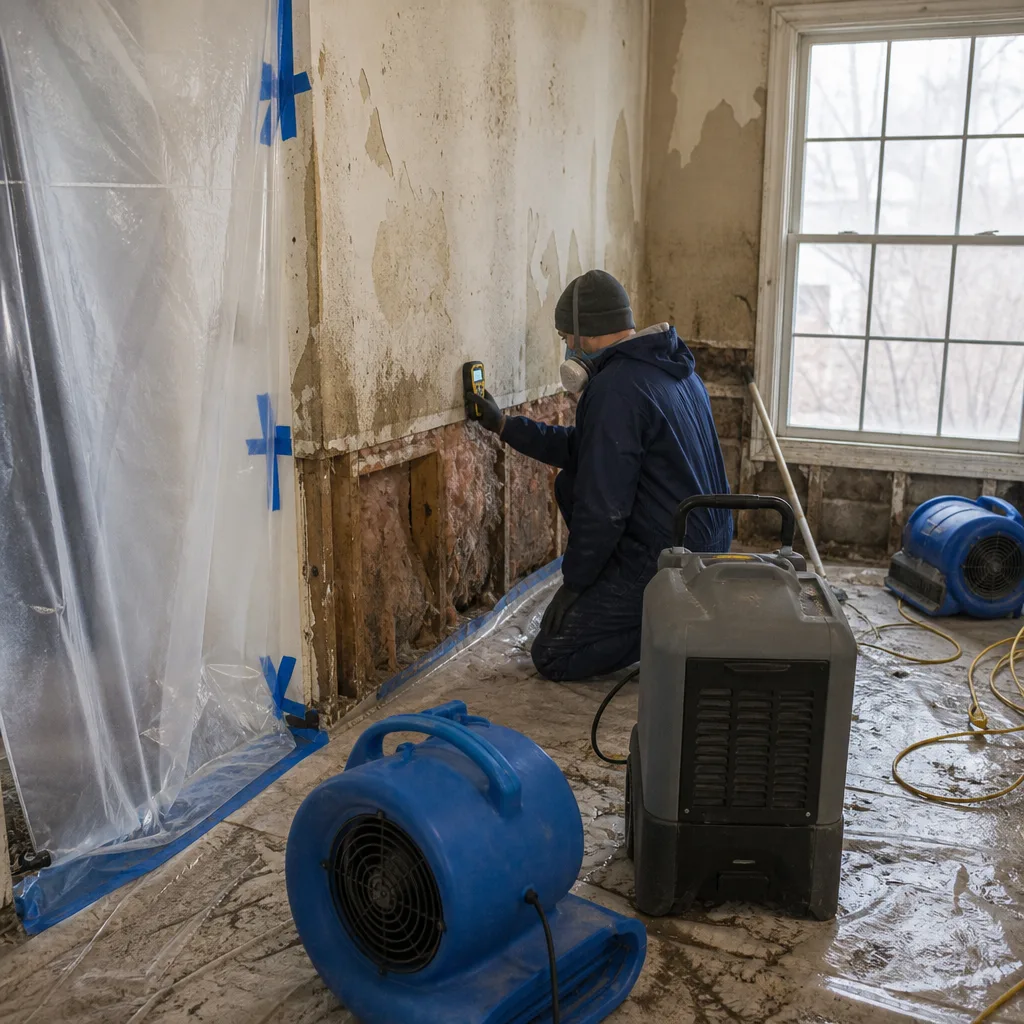 Before
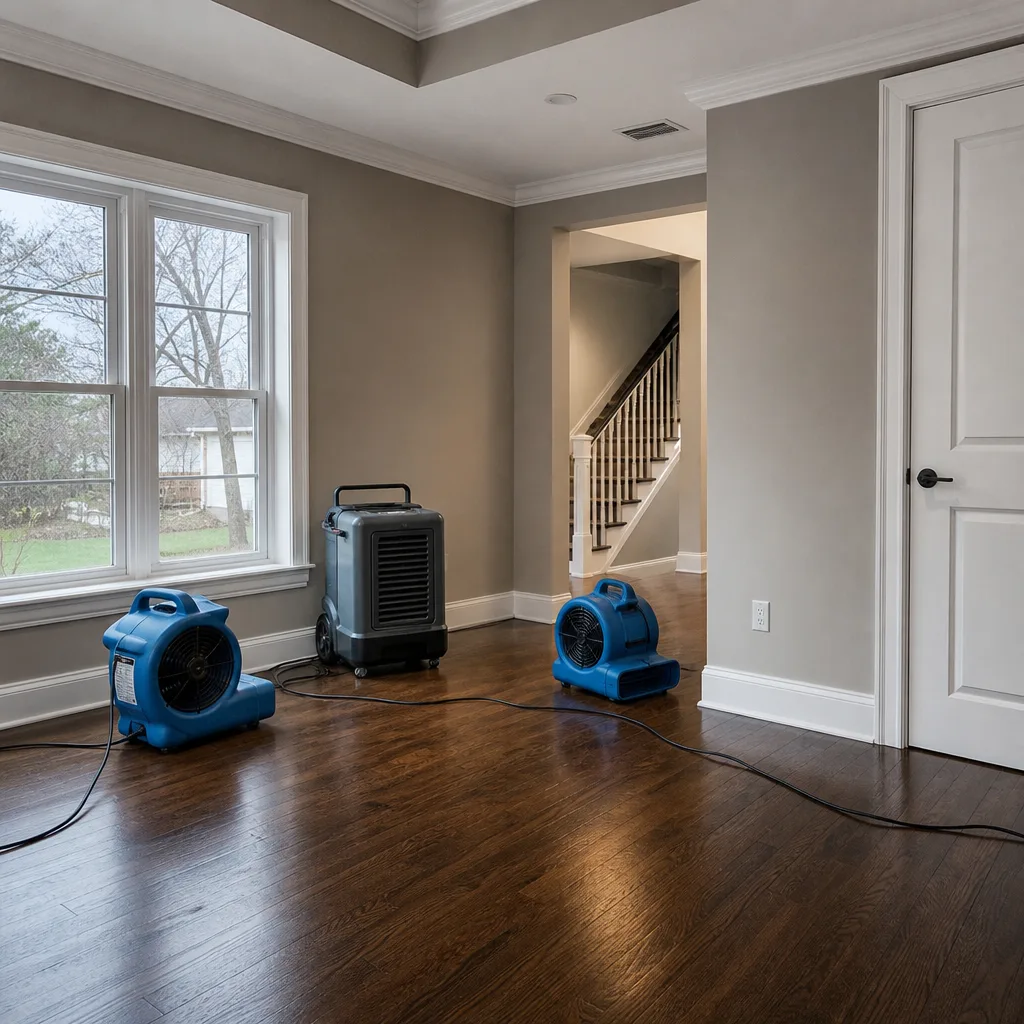 After
After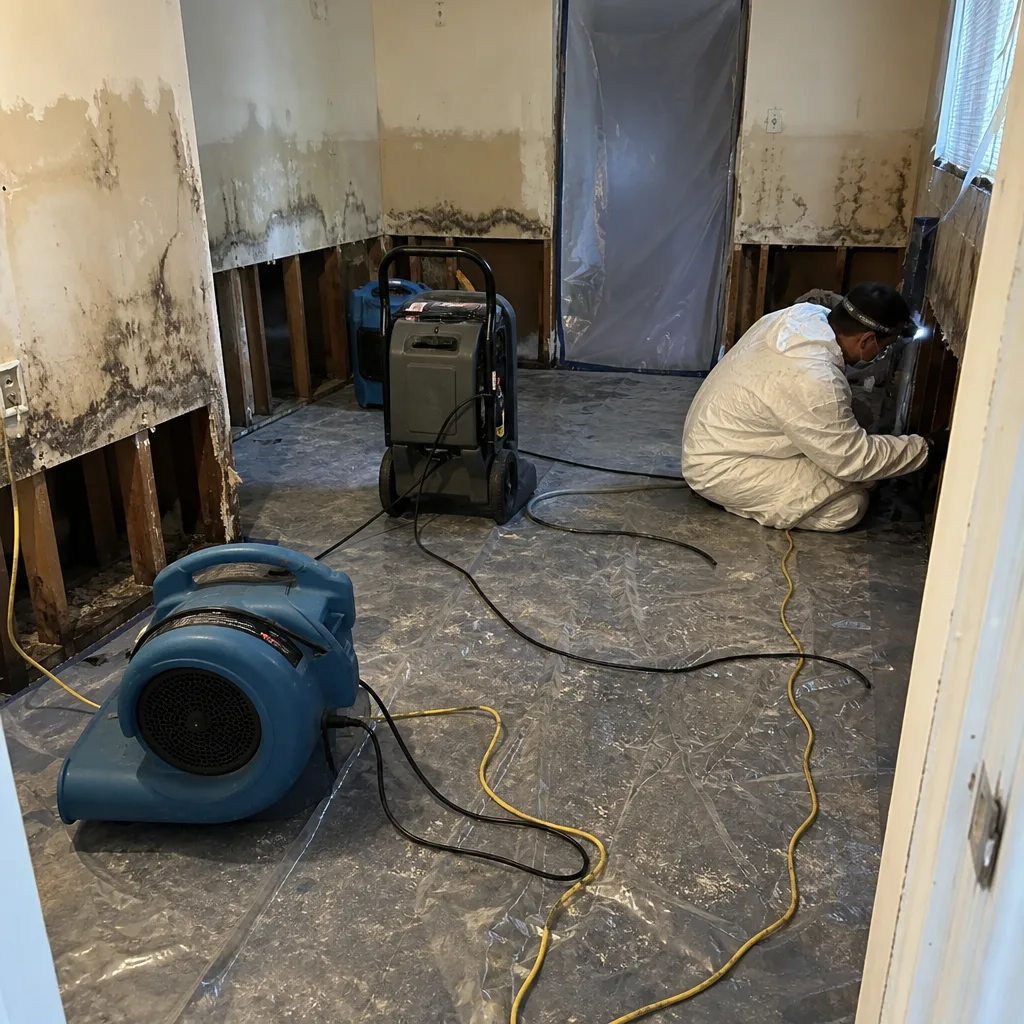 Before
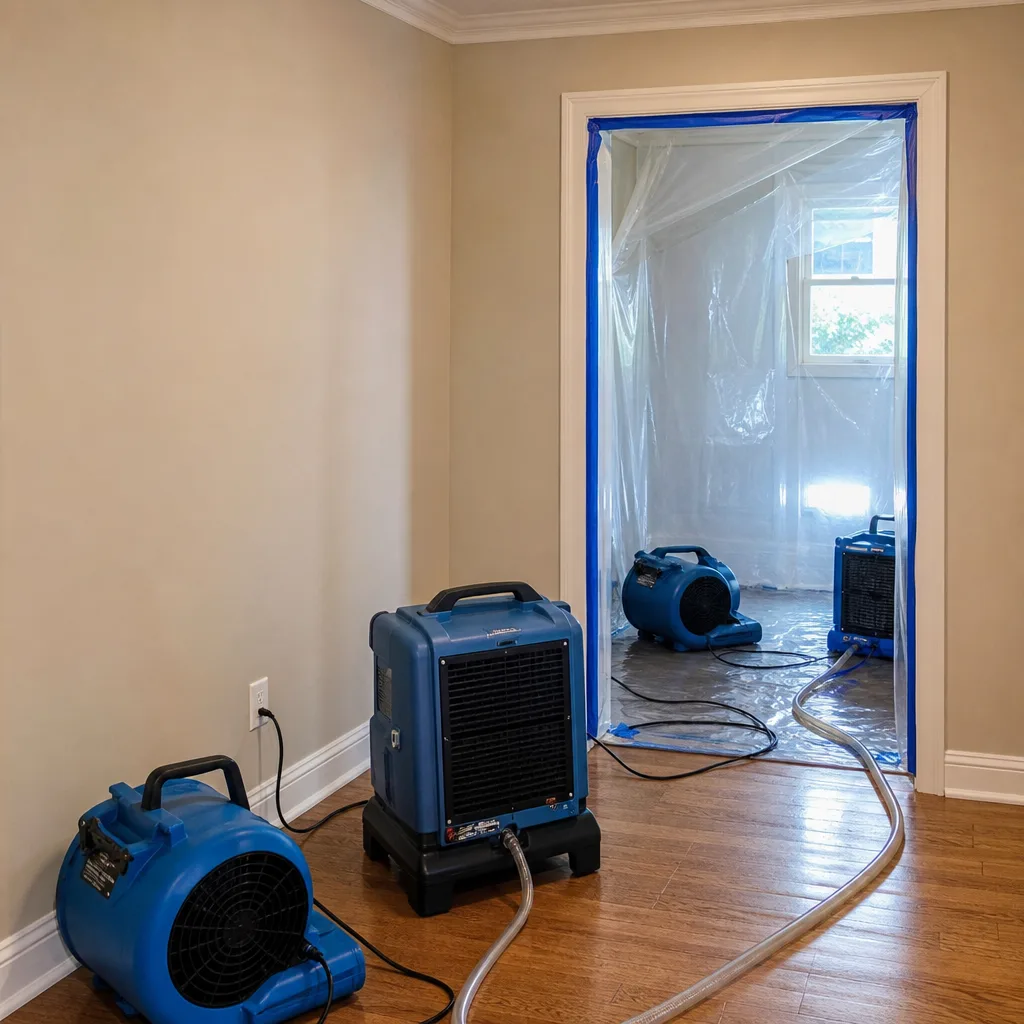 After
After24/7 Emergency Water Damage Restoration in Great Neck
Water damage restoration in Great Neck typically costs between $2,800 and $8,500 for a standard basement flood, with structural drying alone running $1,200 to $3,400 depending on square footage and how long water sat before extraction. If a supply line bursts in a second-floor bath of a 1920s Tudor and water runs down through plaster-and-lath ceilings for even an hour, you’re looking at the higher end of that range plus custom plaster repair. Our live dispatchers answer at (518) 873-4306 around the clock, every day of the year. A certified crew reaches most Great Neck addresses within 45 minutes, and extraction starts on that first visit, because on this peninsula, the first hour determines whether original hardwood floors get saved or torn out.
We’re Water Damage Restoration specialists, and we treat Great Neck homes differently than we treat newer Long Island construction. That’s the job.
Understanding Water Damage Restoration Severity in Great Neck Properties
Water falls into three categories that drive every decision we make on a Great Neck job. Category 1 is clean water, typically from a burst supply line or an overflowing tub. Category 2 carries significant contamination, the kind you get when a dishwasher discharges across a kitchen floor or a nor’easter pushes surge into a finished basement. Category 3 is grossly contaminated, sewage or standing floodwater from Manhasset Bay or Little Neck Bay, and it demands full containment, antimicrobial treatment, and often stud-out demolition before drying can begin.
In Great Neck specifically, severity has a second layer. Most of the housing stock dates to the 1920s through 1940s, with plaster-and-lath walls, old-growth oak and maple floors, and millwork that was cut and fitted by hand. Those materials absorb water slowly, which sounds like good news until you realize they also release it slowly, and if a contractor rushes the drying phase with too many air movers and too much heat, the plaster cracks at the corners, the floorboards cup, and the trim delaminates. Moisture mapping with thermal imaging and daily hygrometer readings are not optional here. They are the difference between a restoration and a gut job.
Need Emergency Water Damage Restoration in Great Neck Now?
Crews minutes away, answering live 24 hours a day. The sooner we start, the less it costs.
Why Great Neck Property Owners Choose Floodline Restoration Co.
- 45-minute response commitment. We dispatch from our New York City office to Great Neck immediately, and a uniformed, background-checked crew is on-site within the hour for most calls. The clock matters on water.
- A real person answers, 24/7. Call (518) 873-4306 at two in the morning and a live dispatcher picks up. Not a recording. Not a callback service. You talk to someone who can send help right then.
- IICRC-certified crews. Our technicians hold WRT and ASD certifications and train to RIA and IFA standards. They know what a 1930s plaster wall can and cannot survive.
- Free visual inspection. Before any money changes hands, we walk the damage, explain what we see, and give you a written scope with line-item pricing. No obligation.
- Direct insurance billing. We document from the first hour, we talk to your adjuster directly, and we bill your carrier. You are not the messenger.
- One team, start to finish. From extraction to drying to reconstruction, the same certified crew runs the whole job. No handoff, no inherited subcontractor who never saw the flood.
This is the difference between a call center and a restoration company. Curt Bowman founded Floodline Restoration Co. in 2010 around a dispatch board, not a sales desk, and the company has never drifted from that. Every job we finish carries the 90-Day Done Right Promise in writing. If it is not done right, we make it right. No paperwork battles, no arguing.
Our Water Damage Restoration Process
Inspection & Assessment
We arrive, we walk the entire affected area, and we map moisture with thermal imaging and penetrating meters. In a pre-war Great Neck home, this means checking not just the obvious flood line but the cavities behind plaster-and-lath and under baseboards where water hides for weeks.
Extraction & Stabilization
Our crews run truck-mounted and portable extraction units to pull standing water fast. We remove saturated carpet, pad, and any drywall that has wicked past the point of no return, then we set containment if needed.
Drying & Dehumidification
This is where Great Neck patience pays off. We place Dri-Eaz air movers and Phoenix dehumidifiers in a controlled pattern, and we run daily moisture readings until the structure hits dry standard. We log every reading. You get the log. So does your adjuster.
Cleaning & Sanitization
Category 2 and 3 water leave more than dampness. We clean and apply antimicrobial treatment to all affected surfaces, including the framing behind walls where mold starts before you ever see it.
Preservation-Grade Treatment
For original floors and period millwork, we use Injectidry systems and controlled drying chambers rather than rip-out. The goal on a 1930s Colonial is salvage first, demolish only what safety and code require.
Repairs & Restoration
When dry standard is met, we rebuild. Plaster repair, flooring, trim, paint, and any structural work, done by the same crew that has been on the job since day one. You never start over with a stranger.
Working With Your Insurance Company
Great Neck homes carry real replacement value, and insurers know it. They also know that pre-war construction costs more to restore properly than a 1990s drywall box. Our job is to make sure your carrier sees exactly what we see, from the first hour. We photograph every damaged room, we document moisture readings daily, and we write scopes of work that match industry restoration standards your adjuster recognizes. We talk to them directly. When your adjuster has questions about why a plaster wall needs controlled drying instead of tear-out, we answer with data, not assertions. You get a square deal: no surprises on the bill, and no phone tag between you and the carrier.
What We Provide Your Insurer
- Thorough documentation of the loss
- Photos of all damage, room by room
- Moisture readings and drying logs
- A detailed, line-item scope of work
- Direct coordination with your carrier
Built for Great Neck’s Loss Calendar
Great Neck does not have one water damage season. It has four. January and February bring deep freezes that burst supply lines in unheated crawlspaces and exterior walls of 1920s Colonials, and when a pipe lets go in an upstairs bath, water finds the path of least resistance down through original plaster ceilings. March and April bring snowmelt and spring rain, and with Great Neck’s seasonally high water table, basement seepage through cove joints and floor cracks is a near-annual event for mid-block homes above the water table but below the saturation line. July and August thunderstorms drop inches of rain in an hour, overwhelming perimeter drains and sending water over foundation sills. And September through November is nor’easter season, when surge and wind-driven rain push into low-lying streets near Manhasset Bay and Little Neck Bay. We gear our dispatch and our equipment stock to that calendar, because we have been answering these calls for years, and the patterns do not change.
Need Emergency Water Damage Restoration in Great Neck Now?
Crews minutes away, answering live 24 hours a day. The sooner we start, the less it costs.
Water Damage Restoration Across Great Neck’s Neighborhoods
Response routes matter. From our New York City dispatch office, we send crews into Great Neck through the major corridors, and where a home sits changes what we expect to find. In the waterfront streets off Beach Road near Manhasset Bay, we see storm surge and Category 3 floodwater, and we arrive knowing containment and possible stud-out are on the table. In the Village of Great Neck proper, the older pre-war stock near Middle Neck Road includes some of the peninsula’s finest original millwork, and we slow the drying process accordingly. Over toward the Little Neck Bay side, homes on streets running down to the water face similar surge exposure but often have 1950s finished basements with knotty-pine paneling and terrazzo floors, which changes the conversation about demolition. And up on the higher ground south of Northern Boulevard, we see more burst pipes and upper-floor leaks than storm surge, but the same plaster-and-lath walls mean the same preservation-first protocol. Every neighborhood has its own loss pattern, and our crews know them because we have worked them all.
Specialized Water Damage Restoration Services We Offer in Great Neck
Emergency Water Extraction
Standing water in a Great Neck basement is not patient and neither are we. Our extraction teams pull water within the first hour of arrival, which is the single biggest factor in whether original oak floors survive. Call (518) 873-4306 the moment you see water.
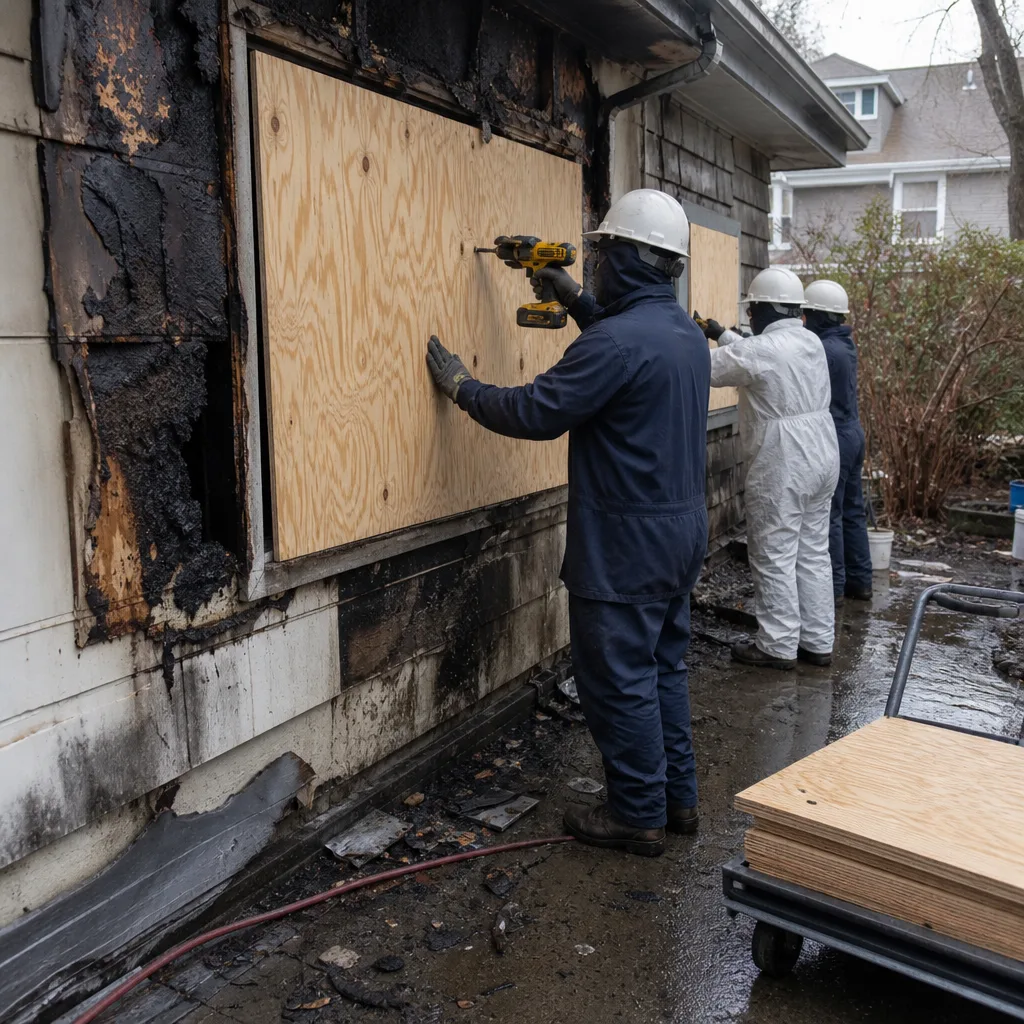
Structural Drying & Dehumidification
This is the service that separates restoration companies in Great Neck. We dry plaster-and-lath walls and old-growth floors on a schedule the materials dictate, not the invoice. Daily moisture readings, logged and shared, until dry standard is met. The 90-Day Done Right Promise stands behind every drying job.
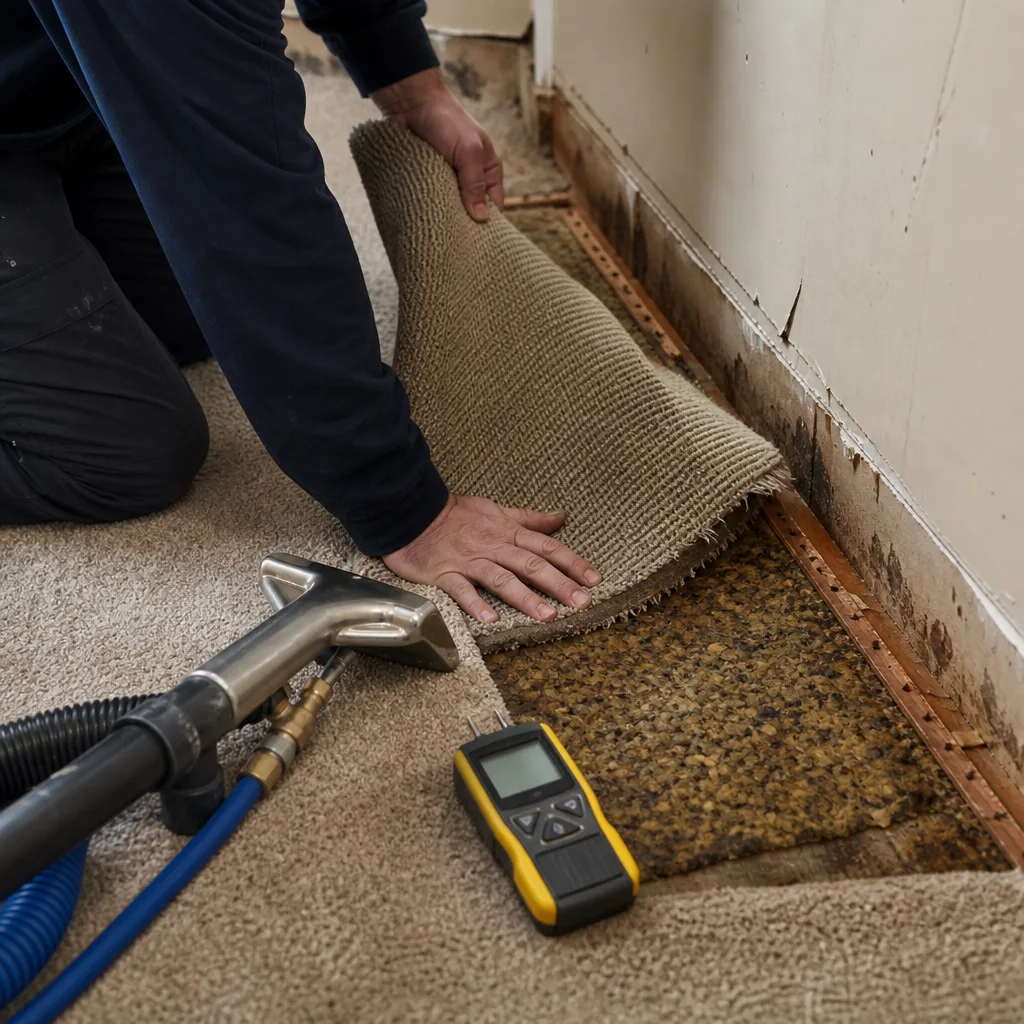
Flood Cleanup
Nor’easter surge and tidal flooding from Manhasset Bay and Little Neck Bay bring Category 3 water into finished basements and first floors. We handle containment, removal of saturated materials, antimicrobial treatment, and the rebuild that follows. We bill your carrier directly.
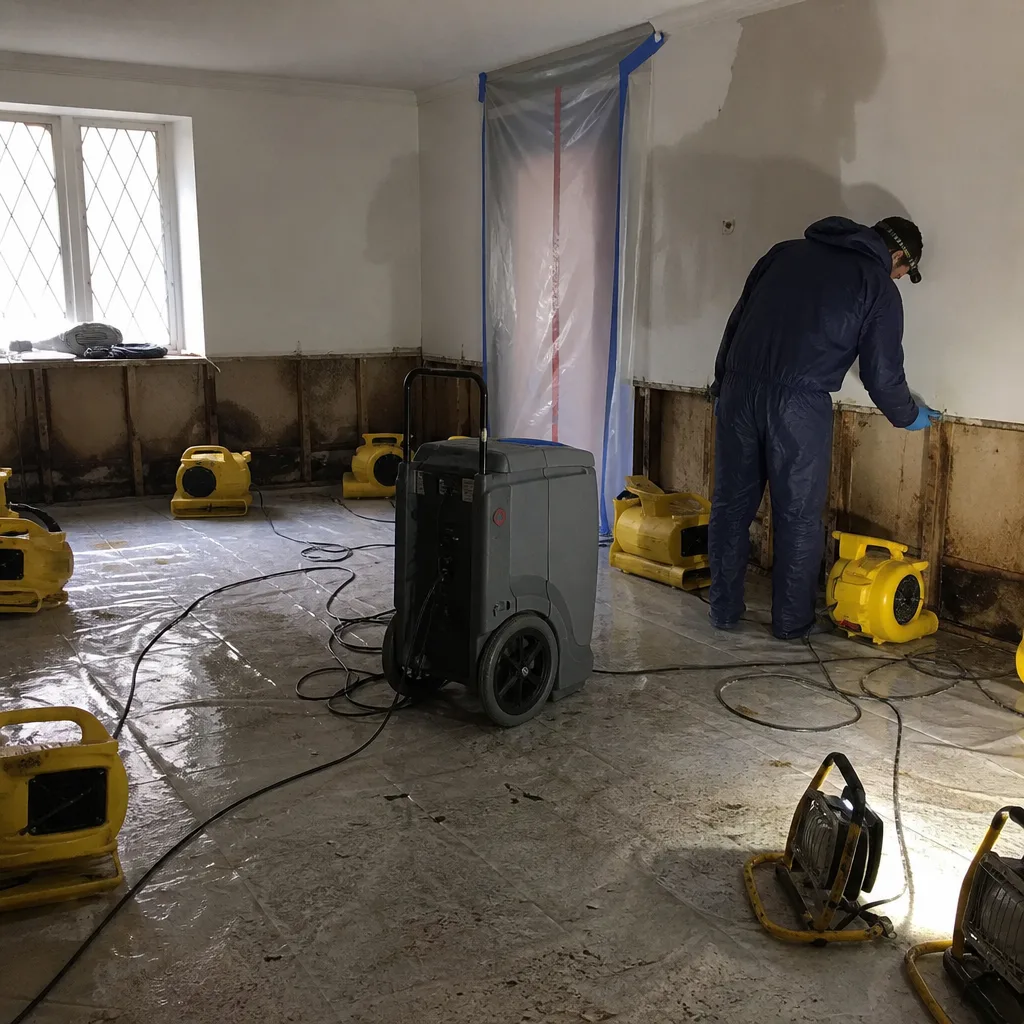
Burst Pipe Restoration
A frozen supply line in a 1920s Colonial dumps gallons into walls and ceilings before you even know it. We find the source, stop the flow, extract, dry, and repair the plaster and trim. One crew, all the way through.
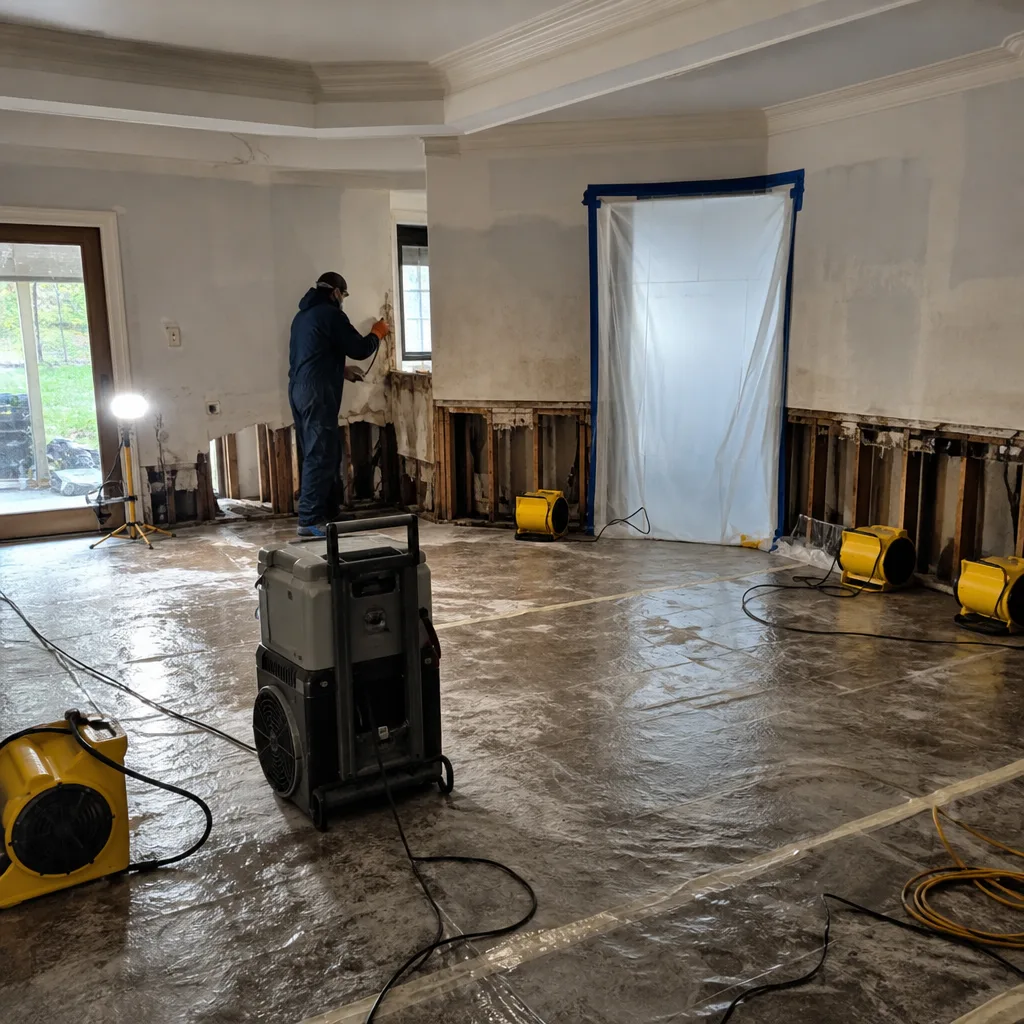
Basement Water Removal
Great Neck’s high water table makes basement seepage a recurring problem. We extract, dry, and then we tell you straight whether you need a perimeter drain, a sump upgrade, or just better grading. We do the water part. We also know who does the drainage part if it is not us.
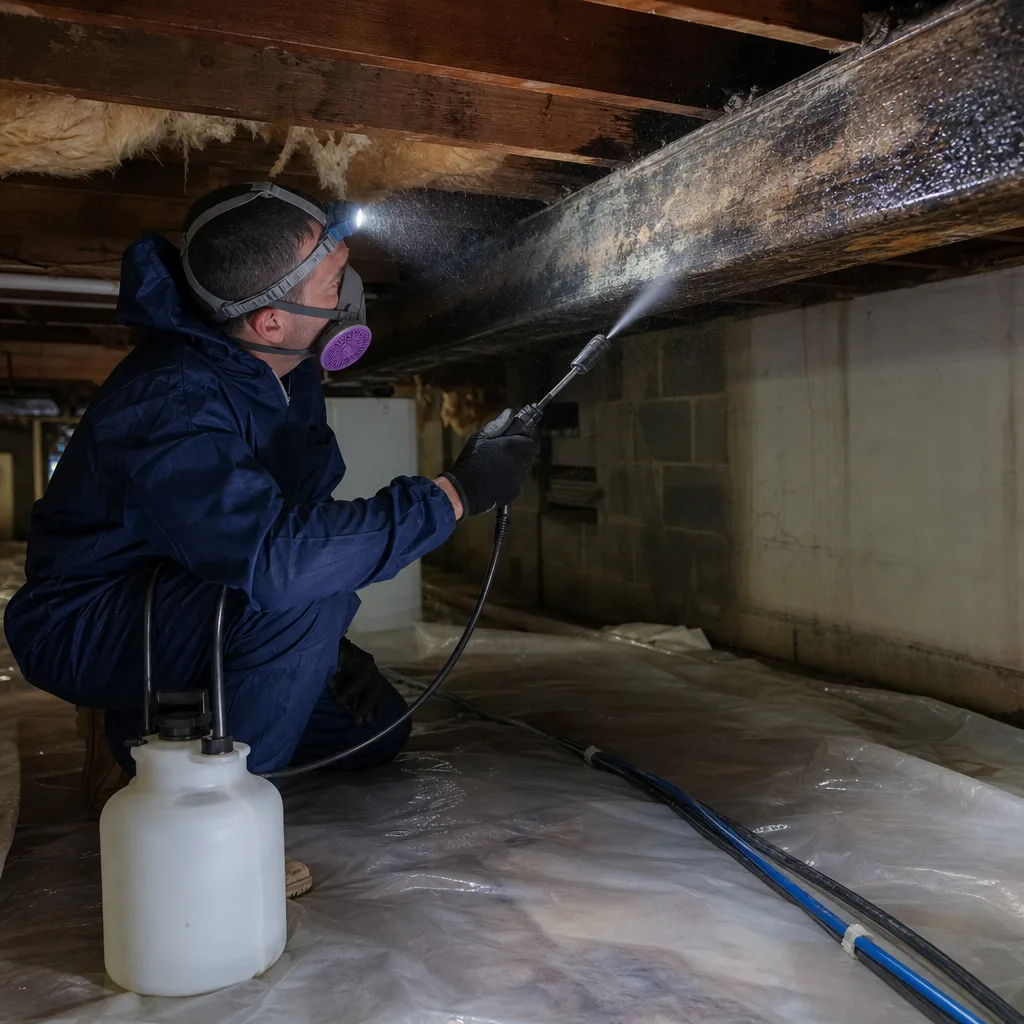
What happens when you call
- 1
A real person answersNo phone trees - you reach a local pro.
- 2
You get an upfront price rangeHonest numbers before anyone is dispatched.
- 3
A background-checked tech heads outLicensed & insured, dispatched right away.
- 4
You approve before work beginsNothing starts until you say go.
Water Damage Restoration Costs in Great Neck, NY
Great Neck pricing runs higher than inland Nassau County because the housing stock demands more labor and more patience. A standard basement water extraction with drying in a 1,200-square-foot finished basement typically runs $2,800 to $5,200. Structural drying alone, without tear-out, ranges from $1,200 to $3,400 depending on how many rooms are affected and how long water sat. A Category 3 flood that requires stud-out demolition, containment, drying, and rebuild of a 1950s rec room can run $12,000 to $30,000 or more, and that is where your insurance coverage does the heavy lifting. What moves the price: water category, how long it sat, whether original plaster or millwork needs preservation-grade treatment, and how much of the finished space must come out to meet code. The free visual inspection is the path to a firm number. We walk the job, we write the scope, and you know the price before work starts. Senior and veteran discounts of five percent apply always, and any repair over $250 takes $50 off.
We Also Serve Cities Near Great Neck
Our crews serve Great Neck and the surrounding North Shore communities, including Little Neck, Manhasset, Oakland Gardens, and Bayside. If you have water damage and you are not sure whether you are in our service area, call (518) 873-4306 and ask. The dispatcher will tell you straight.
Serving Great Neck, NY - Our Local Coverage Area
We’re based in the Great Neck area and know this community well. Use the map below to see our service coverage - if you’re nearby, we can almost certainly help.
Great Neck Water Damage Restoration Questions, Answered
How does Great Neck’s coastal flood exposure change how long structural drying takes in a pre-war home?
Drying a pre-war Great Neck home typically takes 4 to 7 days, compared to 2 to 3 days for a newer drywall-and-plywood house, because plaster-and-lath and old-growth hardwood release moisture far more slowly. Rushing that process with excess heat or airflow causes hairline plaster cracks and cupped floors, so we run daily moisture readings and adjust equipment placement until the structure hits dry standard. Call (518) 873-4306 for a drying assessment specific to your home.
Can mold grow inside our 1930s plaster walls if we only had a few inches of floodwater in the basement?
Yes, and it often does in Great Neck because the seasonally high water table keeps the soil and foundation damp long after the visible water is gone, feeding mold behind baseboards and inside wall cavities. Plaster itself resists mold better than drywall, but the wood lath, framing, and any finished basement paneling do not. A moisture map and air samples are the only way to confirm whether mold is present. Call (518) 873-4306 for an inspection.
Will our insurance adjuster require us to tear out our 1950s knotty-pine rec room after a flood, even if the paneling looks fine?
Often yes, because FEMA flood elevation maps revised after Hurricane Sandy put many Great Neck finished basements in zones where full stud-out is the standard post-flood requirement, regardless of how the paneling looks. We can sometimes salvage knotty-pine and terrazzo pieces for reuse, and we coordinate directly with your adjuster to document what could be saved versus what code required removed. Estimates are free at (518) 873-4306.
What category of water typically affects Little Neck Bay homes during a nor’easter, and why does that matter for what gets removed?
Little Neck Bay surge during a nor’easter is Category 3 water, heavily contaminated with salt, sediment, and whatever the storm pushed in from the bay and storm drains. Category 3 requires removal of saturated porous materials, antimicrobial treatment, and often stud-out of finished walls because the contamination penetrates beyond what surface cleaning can address. We handle that containment and treatment in-house. Call (518) 873-4306.
Why do Great Neck restoration contractors often need pack-out services after a burst pipe in an upstairs bath of a 1920s Tudor?
When a supply line bursts upstairs in a 1920s Tudor, water runs down through the original plaster ceiling and into the floor framing, and the contents of the rooms below, rugs, furniture, stored personal items, often need to be moved out before drying can reach the structure. Pack-out protects your belongings from further damage and gives our crews full access for drying and plaster repair. We coordinate pack-out as part of the restoration scope, and we bill it through your carrier.
How fast can someone actually get to a water emergency in Great Neck?
Our commitment is 45 minutes to most Great Neck addresses, and our live dispatchers answer at (518) 873-4306 24 hours a day, seven days a week. Extraction typically starts on that first visit, because the difference between saving and replacing original floors is measured in hours, not days.
Will insurance cover water damage restoration in Great Neck, and who deals with my adjuster?
Most standard homeowners policies cover sudden and accidental water damage, like a burst pipe or storm-driven flooding if you carry flood coverage, but coverage differs policy by policy. We document all damage from the first hour, we talk to your adjuster directly, and we bill your carrier, so you are not the one carrying paperwork between two parties. Call (518) 873-4306 and we will walk your policy with you.
What should I do in the first 30 minutes after finding water in my Great Neck home?
Shut off the water at the main if the source is a pipe, kill power to the affected area if water is near outlets or appliances, and call (518) 873-4306. Move small valuables up and out if it is safe to walk, but do not enter standing water in a finished basement if the panel is submerged. Our dispatcher will talk you through the next thirty minutes while a crew is on the way.
We have been doing this work on the Great Neck peninsula long enough to know that a flood in a 1930s Colonial is not the same job as a flood in a 1990s split-level. The water does not know the difference. The house does. And so do we.
Written by Curt Bowman, Owner at Floodline Restoration Co., serving Great Neck, NY.