

Free visual inspection and a written scope of work before any mitigation begins - photos, moisture readings, and drying logs go in your claim file
The scope we write is the scope we bill. Anything new gets shown to you, in writing, before we touch it.
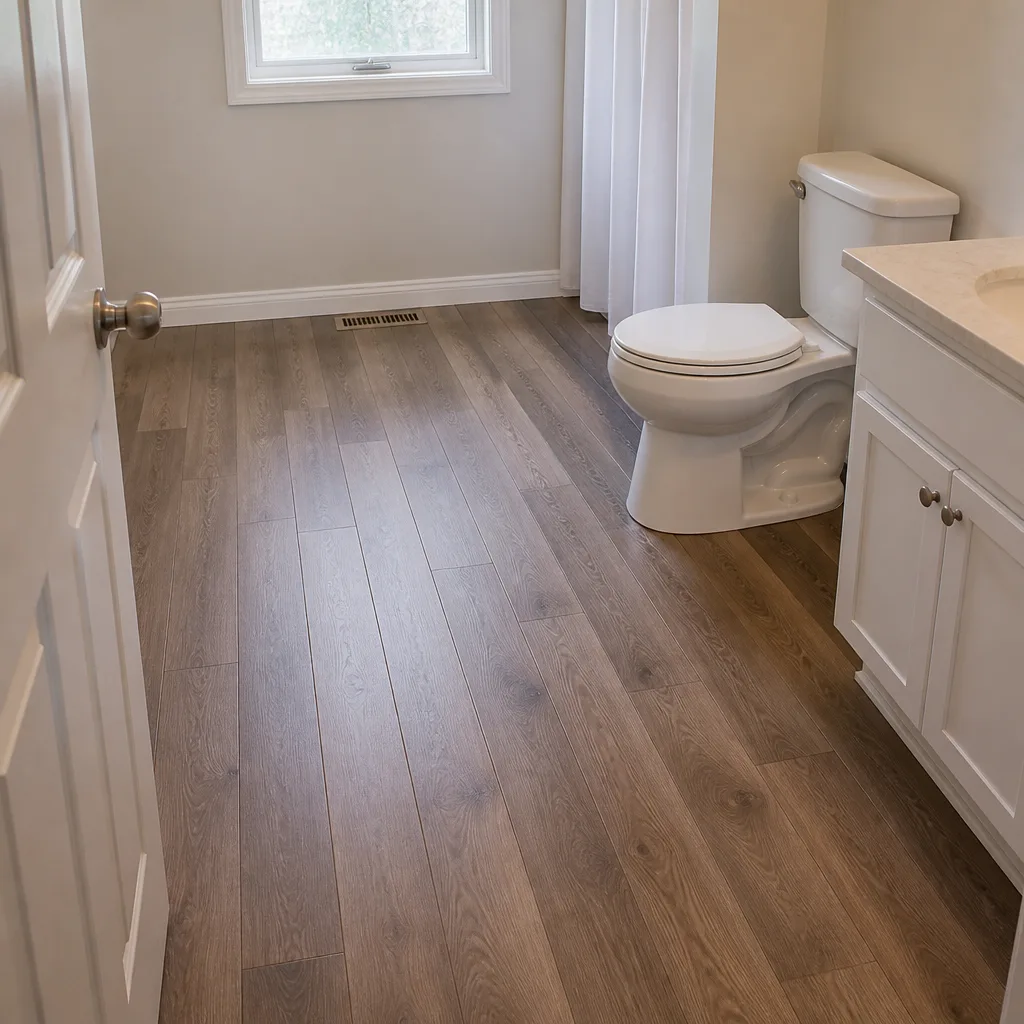
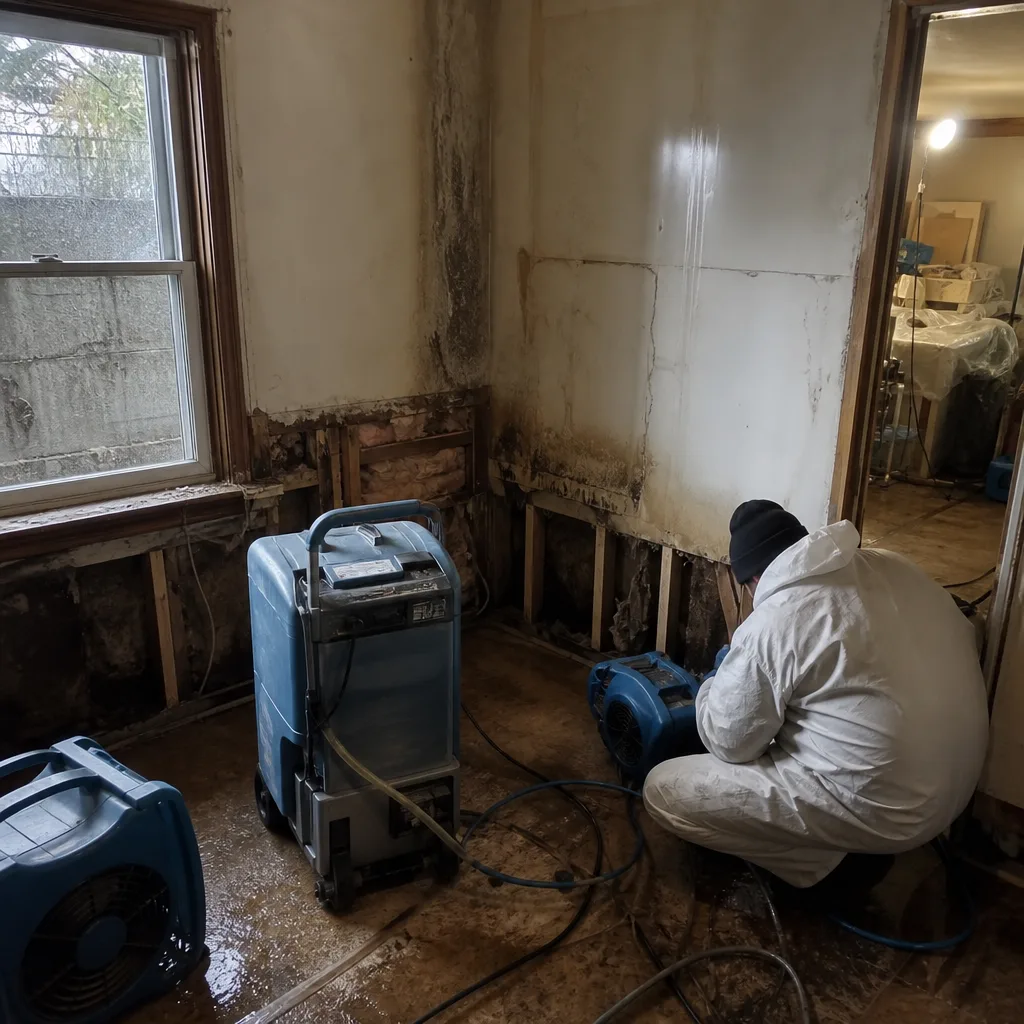 Before
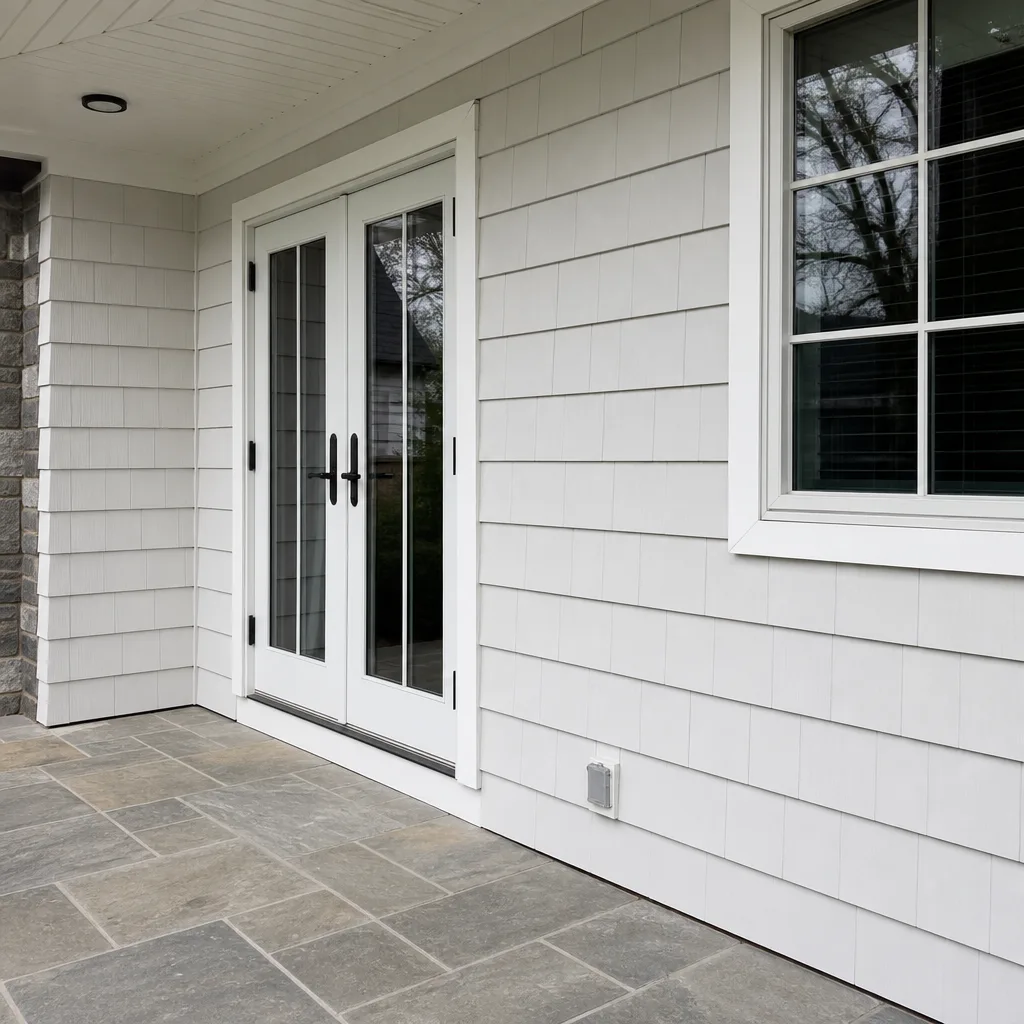 After
After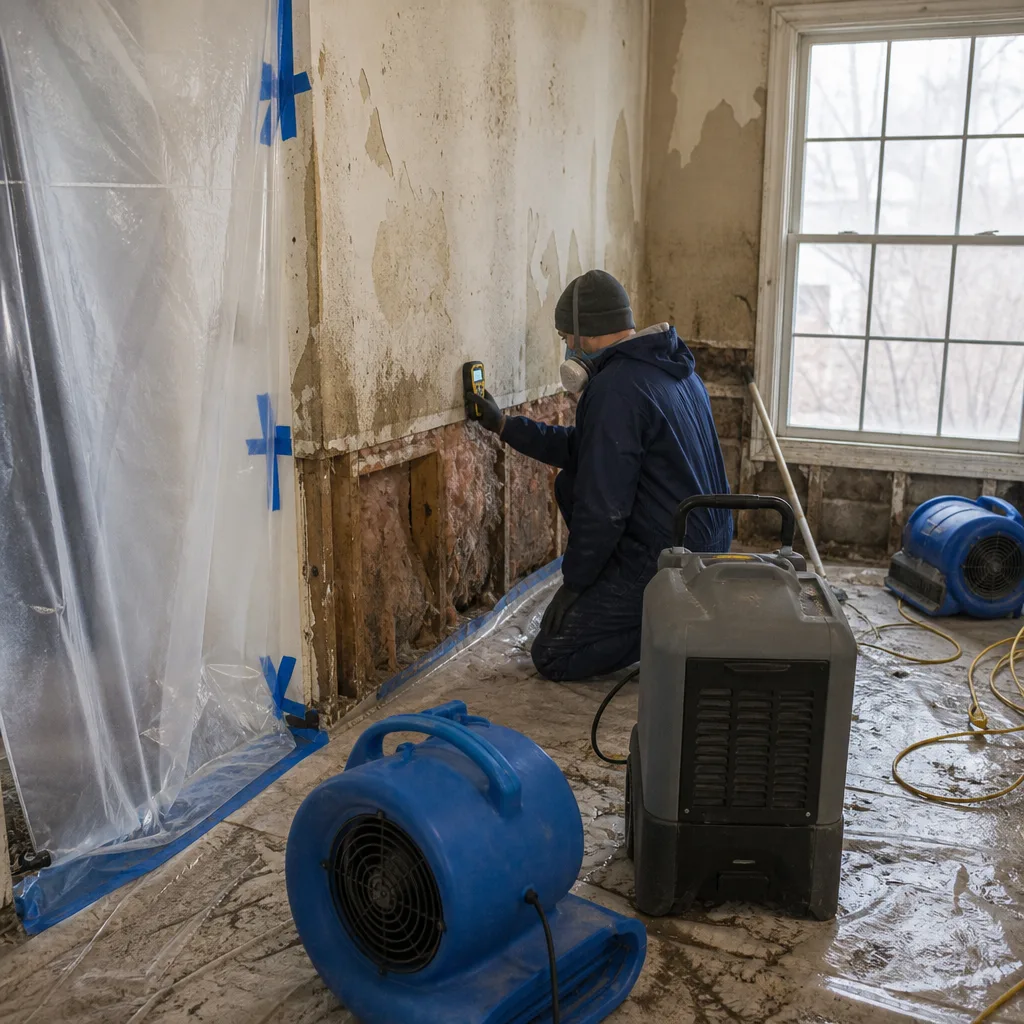 Before
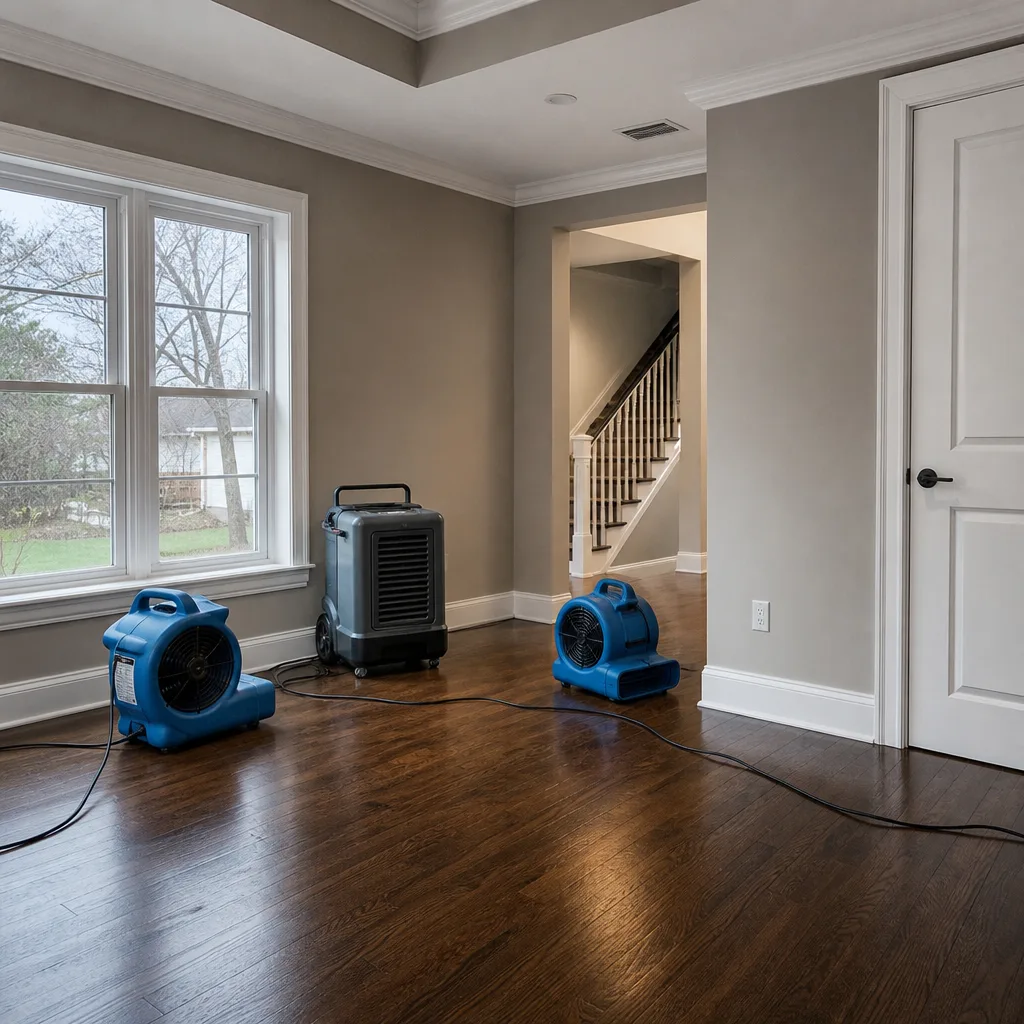 After
After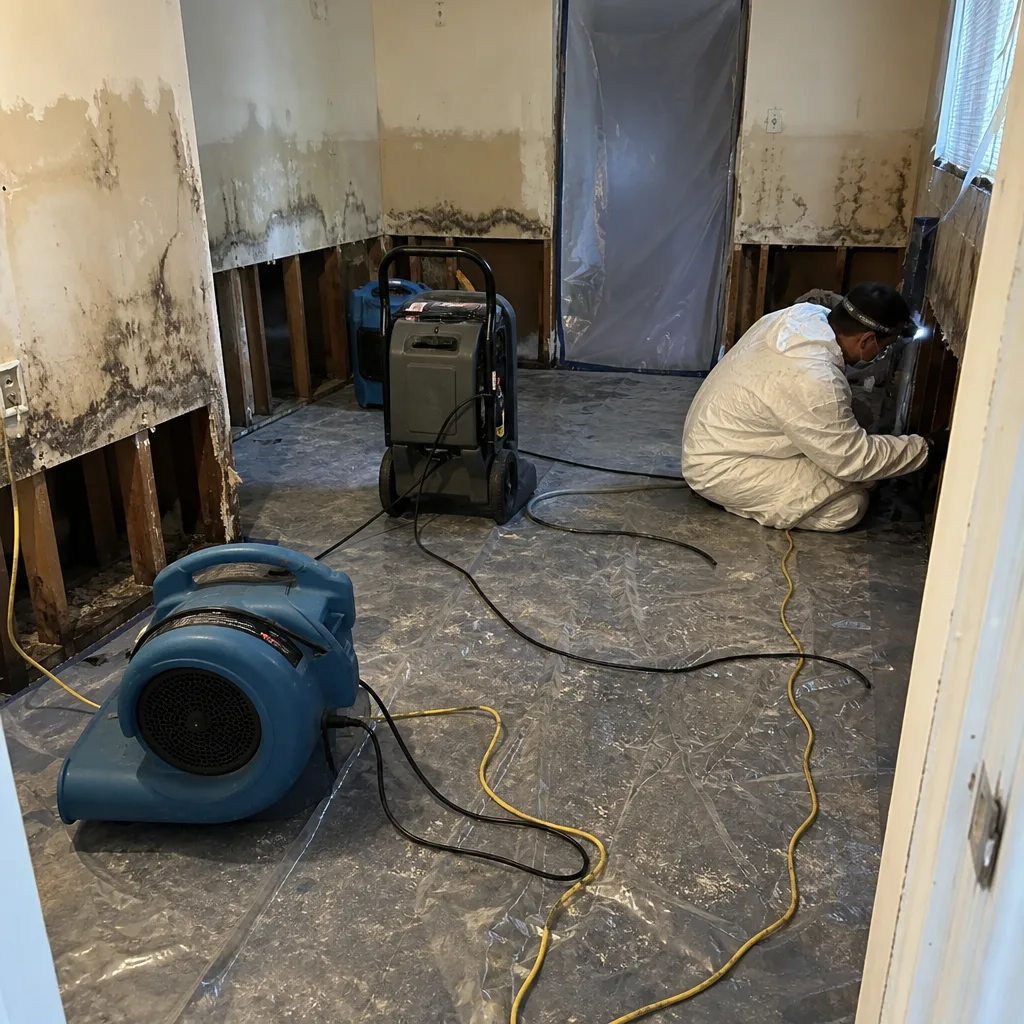 Before
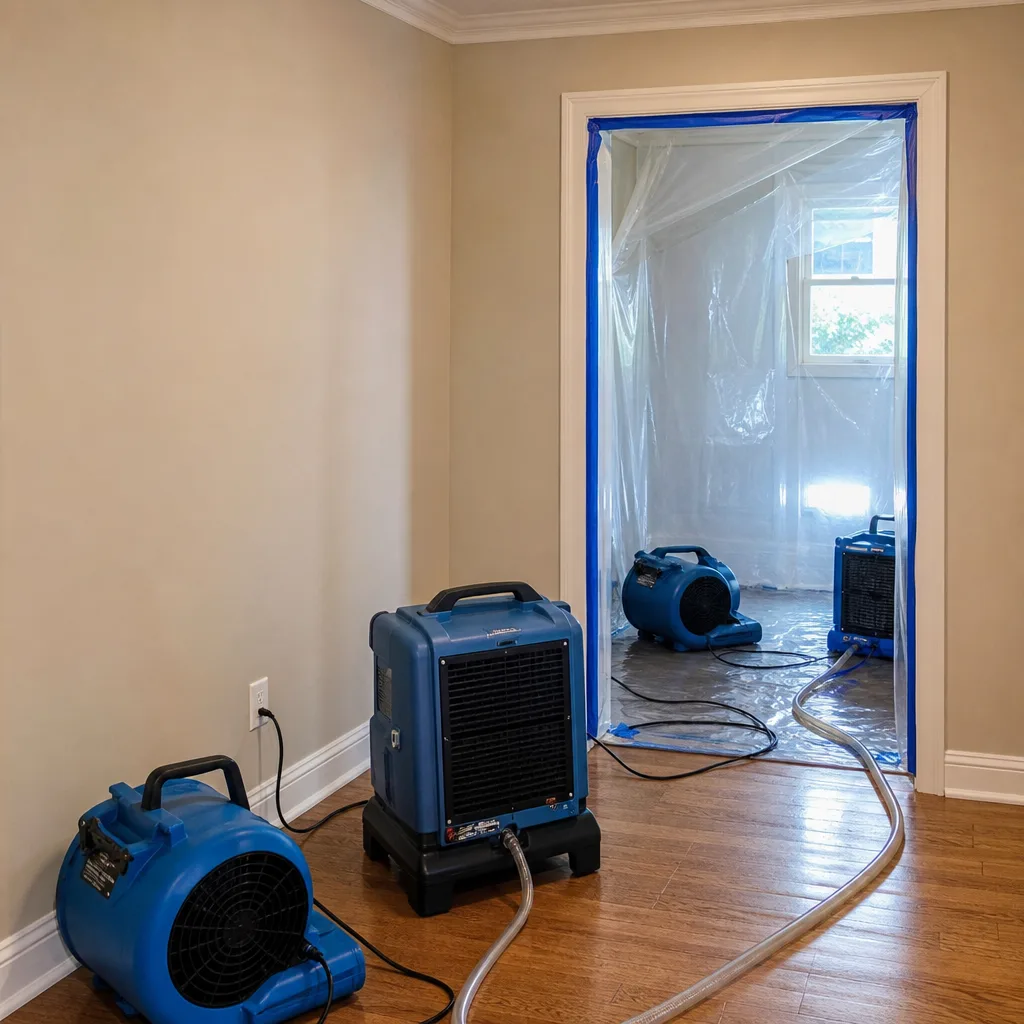 After
After24/7 Emergency Mold Remediation in Little Neck
Mold remediation in Little Neck costs $1,800 to $6,500 for a typical single-room containment job, and $8,000 to $25,000+ when a basement, crawl space, or multiple rooms are involved. We answer live at (518) 873-4306 around the clock, and our crews reach most Little Neck homes within 45 minutes of your call. The first hour matters because mold colonies double every 24 to 48 hours once a water source is present, which means a slow response turns a $2,000 containment job into a $15,000 rebuild.
Our team handles everything from first inspection to final air clearance testing. We do not hand the job off to a subcontractor and we do not leave you playing messenger with your insurance carrier. When you call Floodline Restoration Co., a live dispatcher picks up. You’ll have a background-checked, uniformed technician at your door the same visit, not a salesperson with a clipboard and a pitch.
Understanding Mold Remediation Severity in Little Neck Properties
Little Neck’s housing stock creates conditions most mold remediation companies do not fully read. The neighborhood’s 1920s through 1950s Tudors, brick Colonials, and Cape Cods were built with plaster-on-lath walls over full basements. Plaster reads moisture differently than drywall. A wall that feels dry to the touch can still hold 70% relative moisture inside the plaster keys, feeding hidden mold growth behind the surface. We run hygrometer and thermal imaging readings on every job before we decide containment protocols or drying targets, because pulling containment too early on a plaster wall is the single most common cause of mold regrowth we see in Little Neck.
Severity breaks down into three practical tiers. Tier one is surface mold on visible materials, usually under 10 square feet, often the result of condensation around windows or a small supply-line drip. Tier two involves mold behind walls or above ceilings after a Category 2 water loss, meaning gray water from a washing machine, dishwasher, or sump pump failure. Tier three is the one homeowners fear most: mold throughout a basement or crawl space after repeated tidal flooding or a long-undetected Category 3 sewage backup. Each tier changes the containment approach, the drying timeline, and the cost. On Little Neck streets near the Nassau County line, it can also change which building department governs the permit.
Why Little Neck Property Owners Choose Floodline Restoration Co.
- 45-minute response commitment to any Little Neck address. We dispatch from the NYC metro office and our crews know the Cross Island Parkway corridor, Northern Boulevard, and the residential grid around Little Neck Parkway without GPS detours.
- A live person answers the phone at 2 a.m. Not a recording. Not a call-back service. A dispatcher who can route a certified crew while you are still on the line.
- IICRC-certified technicians trained to AMRT and WRT standards. Applied Microbial Remediation Technician and Water Restoration Technician credentials mean the crew running your job knows containment engineering, not just spraying bleach.
- Free visual inspection with moisture mapping. Before any work begins, we document moisture levels room by room and show you exactly where the mold is and what the scope should be, in writing.
- Direct insurance billing with adjuster coordination. We photograph everything from the first hour, submit line-item estimates in industry-standard format, and speak to your carrier so you do not have to.
- One team from first inspection to final rebuild. The same Floodline crew that runs your structural drying handles the antimicrobial treatment and rebuilds the wall. No mid-job handoff.
Our Mold Remediation Process
Inspection & Assessment
We walk the property, map moisture readings on every wall and floor, and identify the water source. If mold is suspected but not visible, we can run air sampling and surface testing. You get a written scope with photos before any work starts.
Containment & Source Control
We stop the water at the source, then set negative air pressure containment with HEPA scrubbers. On plaster-walled Little Neck homes, we keep containment up until the plaster reads dry, not until the air feels dry.
Drying & Dehumidification
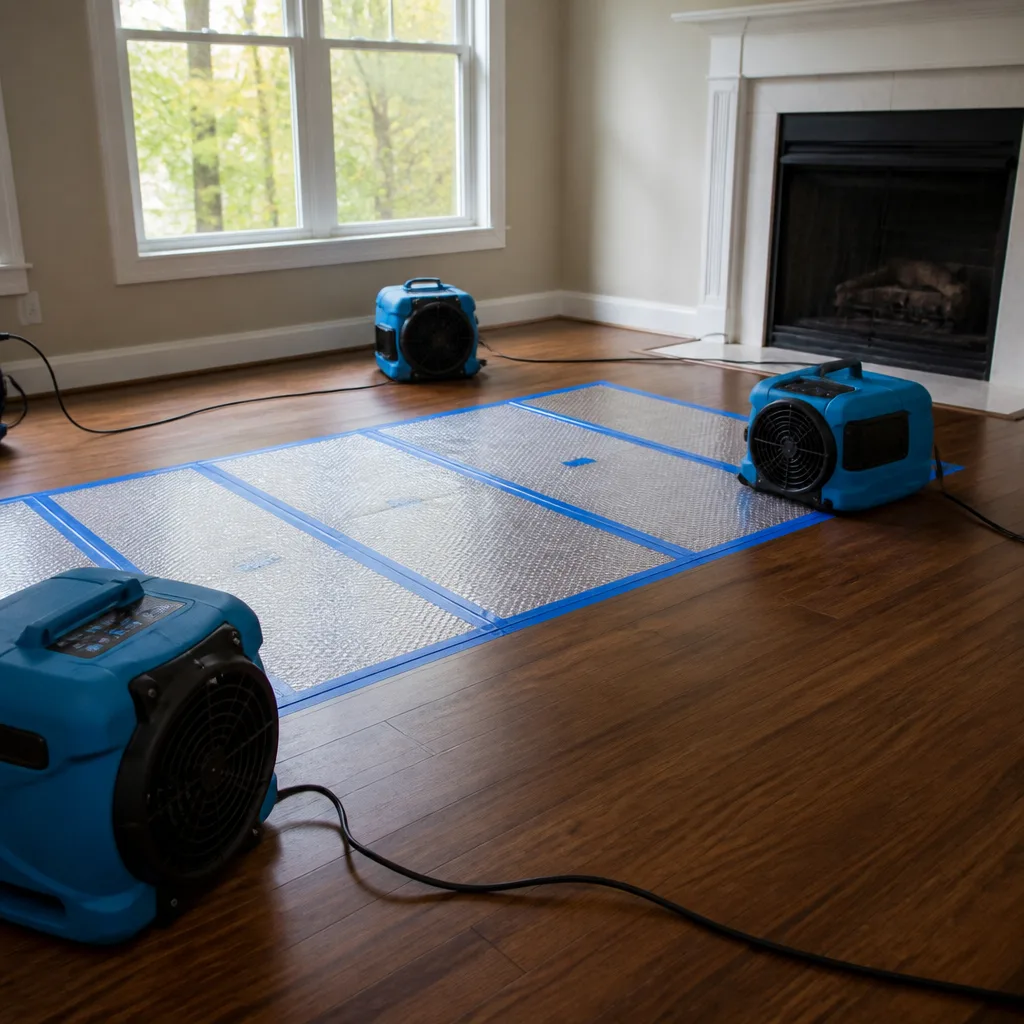
Dri-Eaz dehumidifiers and XPOWER air movers run continuously, with daily moisture readings logged for you and your insurer. We hit the IICRC dry standard, not a gut-feel timeline.
Cleaning & Sanitization
Affected materials get HEPA vacuuming, wire brushing on studs, and antimicrobial treatment. Porous materials that cannot be fully cleaned get cut out and bagged for disposal.
Specialty Treatment: Crawl Spaces & Plaster Walls
For bay-adjacent lots with tidal dampness, we treat crawl spaces with vapor barrier installation, sump pump checks, and dehumidifier sizing. For plaster walls, we monitor readings for several extra days before releasing containment.
Repairs & Restoration
We rebuild what we removed: drywall, trim, insulation, paint. The same crew handles it. You get a finished room, not a contractor referral.
Need Emergency Mold Remediation in Little Neck Now?
Crews minutes away, answering live 24 hours a day. The sooner we start, the less it costs.
Working With Your Insurance Company
Insurance claims for mold are where we earn our keep. Carriers want documentation that proves the mold resulted from a covered water loss, not from long-term neglect. We build that file from the first hour: photos of the interior before we move anything, moisture logs showing the dry standard was hit, and a line-item scope that matches the carrier’s software format. Our adjusters speak your adjuster’s language because they have read thousands of these same claims. You do not have to translate between us. We bill the carrier directly when coverage applies, and you get the written scope before we start so there are no surprises on the back end. For Little Neck homeowners near the Nassau line, we also flag which authority’s documentation the claim may require, since NYC DOB and Nassau County ask for different paperwork.
What We Provide Your Insurer
- Thorough documentation of the loss
- Photos of all damage, room by room
- Moisture readings and drying logs
- A detailed, line-item scope of work
- Direct coordination with your carrier
Built for Little Neck’s Loss Calendar
Little Neck gets hit by a predictable rotation of moisture problems, and mold follows each one. January and February bring deep freezes that burst aging galvanized supply lines in 1920s Colonials, sending Category 1 water through plaster walls and into basements. March and April bring thaw and rain, saturating clay-heavy soil until basement seepage starts at the cove joint. July and August thunderstorms overwhelm the neighborhood’s combined storm drains along Northern Boulevard, and sump pump failures follow in the older homes that never got backwater valves. Then comes nor’easter season. The blocks west of Little Neck Parkway, closer to Little Neck Bay, see tidal surge that carries brackish water into crawl spaces and basements, a problem Hurricane Sandy made unignorable in 2012. Every one of these events leaves moisture behind, and moisture in a 1930s house with plaster walls and a full basement means mold within days, not weeks. We schedule this work year-round because this neighborhood’s calendar never stops producing it.
Mold Remediation Across Little Neck’s Neighborhoods
The homes east of Little Neck Parkway toward the LIRR tracks are the neighborhood’s oldest stock, dominated by Tudor Revivals with steep rooflines, plaster interiors, and basements that have been handling groundwater for ninety years. These jobs usually mean mold behind finished basement walls, where a prior owner covered foundation seepage with paneling and hoped for the best. The grid between Marathon Parkway and the Cross Island Parkway runs newer, mostly 1940s and 1950s brick Colonials with slab foundations in places, and mold here tends to show up in attic spaces after ice dams or in bathroom ceilings where exhaust fans were never properly vented. Along the bay side, west of Little Neck Parkway, crawl spaces and full basements take brackish water during nor’easters, and the salt residue left behind holds moisture against wood framing long after the standing water recedes. The blocks running along Northern Boulevard near the Nassau line create our most unusual permitting challenge, one we will get into below. And the streets immediately north of the LIRR corridor run close enough to the tracks that vibration cracks in old plaster give water a quiet way inside, which is how we have found mold behind a wall with no visible sign of a leak.
Specialized Mold Remediation Services We Offer in Little Neck
Mold Inspection & Testing
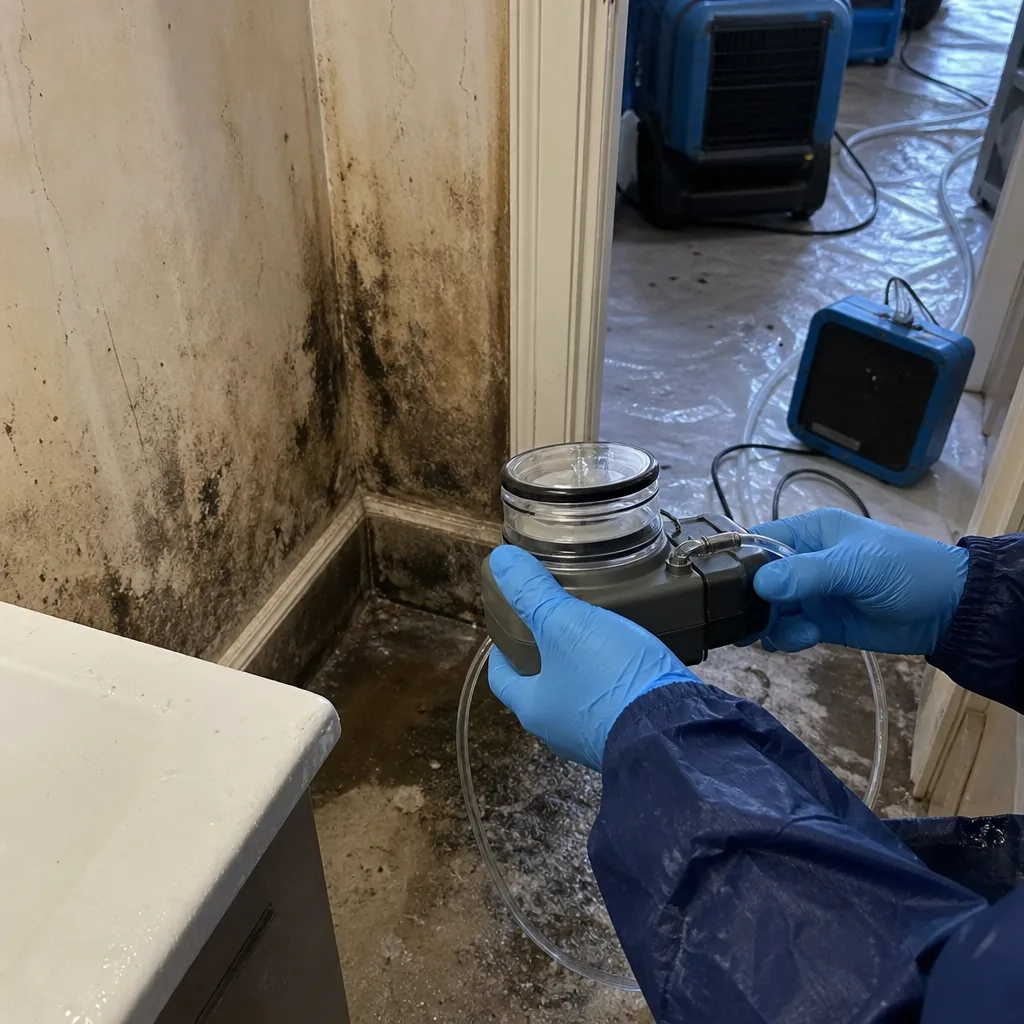
When you smell something musty but cannot see it, we test. Air sampling, surface swabs, and thermal imaging tell us whether the problem is active growth, dormant spores, or just an old house breathing. In Little Neck’s plaster-wall homes, we often test behind walls that read high on moisture meters even when no mold is visible, because hidden mold is the one that keeps coming back if it is not found the first time.
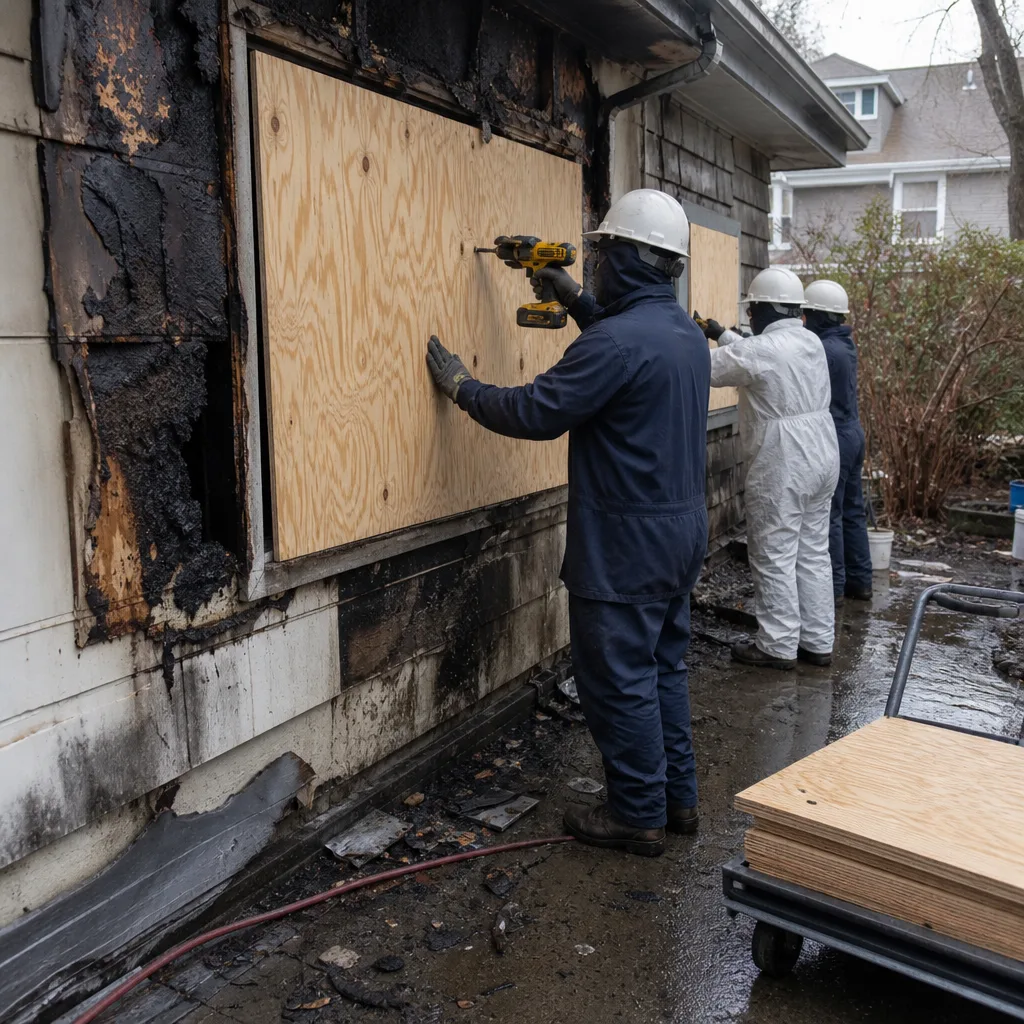
Mold Removal
Physical removal beats chemical masking. We cut out mold-saturated drywall and plaster, wire-brush framing, HEPA-vacuum every surface inside containment, and dispose of contaminated material under proper protocols. On plaster walls that are structurally sound but mold-stained, we treat the surface with antimicrobial and verify the moisture source is solved before we rebuild.
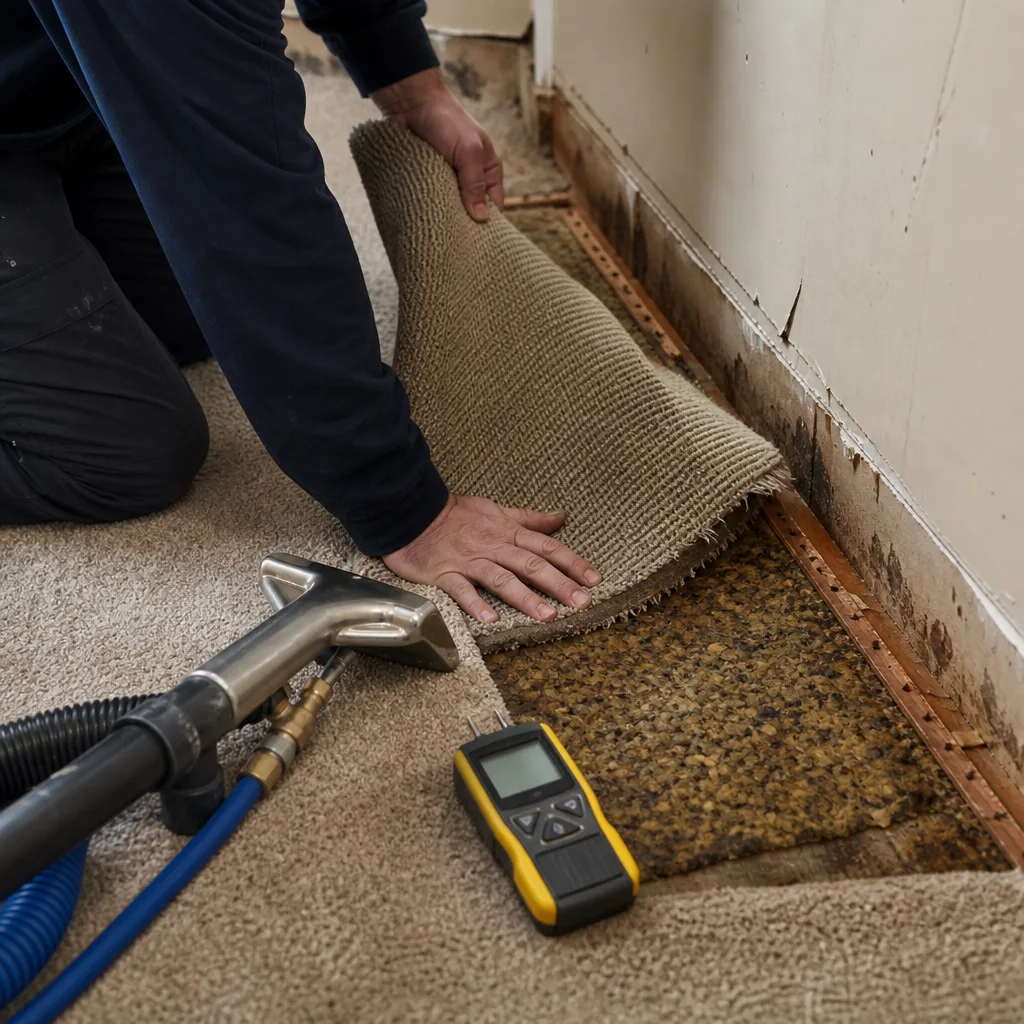
Black Mold Remediation
Black mold, usually Stachybotrys, grows on materials that stay wet for days. In Little Neck, we find it most often in basements with chronic seepage, behind plaster walls after undiscovered supply-line leaks, and in crawl spaces that flooded during a nor’easter and were never dried properly. This work needs full containment, HEPA air scrubbing, and clearance testing before we break down the barriers. We do not guess. We test before and after.
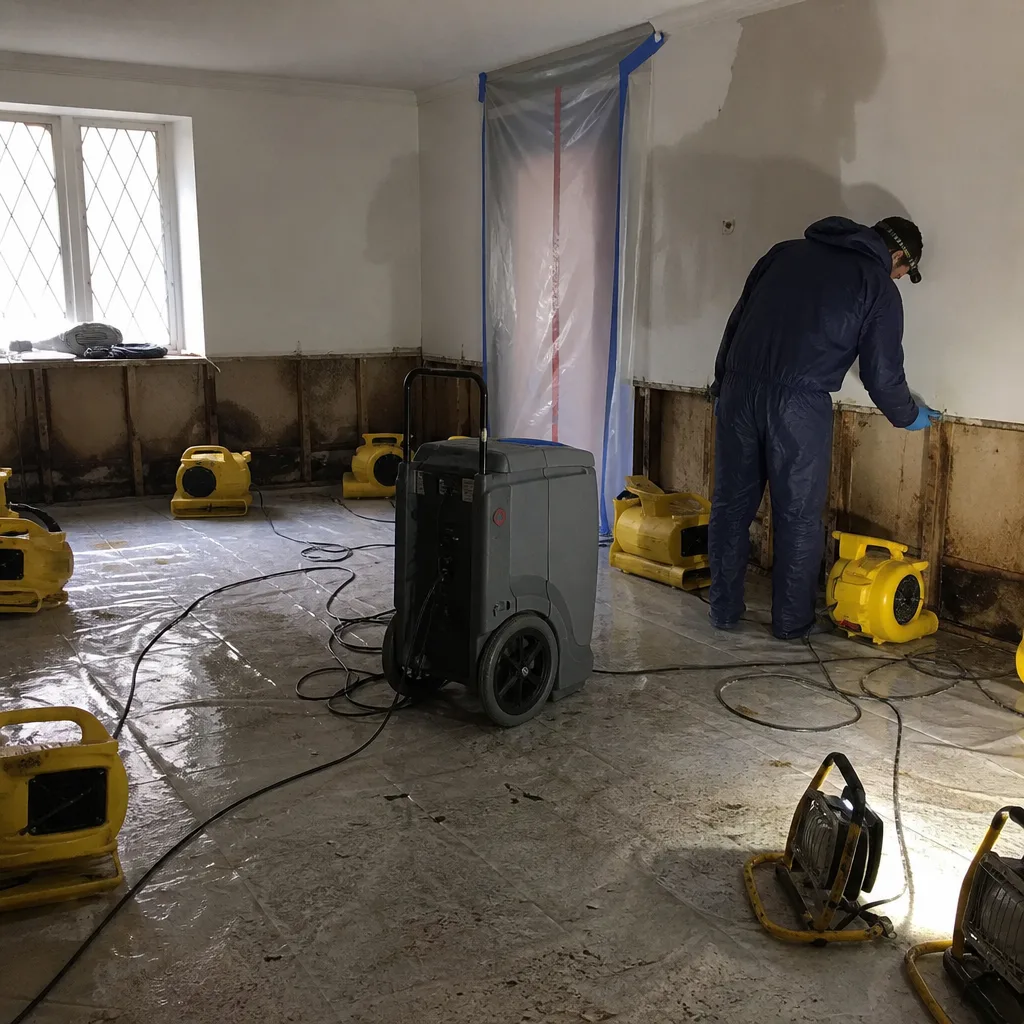
Air Quality Restoration
After a mold job, the air inside should be cleaner than the air outside. We run HEPA air scrubbers for the duration of containment, then perform post-remediation verification with air sampling. For homes near Little Neck Bay where salt air and humidity add baseline moisture, we often recommend a dehumidifier sized for the square footage and a setting that keeps the basement below 55% relative humidity year-round.
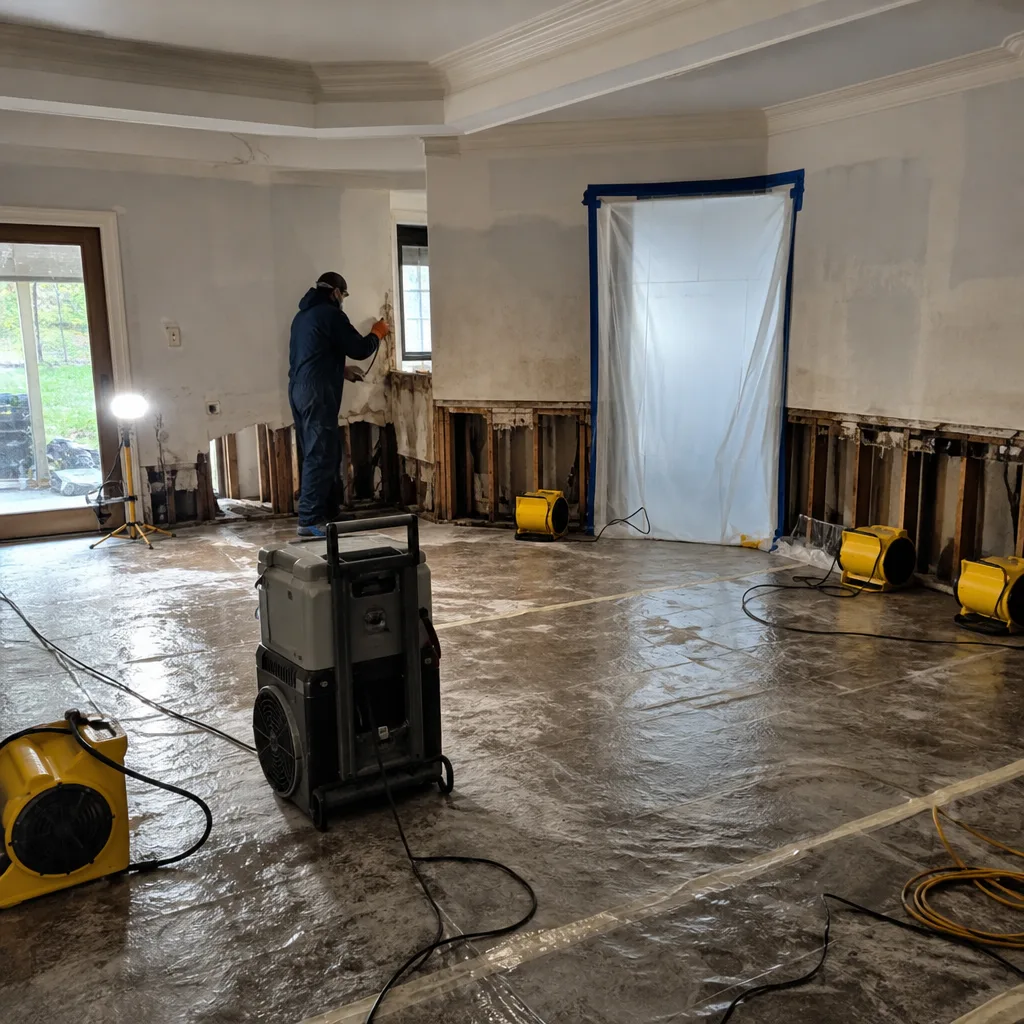
Crawl Space Treatment
The bay-adjacent crawl spaces in Little Neck are the most overlooked mold sources in the neighborhood. Standing water during nor’easters, salt residue, and poor ventilation make them a standing mold incubator. We encapsulate with vapor barriers, install or repair sump pumps, treat wooden members with antimicrobial, and dry the space to a standard that holds through the next storm season.
Moisture & Humidity Control
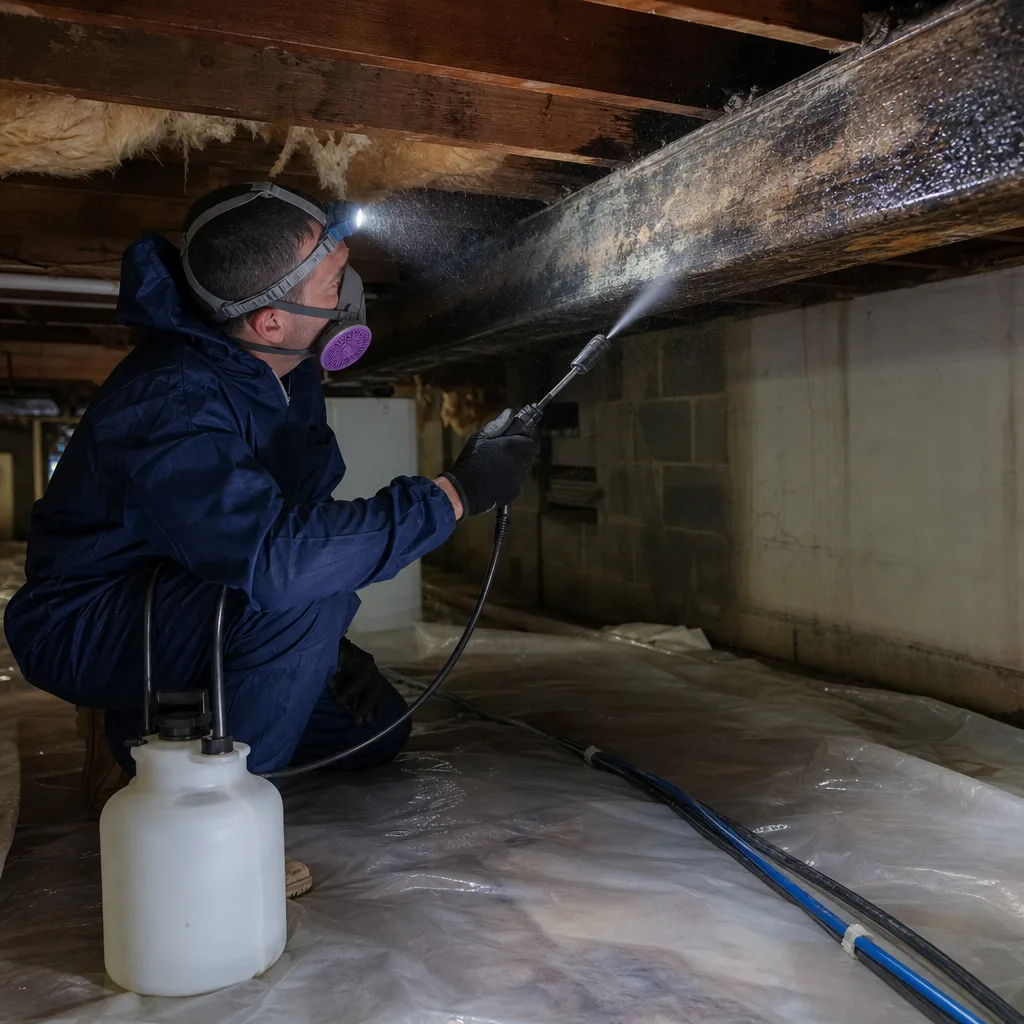
Mold cannot grow without water. Our moisture control work in Little Neck is about making the house do its job. That means grading around foundation walls, extending downspouts, sealing cove joints, correcting bathroom exhaust venting, and dialing in dehumidifiers on older basements that were never designed for modern airtight living.
What happens when you call
- 1
A real person answersNo phone trees - you reach a local pro.
- 2
You get an upfront price rangeHonest numbers before anyone is dispatched.
- 3
A background-checked tech heads outLicensed & insured, dispatched right away.
- 4
You approve before work beginsNothing starts until you say go.
Mold Remediation Costs in Little Neck, NY
A single-room mold remediation job in Little Neck typically runs $1,800 to $4,500. That includes containment, removal of affected drywall or plaster, treatment, drying, and rebuilding the wall to paint-ready. A full basement with widespread mold, especially after a flood or sewage backup, lands between $8,000 and $18,000. Crawl space encapsulation with mold treatment runs $6,000 to $12,000 depending on square footage and access. Whole-house mold after long-term neglect can push past $25,000. What moves the price: whether plaster or drywall is involved, how many rooms need containment, whether asbestos or lead testing is required before we open walls, and whether the water source is fixed or still active. Some Little Neck jobs require NYC DOB permits, some require Nassau County permits, and that documentation adds a line item depending on which side of the line your house sits. The free visual inspection with moisture mapping is the fastest way to a firm number. Call (518) 873-4306 and we will give you a written scope before any work starts.
We Also Serve Cities Near Little Neck
Our crews regularly run through Great Neck, Oakland Gardens, Bayside, and Manhasset. Same live dispatch, same 45-minute response, same written scope. If your house is on the Nassau side of the line, we handle that permitting too.
Serving Little Neck, NY - Our Local Coverage Area
We’re based in the Little Neck area and know this community well. Use the map below to see our service coverage - if you’re nearby, we can almost certainly help.
Little Neck Mold Remediation Questions, Answered
How does Little Neck’s coastal air make mold worse inside a 1920s Tudor after a water loss?
Salt air holds more moisture, and Little Neck’s older Tudors were built with plaster-on-lath walls that absorb and retain that moisture far longer than modern drywall. When a water loss occurs, the plaster wicks dampness deep into the wall cavity, and the humid coastal air slows natural drying. That combination gives mold a longer window to establish itself, which is why we run longer structural drying cycles and verify with moisture meters before releasing containment on these homes.
Do I need a mold remediation permit from NYC or Nassau County for my house near Northern Boulevard?
It depends on which side of the line your house sits on. Little Neck is uniquely split: homes on the Queens side fall under NYC DOB, while homes just across the line fall under Nassau County code. On streets near Northern Boulevard, two nearly identical houses on the same block can require completely different permits and inspectors. We determine jurisdiction before any work starts and handle the paperwork either way, so you never face a stop-work order because the wrong inspector showed up.
Why does my Little Neck Colonial keep getting mold in the basement every winter?
Most likely, groundwater is entering through the cove joint or through cracks in the foundation, and the basement is not drying fast enough to keep mold from taking hold. Older Little Neck Colonials often lack foundation drainage, and winter rain or snowmelt saturates the soil around the house. The fix is usually a combination of exterior grading, interior drainage, dehumidification, and antimicrobial treatment. Until the water source is addressed, mold will keep coming back no matter how many times you clean it.
What’s the difference between mold removal and mold remediation for a house with plaster walls?
Mold removal is physical: cutting out and disposing of contaminated material. Mold remediation is the full protocol: containment, air filtration, moisture correction, removal, treatment, and verification. On plaster walls, the distinction matters because you cannot always cut out a section of plaster without destabilizing the surrounding wall. Remediation often means treating the plaster in place, drying it to standard, and verifying with clearances that the mold is gone, not just covered up.
Can you handle mold in a crawl space on a bay-adjacent lot that floods during nor’easters?
Yes. These are among the most common jobs we handle in Little Neck. We set up containment, remove contaminated insulation and debris, treat all wooden framing with antimicrobial, install or repair vapor barriers and sump pumps, and dry the space to standard. For bay-adjacent lots, we also recommend a dehumidifier sized for the space and a drainage plan that accounts for the next storm surge, not just the last one.
How fast can someone actually get to my Little Neck home?
We commit to 45 minutes for most Little Neck addresses. Our crews are dispatched from the NYC metro office and know the local roads, so we do not lose time circling Little Neck Parkway or Northern Boulevard. Call (518) 873-4306 and a live dispatcher confirms the ETA while you are on the phone.
Will my insurance cover mold remediation in Little Neck?
It depends on the source. Mold resulting from a sudden, covered water loss, like a burst pipe or a storm-related flood, is typically covered up to policy limits. Mold from long-term seepage or deferred maintenance is usually not. We document everything from the first hour and work directly with your adjuster, so if coverage applies, the claim moves forward with the documentation the carrier needs.
What should I do in the first 30 minutes if I discover mold in my Little Neck home?
Stop running fans or air conditioning, if you can, to avoid spreading spores. Do not disturb the mold by wiping or scraping it. Close off the room if possible. Then call us at (518) 873-4306. We will walk you through immediate steps over the phone and have a crew on the way. The less the mold is disturbed before containment goes up, the smaller the remediation scope will be.
Written by Curt Bowman, Owner at Floodline Restoration Co., serving Little Neck and the surrounding Queens and Nassau communities.