

Free visual inspection and a written scope of work before any mitigation begins - photos, moisture readings, and drying logs go in your claim file
The scope we write is the scope we bill. Anything new gets shown to you, in writing, before we touch it.
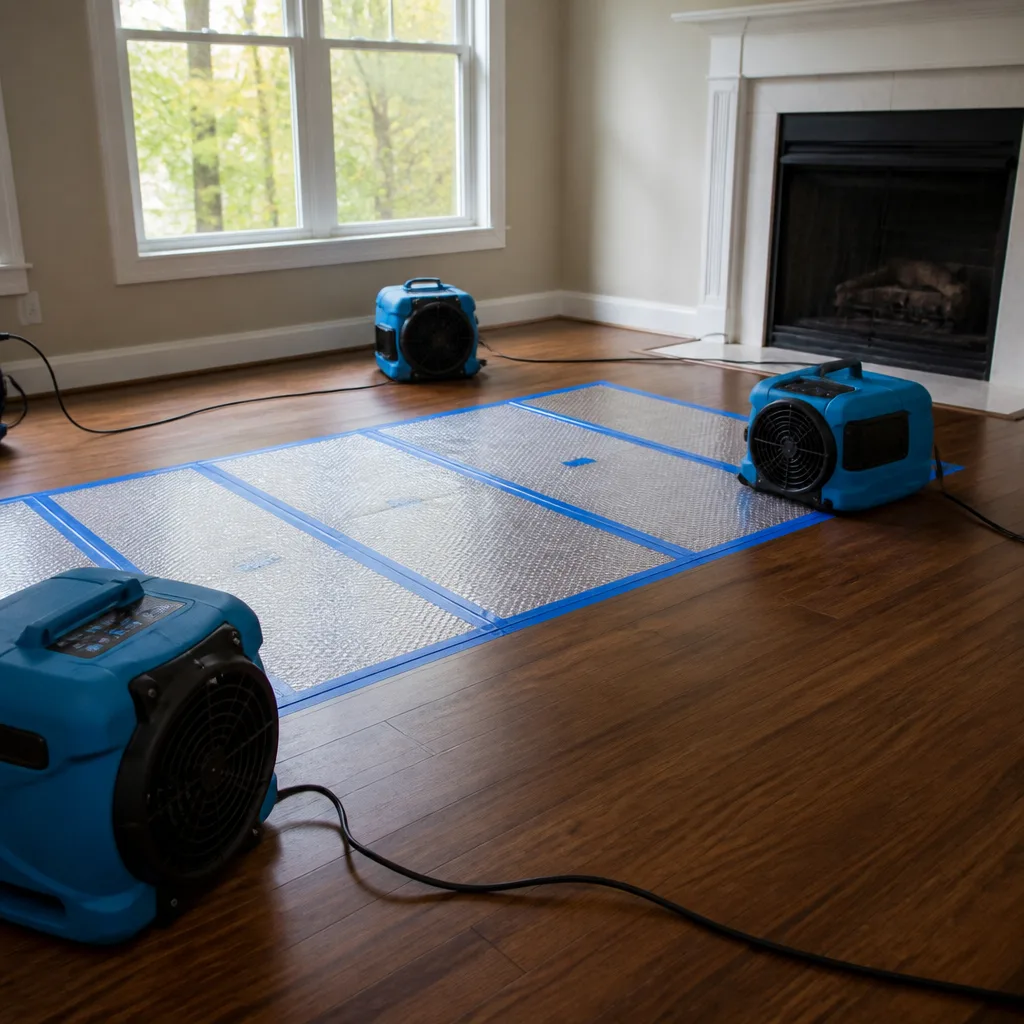
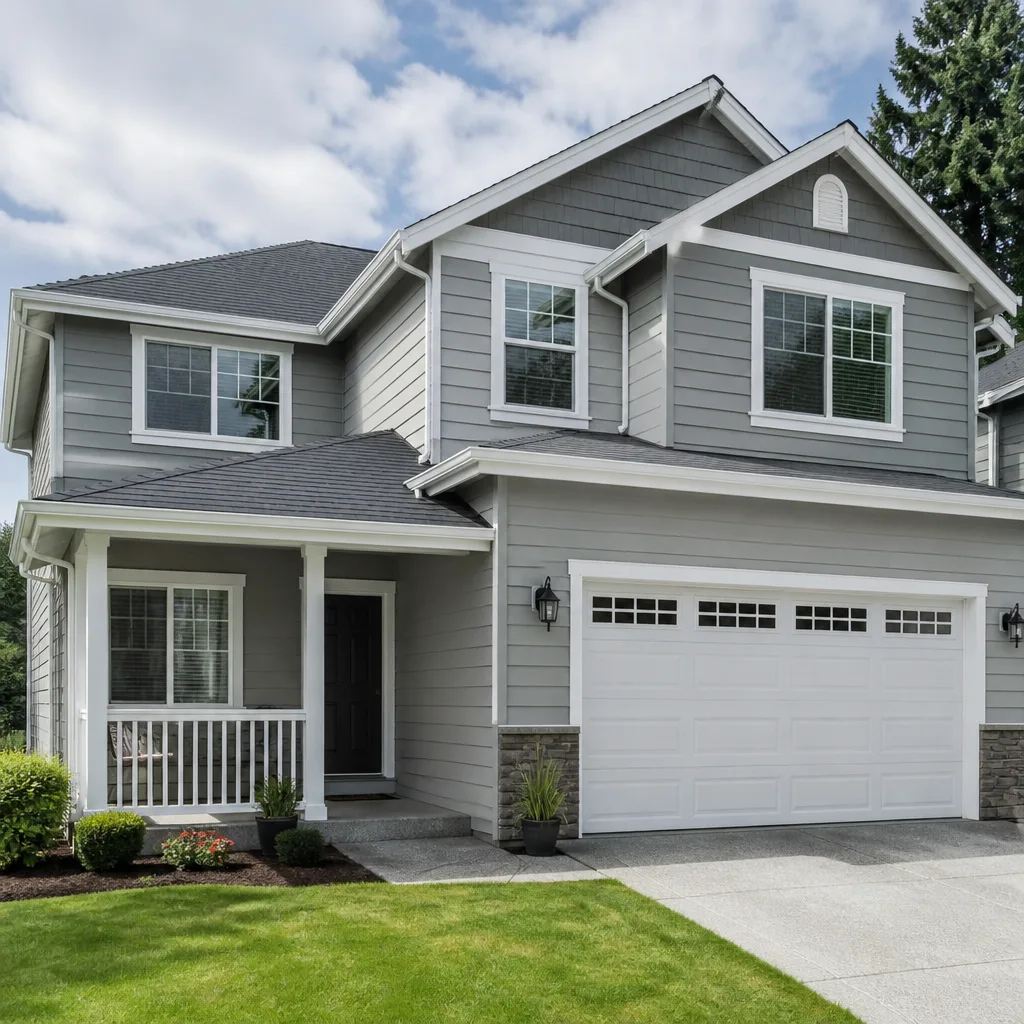
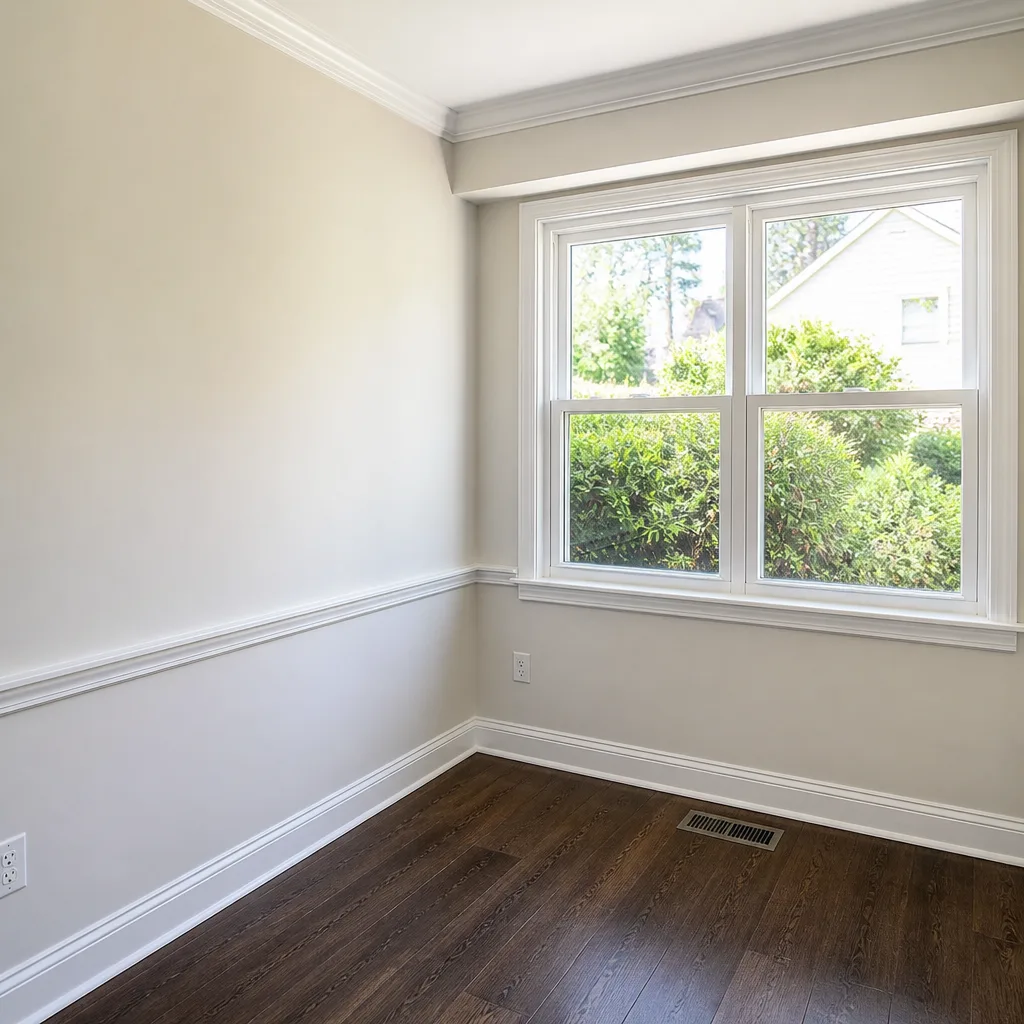
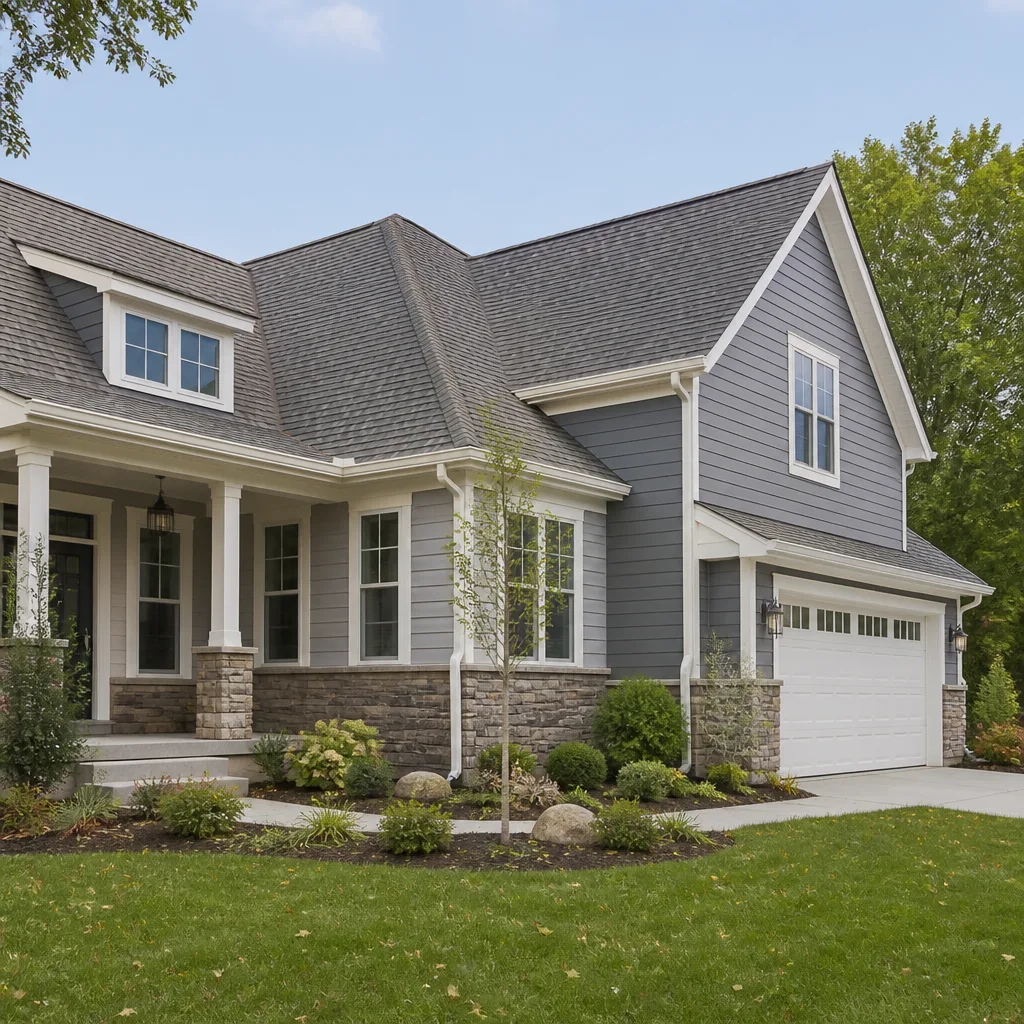
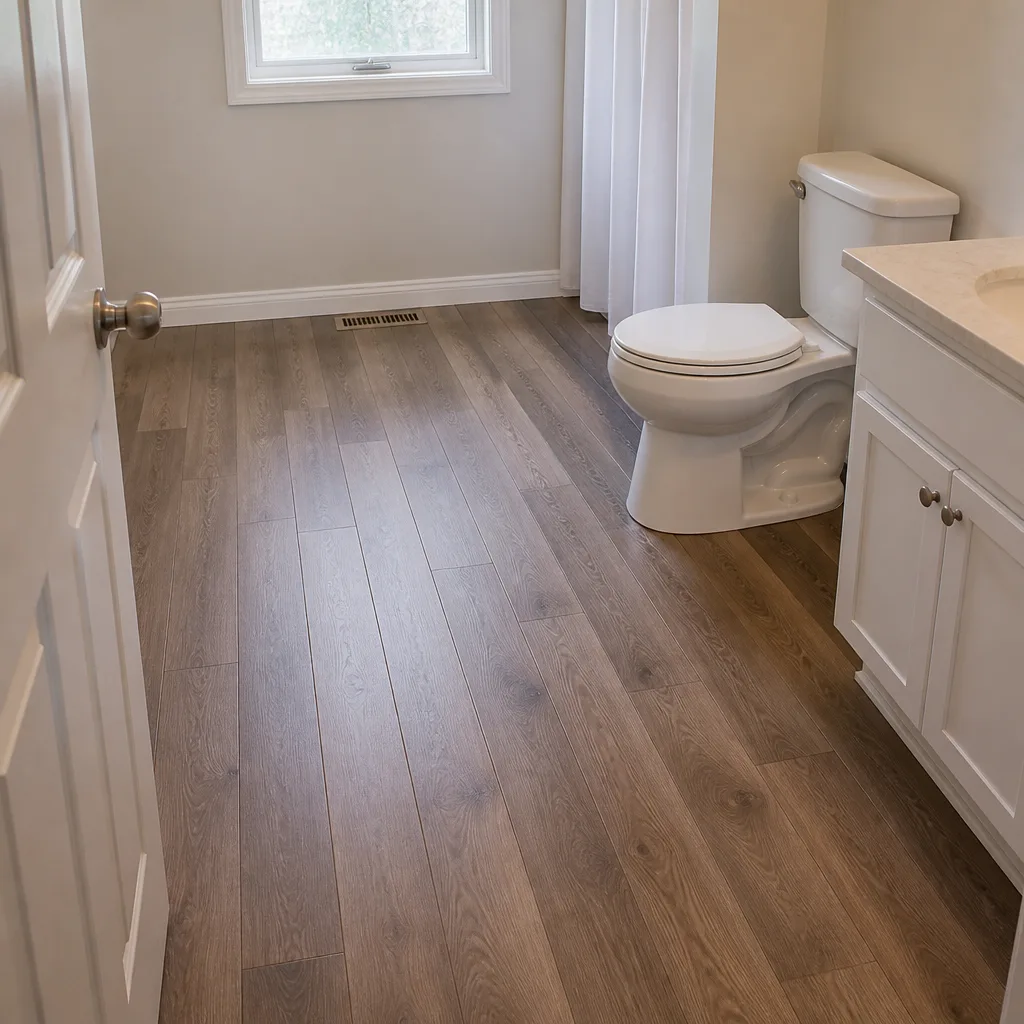
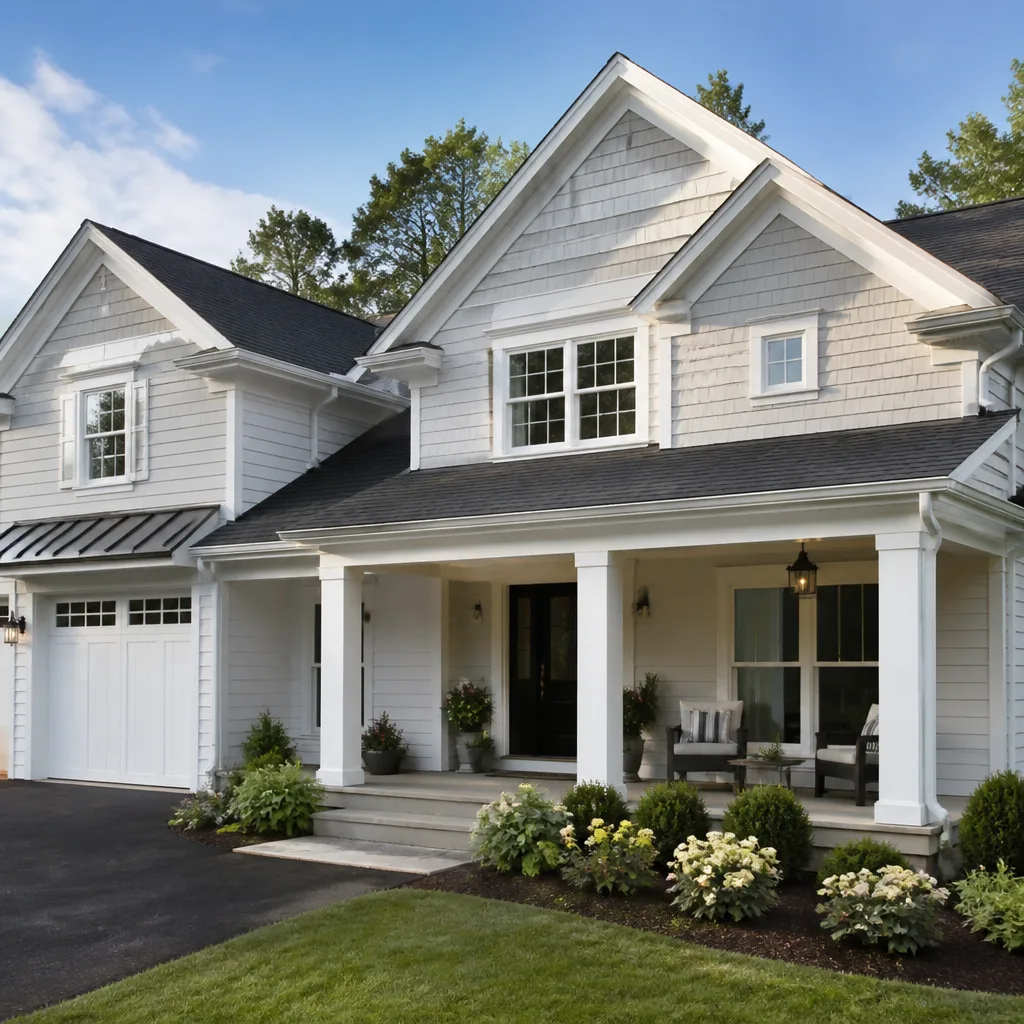
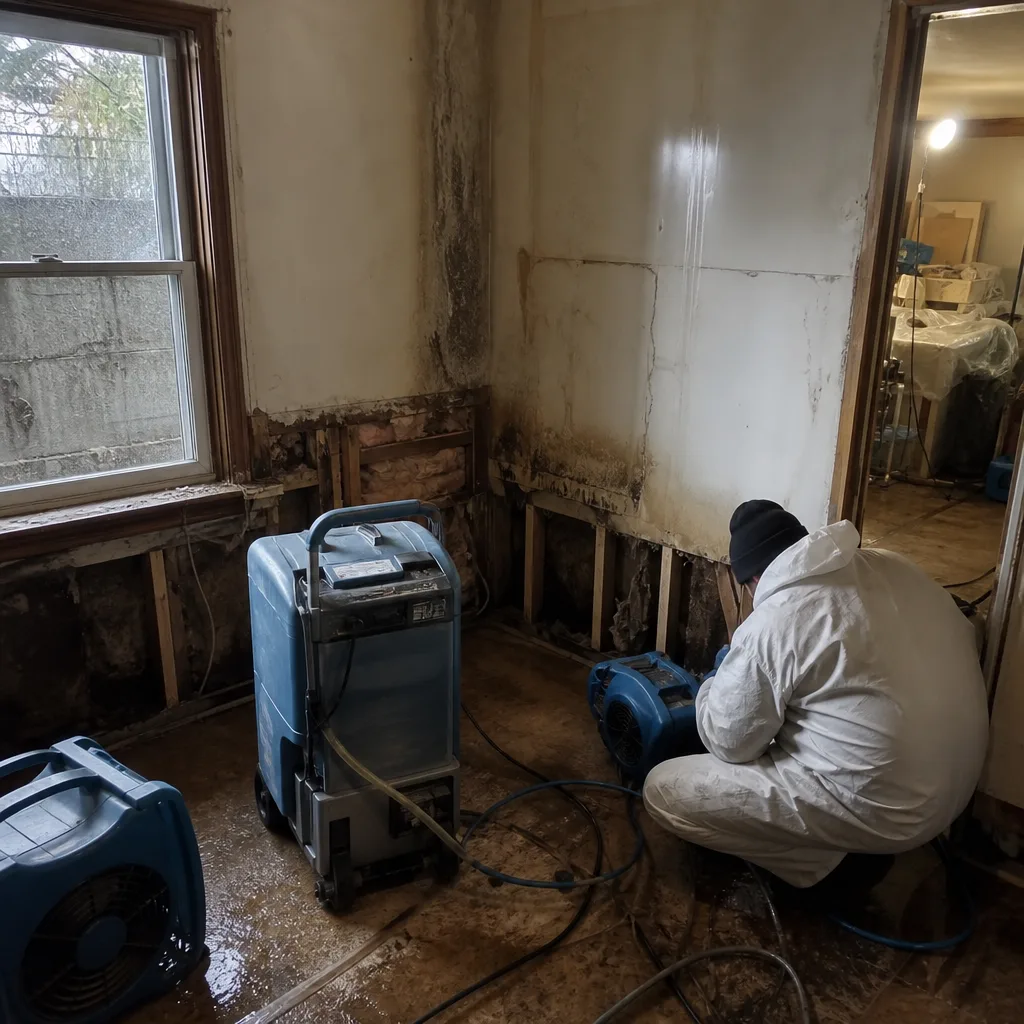 Before
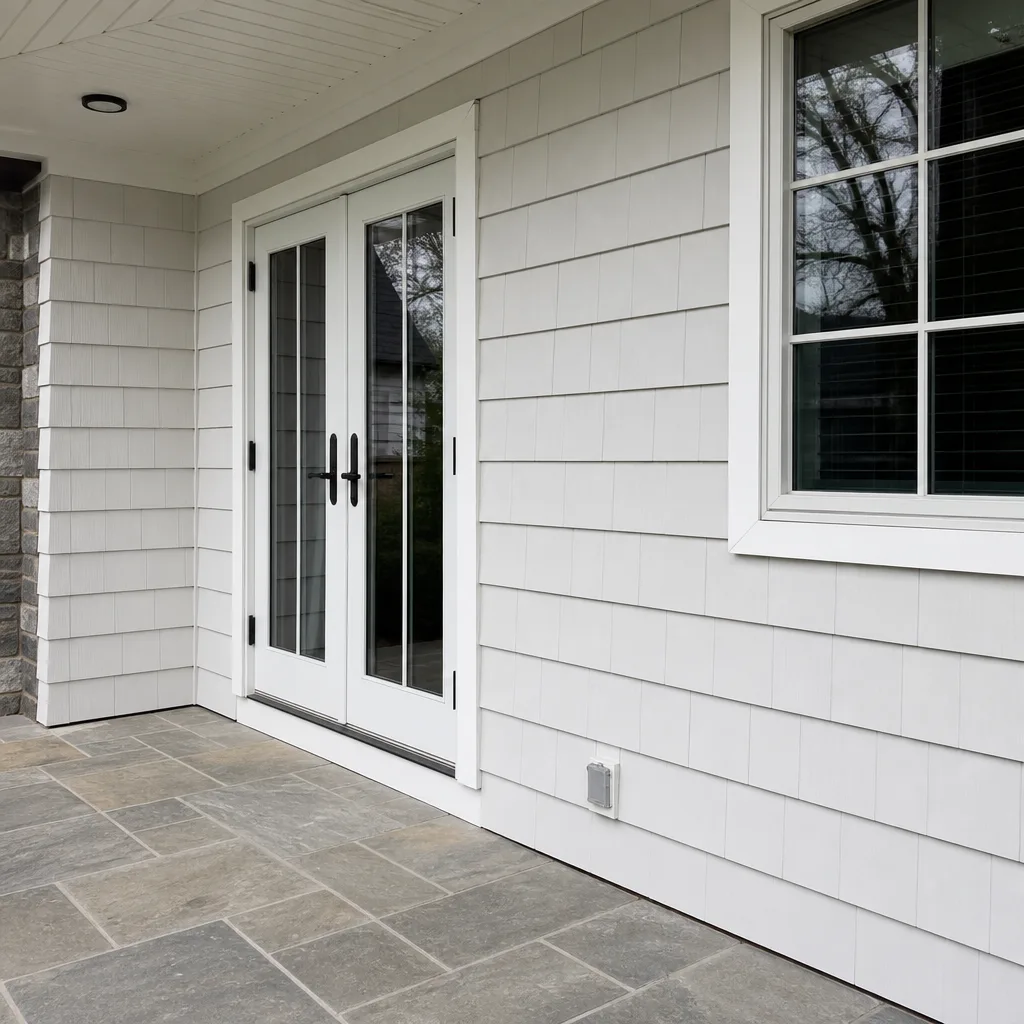 After
After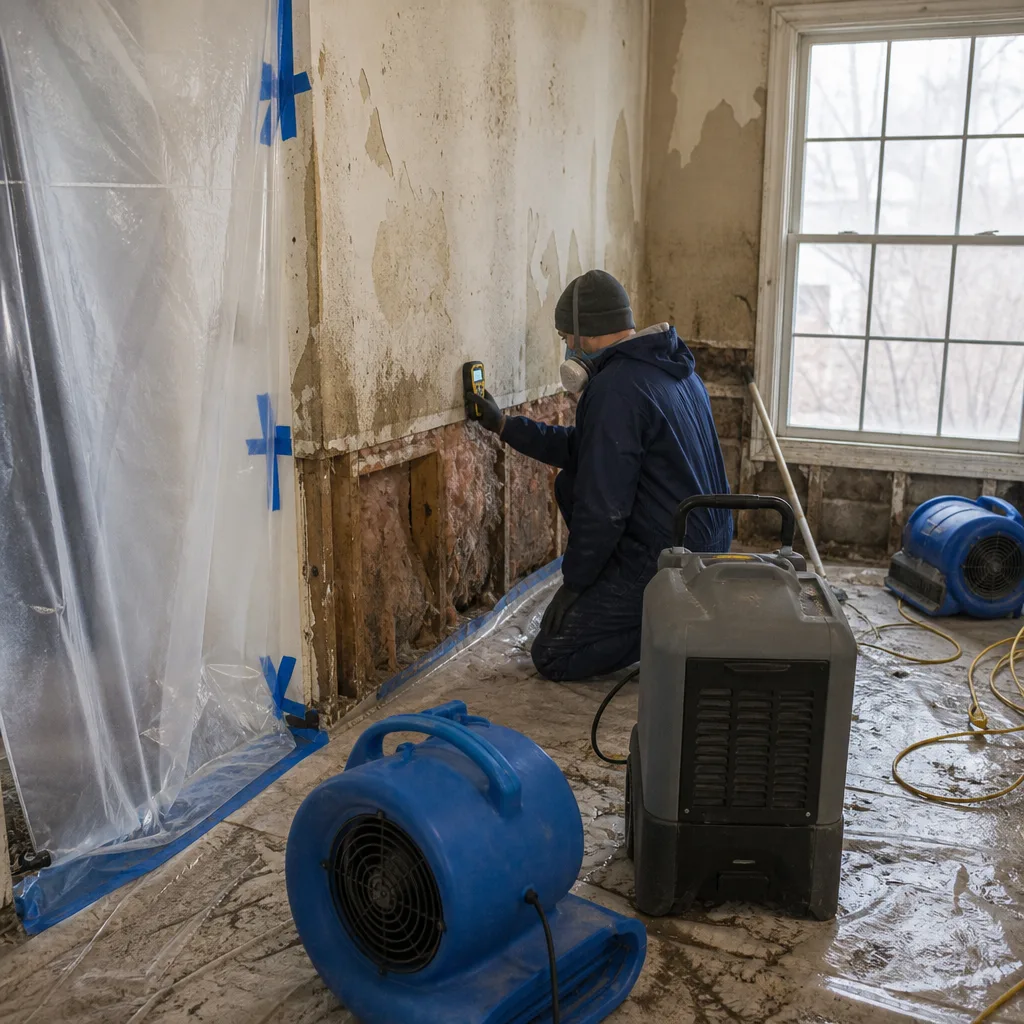 Before
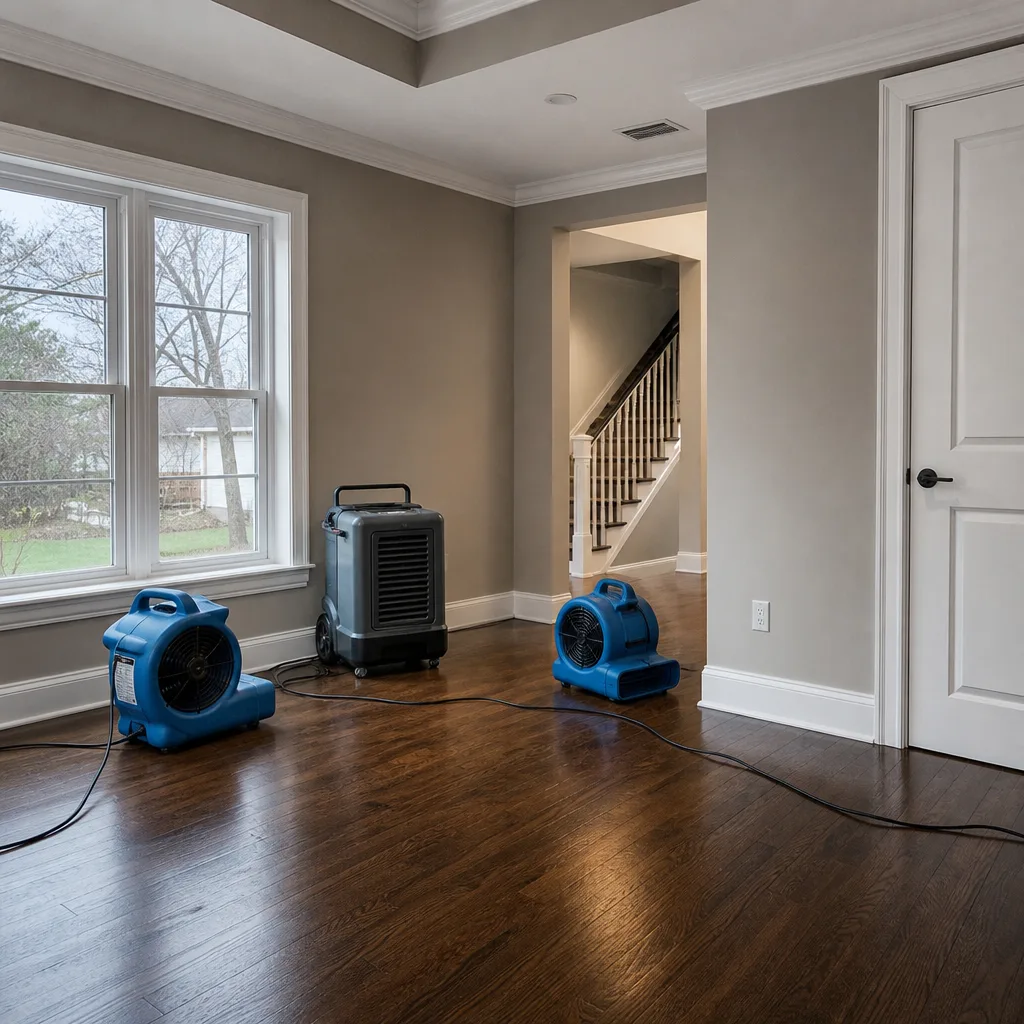 After
After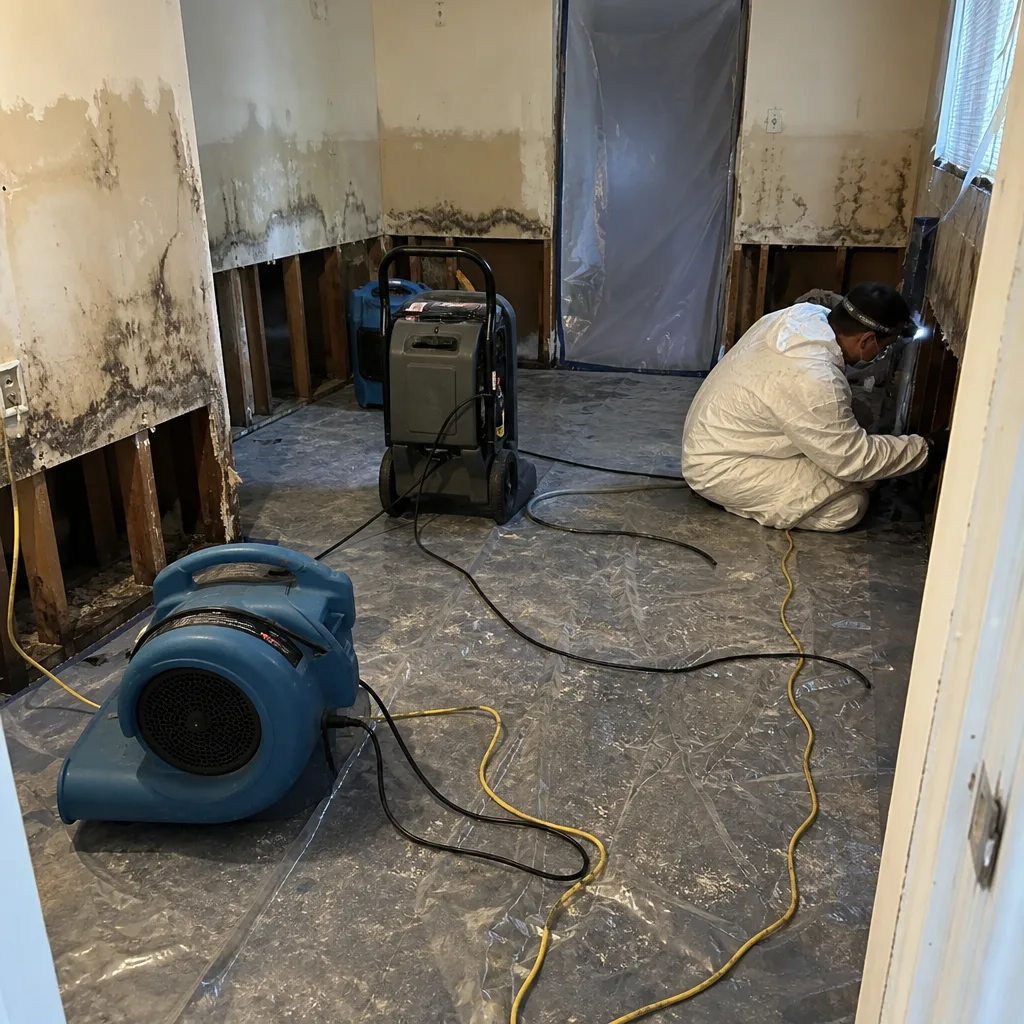 Before
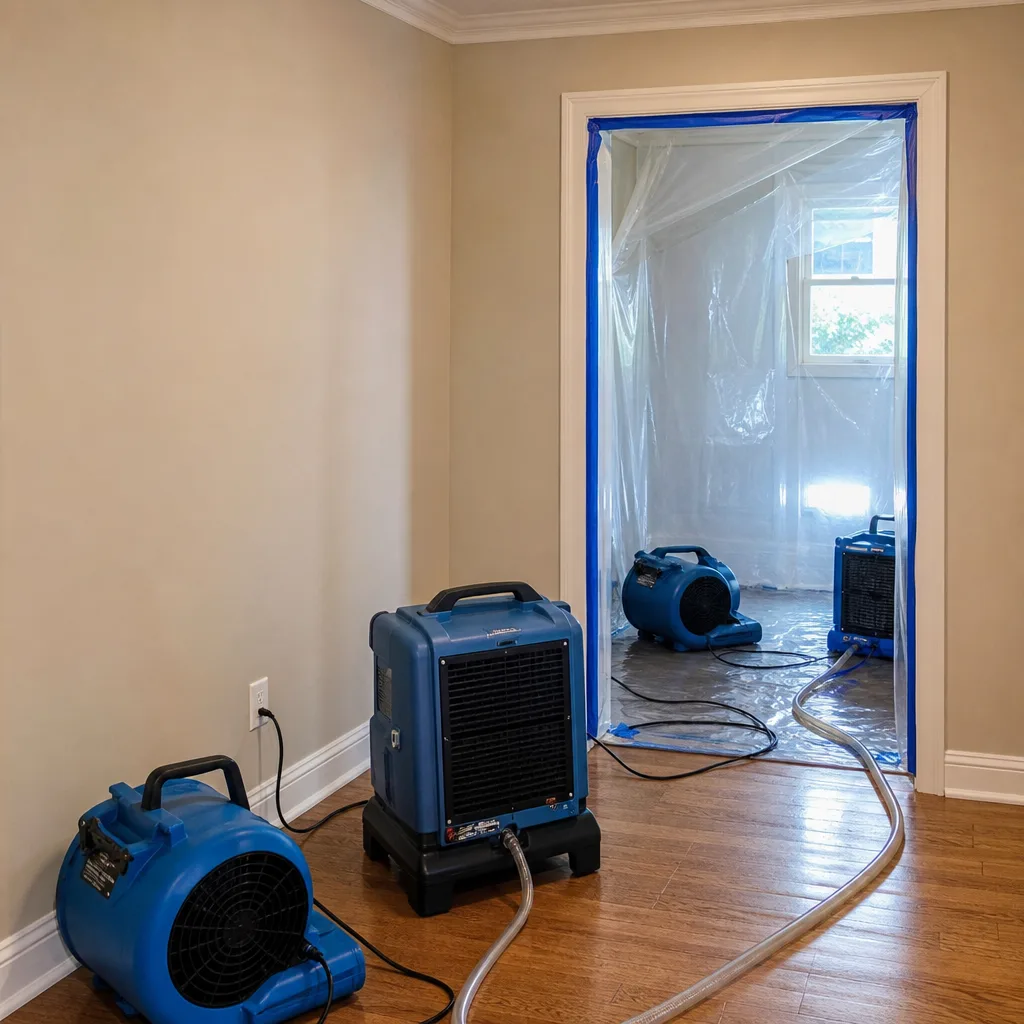 After
After24/7 Emergency Storm & Disaster Restoration in Bayside
Storm and flood damage in Bayside moves fast, and so do we. Floodline Restoration Co. answers the phone with a live dispatcher at any hour, day or night, and our certified crews reach homes across 11359, 11360, and 11361 quickly, usually within 45 minutes of your call. When tidal surge, a snapped tree limb, or a backed-up sewer line breaches your home, the first hour determines whether you’re facing a cleanup or a rebuild. Call (518) 873-4306 the moment you see water, smell smoke, or spot a sagging ceiling. We’ll walk you through the first steps and get a crew rolling to you before you hang up.
Understanding Storm & Disaster Restoration Severity in Bayside Properties
Storm damage in Bayside rarely fits a single category. Water from a nor’easter surge or a failed sump pump during a thunderstorm is Category 1 or 2, but the moment it mingles with what’s already in your basement drain or the combined sewer mains that run under Bell Boulevard and Northern Boulevard, it jumps to Category 3, meaning pathogenic contamination requiring full biohazard containment, antimicrobial treatment, and structural drying, not just mopping and fans. Our crews perform moisture mapping with thermal imaging and hygrometers on every job, because Bayside’s 1920s through 1940s Tudors and Colonials don’t dry like modern homes. Plaster-and-lath walls, older foundation stone, and finished basements with paneling over concrete trap water in hidden cavities where mold takes hold within 48 hours. We identify these paths before we start moving air, because the wrong drying sequence in an old Bayside house means demolition two weeks later.
Why Bayside Property Owners Choose Floodline Restoration Co.
- 45-minute response commitment - Our Bayside crews are on the road fast, with extraction running the same visit.
- A live person answers, 24/7 - Never an automated system, never a call center. You get a dispatcher who knows Bayside’s streets at 2 a.m.
- IICRC-certified technicians - Our crews hold WRT, FSRT, and AMRT certifications and train to RIA and IFA standards.
- Free visual inspection - We assess the damage before any work begins, so you make decisions with real information.
- Direct insurance billing - We handle the claim paperwork and talk to your adjuster, so you’re not the messenger.
- One team from extraction to reconstruction - No mid-job handoff to a crew you’ve never met. The certified team that reads your moisture map on day one rebuilds what needs rebuilding.
Our Storm & Disaster Restoration Process
Inspection & Assessment
We start with a full visual and moisture audit using thermal imaging cameras and hygrometers, identifying every affected area, the water category, and any legacy materials in your Bayside home that need special handling. You get a written scope before work begins.
Extraction & Stabilization
Using truck-mounted and portable extraction units, including Dri-Eaz and XPOWER equipment, we remove standing water and secure compromised areas. For storm damage, this may include emergency board-up of broken windows or doors and roof tarping to stop further water entry.
Drying & Dehumidification
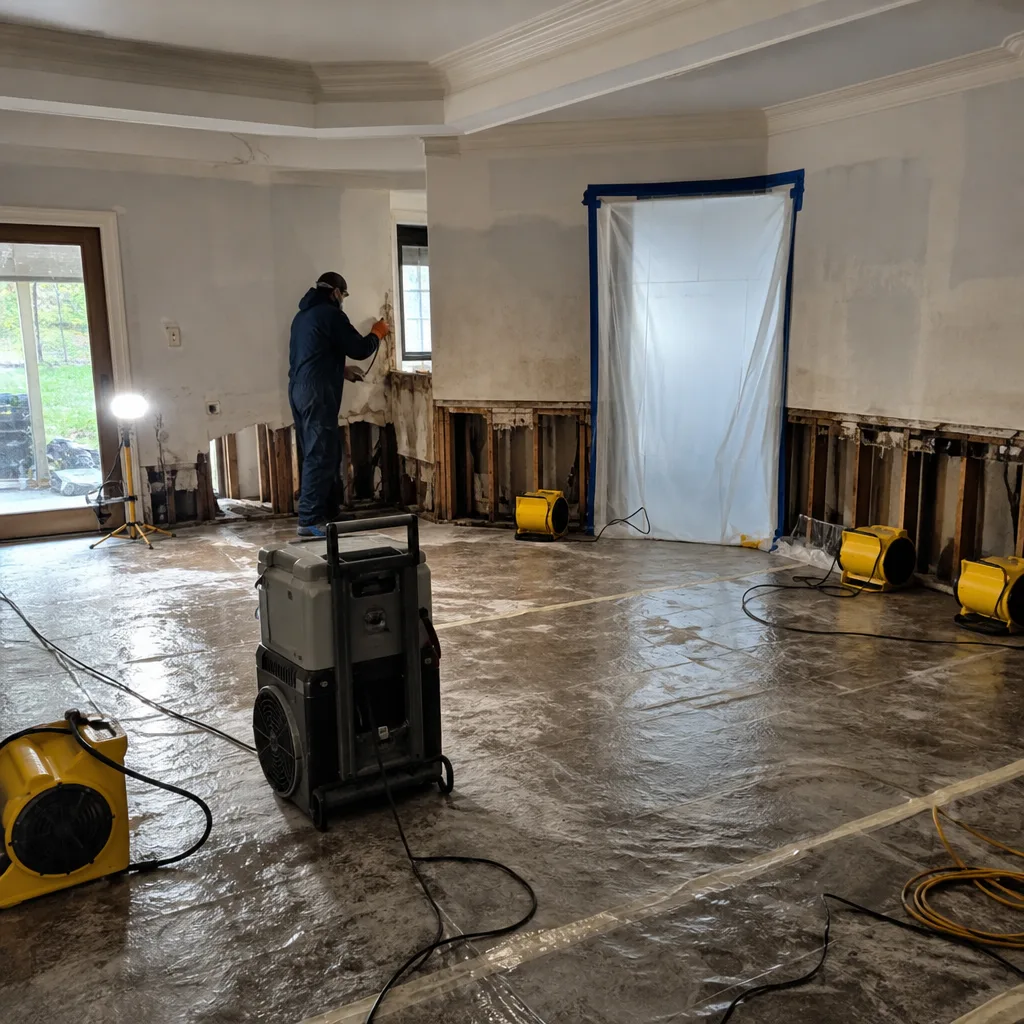
Industrial air movers and Phoenix dehumidifiers run on a calculated layout based on your home’s materials, not a guess. Plaster and old framing in Bayside homes dry slower than modern drywall, so we take daily readings and adjust equipment placement until the dry standard is met.
Cleaning & Sanitization
When storm water has introduced sewage or bay sediment, we contain the affected rooms with HEPA-filtered negative air machines and apply antimicrobial treatments after the structural drying is complete. Hard surfaces are cleaned and sealed; contaminated porous materials are removed and replaced.
Moisture Verification & Documentation
We log every reading from day one through final verification and hand you, and your carrier, the full moisture log. This is the documentation that proves the drying was done to standard, which matters when old construction hold moisture hidden from view.
Repairs & Restoration
The same Floodline crew that extracted the water handles the rebuild, from replacing plaster and refinishing floors to reconstructing finished basements. We stand behind every job with our 90-Day Done Right Promise, in writing.
Need Emergency Storm & Disaster Restoration in Bayside Now?
Crews minutes away, answering live 24 hours a day. The sooner we start, the less it costs.
Working With Your Insurance Company
We’ve handled enough Bayside claims to know that the paperwork matters as much as the drying. Floodline Restoration Co. documents everything from the first hour: photos of the damage room by room, moisture readings before and during drying, and a line-item scope of work in industry-standard format that your adjuster can process without delay. We communicate directly with your carrier, so you’re not translating restoration terminology on a phone call. Our goal is a claim that gets approved because the documentation is complete, specific, and defensible. If your storm damage involves sewer backflow, which is a Category 3 scenario, we document the contamination thoroughly, because that distinction determines coverage on many Bayside policies.
What We Provide Your Insurer
- Thorough documentation of the loss
- Photos of all damage, room by room
- Moisture readings and drying logs
- A detailed, line-item scope of work
- Direct coordination with your carrier
Built for Bayside’s Loss Calendar
Bayside’s calendar of storm losses runs on a predictable rhythm, and our teams plan around it. Winter nor’easters push water and ice into bayfront streets in Bay Terrace and along the shoreline near Cross Island Parkway, while January deep freezes burst supply lines in the unheated crawl spaces common under 1920s Colonials. Spring brings snowmelt and saturated ground, which drives groundwater seepage into basement foundations across Bayside’s lower streets. Summer thunderstorms, with their sudden downpours, overwhelm the area’s older combined sewer mains and send sewage backflow into basements across Bayside regardless of elevation. And each September, tropical systems trace the Long Island Sound coast, mirroring what Sandy did in 2012 when surge water reached doorways along Little Neck Bay. We’ve seen every one of these patterns in Bayside homes. Each one requires a different response, and we arrive ready for the one that’s hitting today.
Storm & Disaster Restoration Across Bayside’s Neighborhoods
Bayside isn’t one housing type, and our response routes reflect that. Along Bell Boulevard near the Bayside Long Island Rail Road station, we respond to wind-driven rain entering commercial storefronts and the apartments above them, where tarps and board-up have to be secure enough for safety by morning. In Bay Terrace, mid-century brick co-ops present a different challenge: water travels through shared wall chases and mechanical shafts, so a leak that started in a top-floor unit can show up days later as staining in a fourth-floor apartment three doors down. We map those paths with moisture meters before any drying begins. The leafy blocks south of Northern Boulevard, filled with Tudors from the 1920s and 1930s, demand careful material handling, because opening a plaster wall without checking for horsehair plaster and ACM can create a liability worse than the storm itself. And along the waterfront streets of 11360, we know that bay-adjacent soil stays saturated for days after a surge, which means seepage can continue long after the tide recedes.
Specialized Storm & Disaster Restoration Services We Offer in Bayside
Flood Damage Restoration
Flood water in Bayside is rarely clean. When Little Neck Bay overflows or the combined sewer backs up during a heavy rain, the water carries silt, salt, and sewage into your basement. We extract, contain, treat, and dry using the full force of our Storm & Disaster Restoration team, with the moisture log to prove the job was done to standard.
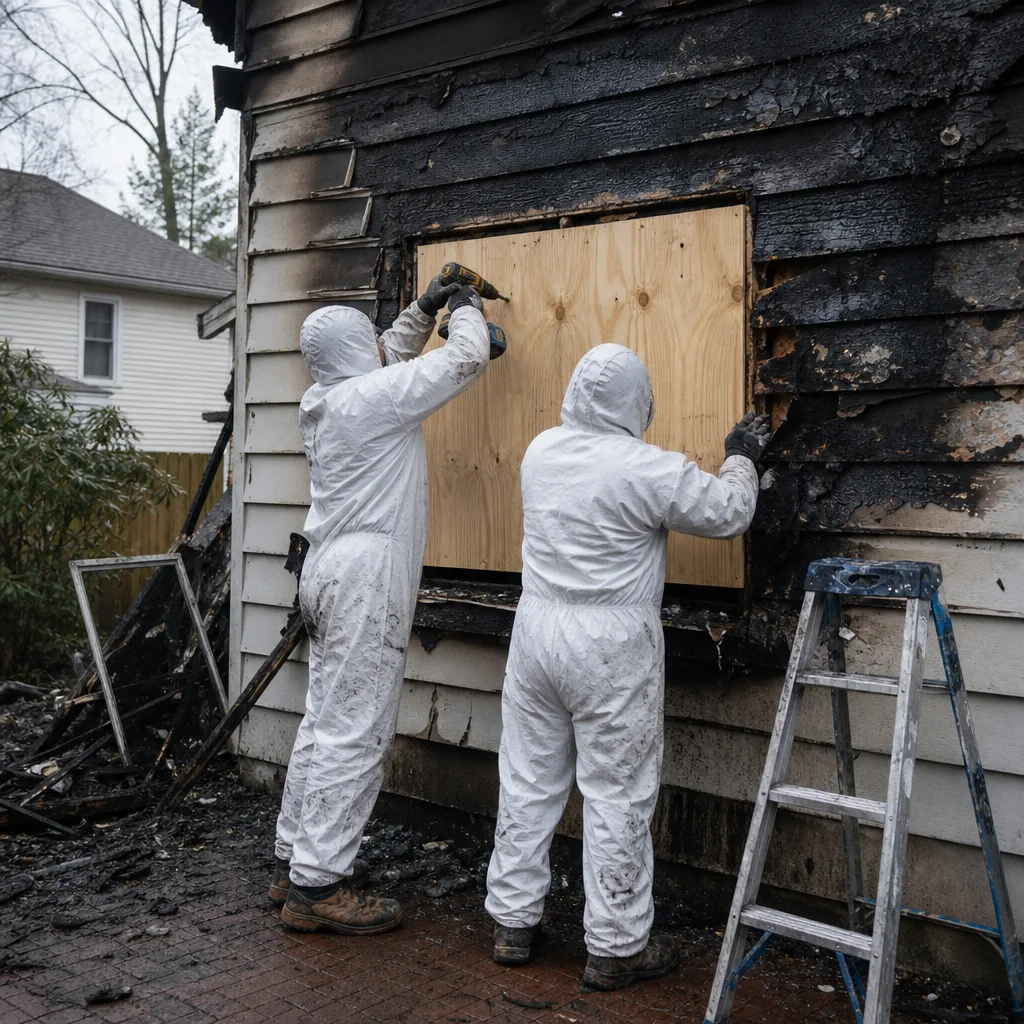
Storm Damage Cleanup
Fallen limbs, roof debris, broken glass, and scattered insulation after a high-wind event need to be cleared before restoration work can start. Our crews handle the full removal, including the wet carpet, ruined drywall, and damaged belongings, with care for what can be saved and transparency about what can’t.
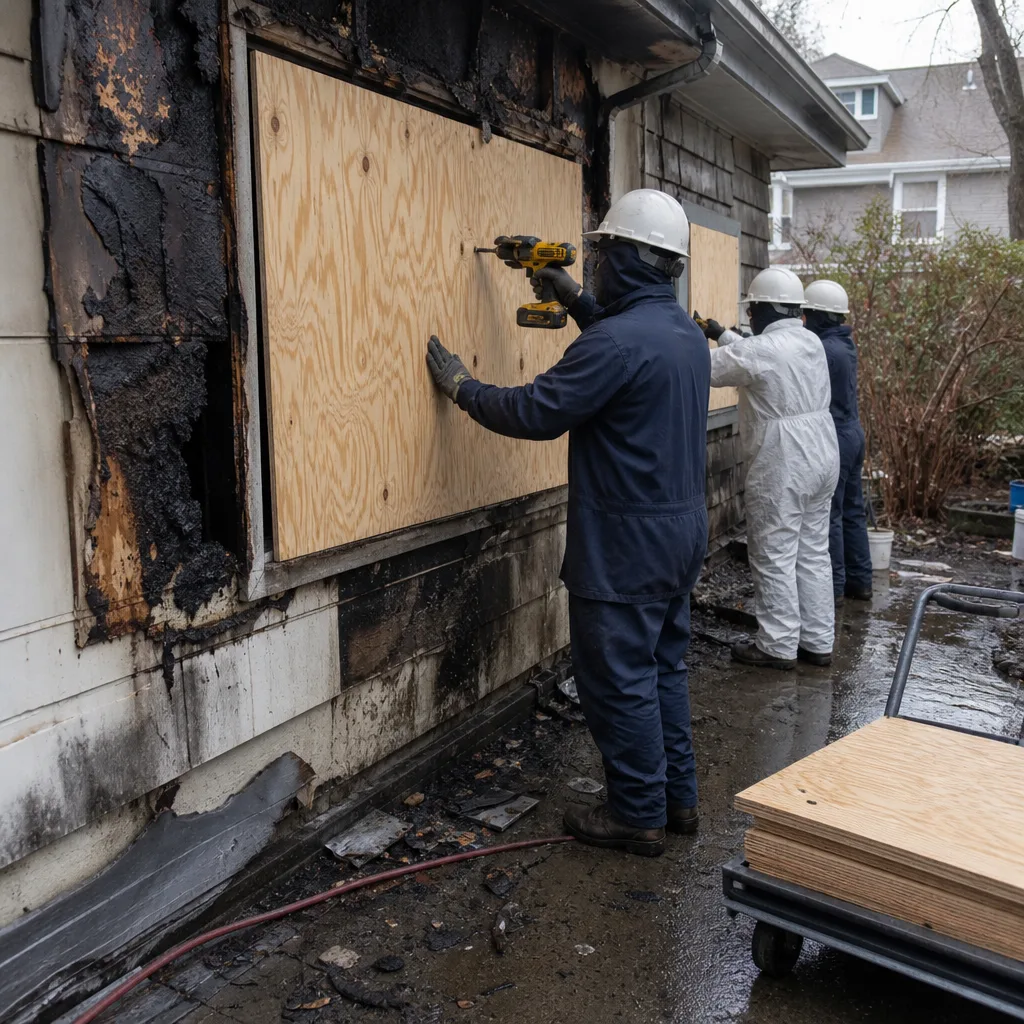
Emergency Board-Up
When a storm blows out a window or a limb punctures a wall, your home is open to weather, trespass, and theft. We board up and secure openings with plywood, industrial fasteners, and weather wrap, fast enough to make your home secure the same night, and we document the board-up for your insurer.
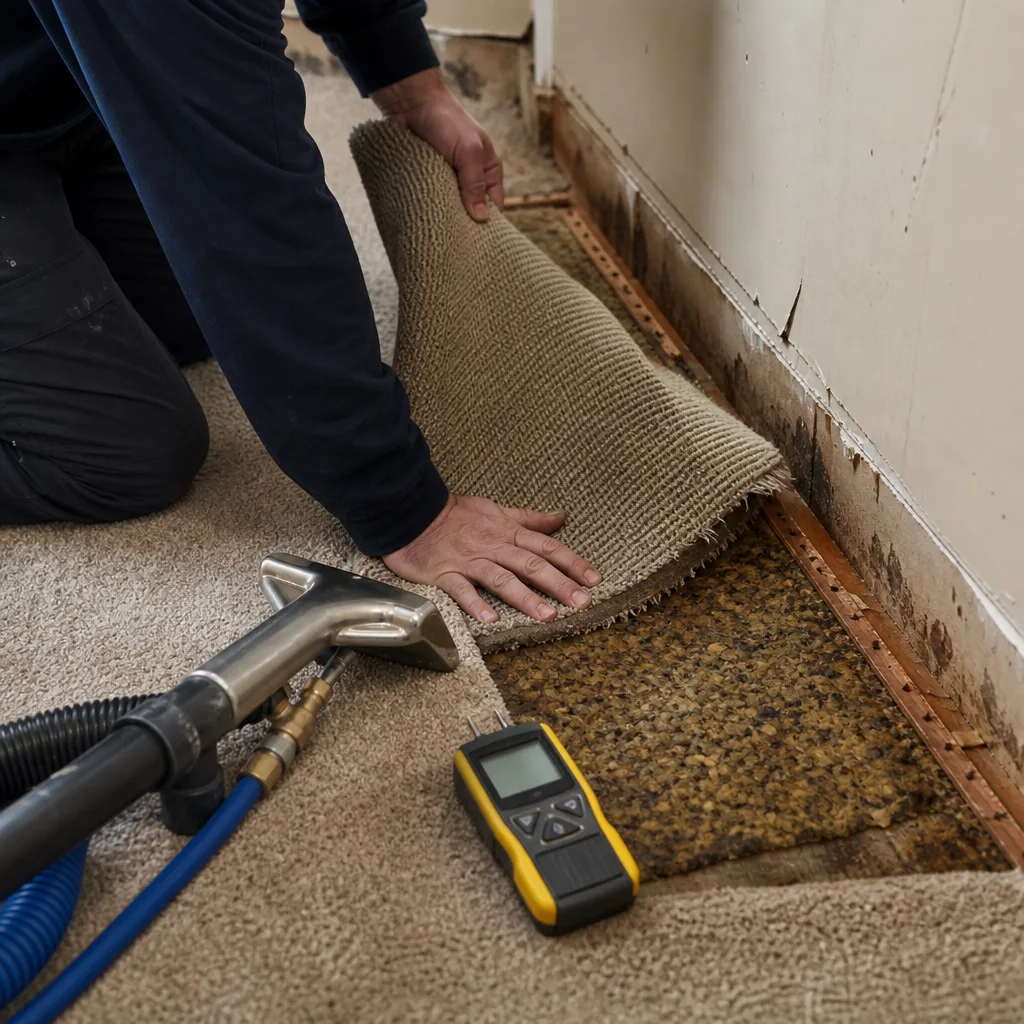
Roof Tarping
A storm-damaged roof leaks with every passing shower until it’s tarped. Our crews secure a waterproof tarp over the damaged section using counter-battening that holds in Bayside’s coastal winds, buying you the time to plan a permanent repair without watching your ceilings stain.
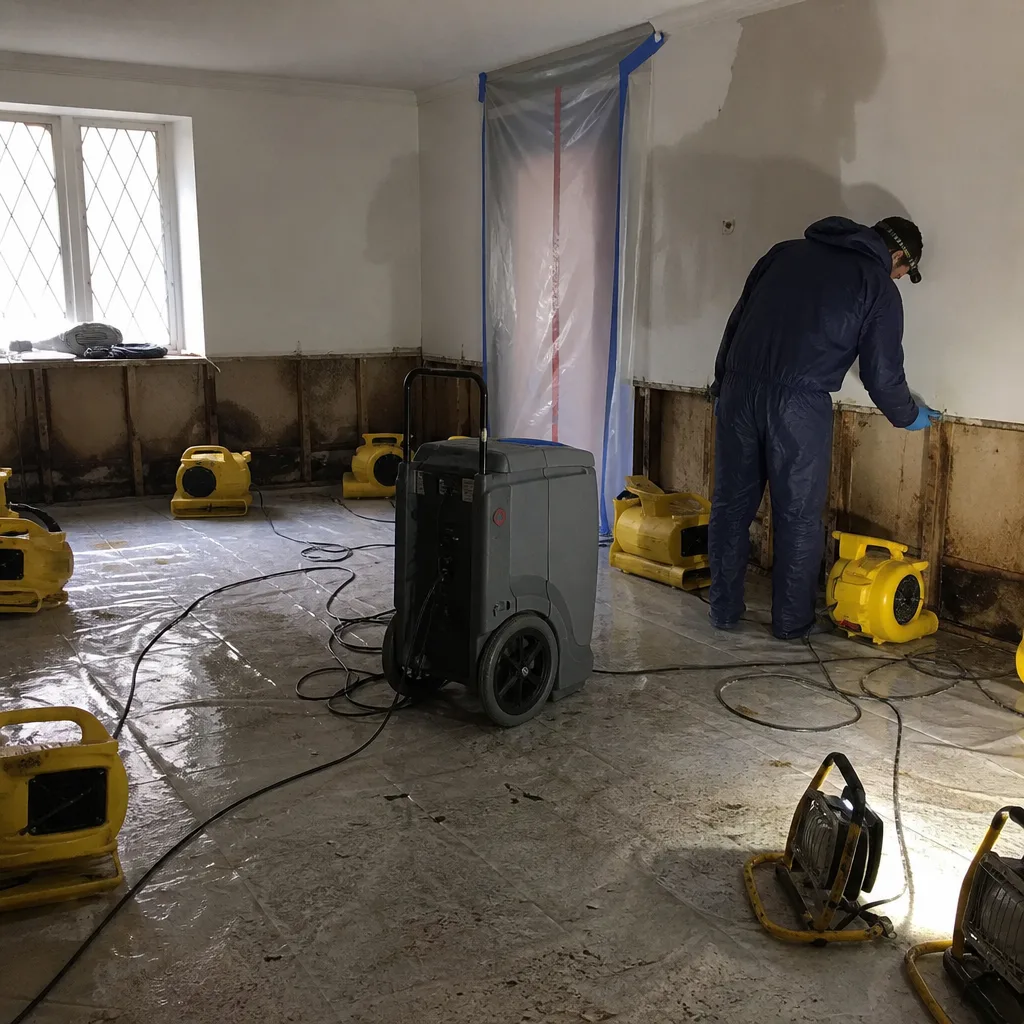
Debris Removal
Storm debris, from tree limbs to waterlogged furniture, becomes a hazard and a mold source if left in place. We remove it, dispose of it properly, and clear the driveway and sidewalk so your family can move safely around the property while restoration proceeds.
What happens when you call
- 1
A real person answersNo phone trees - you reach a local pro.
- 2
You get an upfront price rangeHonest numbers before anyone is dispatched.
- 3
A background-checked tech heads outLicensed & insured, dispatched right away.
- 4
You approve before work beginsNothing starts until you say go.
Storm & Disaster Restoration Costs in Bayside, NY
Storm restoration costs in Bayside reflect the structure you own and the water category you’re facing. A straightforward storm cleanup with drying in a modern home might run $2,500 to $5,000. A Category 3 sewer backflow into a finished basement in a 1930s Tudor, requiring containment, antimicrobial treatment, plaster removal, and rebuild, commonly falls between $12,000 and $35,000. Roof tarping typically ranges $400 to $1,200 depending on accessibility and roof slope. Emergency board-up runs $350 to $900 for standard openings. What moves the price is the age of your home’s materials, the extent of hidden moisture in plaster walls, and whether demolition reveals legacy materials requiring specialized handling. Most of our Bayside storm restoration jobs are covered by insurance, and our free visual inspection turns the initial unknowns into a firm written scope before you commit. Call (518) 873-4306 and we’ll get you real numbers based on your specific home, not a brochure.
Key Takeaways for Bayside Homeowners: Flood damage here often involves Category 3 water due to combined sewer backflow. Older Tudor and Colonial homes require legacy-material checks before walls are opened. Coastal soil saturation delays drying and keeps wicking water into foundations for days after a storm. We document everything for your insurer and bill them directly.
We Also Serve Cities Near Bayside
Floodline Restoration Co. crews regularly respond across the North Shore of Queens. We handle storm damage calls in Bayside and neighboring communities including Oakland Gardens, Little Neck, Great Neck, and Manhasset, all with the same 24/7 live dispatch and 45-minute response commitment.
Bayside Storm & Disaster Restoration Questions, Answered
Why does my Bayside basement still feel damp days after a storm even though there’s no standing water?
In Bayside’s older homes, water wicks upward and inward through foundation stone and slab edges long after the visible water is gone, especially in bay-adjacent neighborhoods where the soil stays saturated for days. This is the delayed-surge pattern we see regularly in Bay Terrace and along the Little Neck Bay waterfront, and it requires active moisture mapping and structural drying, not just fans and dehumidifiers. We run thermal imaging and hygrometer readings to find where the water is still moving and set up drying equipment targeted at those paths. If your basement still feels damp, call (518) 873-4306 and we’ll find the source.
Do Bayside’s older Tudor homes need special handling after a flood?
Yes, and this is where a generic restoration company can get it wrong. Tudor and Colonial homes from the 1920s through 1940s often contain horsehair plaster, older framing, and asbestos-containing materials in pipe wrap, ceiling tiles, or floor adhesive. Before we open any wall or remove any material, our crews complete a legacy-material identification check to confirm what’s present and what requires specialized handling. This step is not optional, and it protects you from legal and health liabilities. It also extends the drying timeline, because plaster and lath hold moisture far longer than modern drywall.
Is sewage backup during heavy rain common in Bayside, and how is it handled?
Unfortunately, yes. Bayside’s older combined sewer infrastructure can be overwhelmed during heavy rain, pushing sewage-contaminated water back into basements across the neighborhood, even in homes that have never flooded before. This is a Category 3 water loss requiring full biohazard protocols: containment, HEPA air scrubbing, removal of contaminated porous materials, and antimicrobial treatment after drying. We document the contamination thoroughly for your insurer, because sewage backup often falls under different coverage provisions than rainwater intrusion. If your basement has sewage backup right now, call (518) 873-4306 and keep family members and pets out of the area.
How do you dry out a Bay Terrace co-op unit when the water came through shared walls?
Water in Bay Terrace’s mid-century brick co-ops travels through shared wall chases, pipe runs, and mechanical shafts, so we start by mapping moisture across the entire wall assembly, not just the room that shows staining. We coordinate with building management for access to common areas and adjacent units, because the water may have started three floors up. Our drying plan includes targeted air injection into wall cavities using Injectidry systems where needed, with daily readings logged and shared with you and the co-op board. This is a specialized response, and our crews have handled these buildings before.
What does a delayed-surge pattern look like in Bayside, and why does it fool homeowners?
A delayed-surge pattern is when storm surge soaks the ground around your foundation and the water keeps seeping into your basement for days after the storm has passed. In Bayside, we returned to a 1930s Tudor on Bell Boulevard three days after a nor’easter to find slow seepage still wicking under slab edges, water that had been moving through bay-adjacent soil the whole time. Homeowners often misread this as a burst pipe, which triggers the wrong drying strategy and misses the actual contamination source. That’s why we run moisture mapping on every Bayside storm call, even when the visible water is minimal. The source matters.
How quickly can you actually get to my Bayside home?
We commit to a 45-minute response time for emergency storm calls across Bayside, including 11359, 11360, and 11361. Our live dispatcher, not a recording, takes your call, confirms the address, and routes the nearest certified crew to you immediately. For bayfront streets in Bay Terrace, that often means we’re on site within a half hour. The faster extraction starts, the less saturated your plaster and framing become, and the lower your total restoration cost.
Will my insurance cover storm and flood damage restoration in Bayside?
Most Bayside homeowners policies cover storm-related water intrusion, wind damage, and sewer backup, though flood damage from tidal surge may require a separate FEMA flood policy, especially in the Special Flood Hazard Areas along Little Neck Bay. We’ve worked with carriers on hundreds of local claims and know how to document each scenario properly. Our team photographs everything, logs moisture readings daily, writes the scope in industry-standard format, and communicates directly with your adjuster. You’ll know what’s covered and what isn’t before the work escalates, and we bill your carrier directly when coverage applies.
What should I do in the first 30 minutes after storm damage in Bayside?
First, get your family to safety and shut off electricity to any flooded areas if you can do so safely. Call (518) 873-4306 before you start moving furniture, and we’ll walk you through the immediate steps while the crew is en route. If water is from the bay or a sewer backup, do not touch it with bare hands and keep children and pets away. If your roof is damaged or a window is broken, don’t climb anything, we’ll board up and tarp when we arrive. The sooner we document the damage and start extraction, the more of your home we can save and the cleaner your insurance claim will be.
Serving Bayside, NY - Our Local Coverage Area
We’re based in the Bayside area and know this community well. Use the map below to see our service coverage - if you’re nearby, we can almost certainly help.
Call Floodline Restoration Co. for Storm & Disaster Restoration in Bayside
When the water rises in Bayside, don’t wait. The line the water left is where we start, and we stay with the job until your home is dry, clean, and rebuilt to the standard you expect. Call (518) 873-4306 now for a free estimate and a live dispatcher who can have a certified crew at your door within 45 minutes. Serving Bayside, Oakland Gardens, Little Neck, Great Neck, and Manhasset. Founded in 2010 by Curt Bowman, Floodline Restoration Co. is built around a dispatch board, not a sales desk, and every job is backed by our 90-Day Done Right Promise, in writing. A square deal, no surprises on the bill, and one team from first extraction to final coat of paint. That’s how restoration should work.
Available 24 hours a day, 7 days a week. $50 Off Any Repair Over $250 | $89 Seasonal Tune-Up | Senior & Veteran 5% Discount, Always.
Written by Curt Bowman, Owner at Floodline Restoration Co., serving Bayside with storm, flood, and disaster restoration since 2010.