
Free visual inspection and a written scope of work before any mitigation begins - photos, moisture readings, and drying logs go in your claim file
The scope we write is the scope we bill. Anything new gets shown to you, in writing, before we touch it.
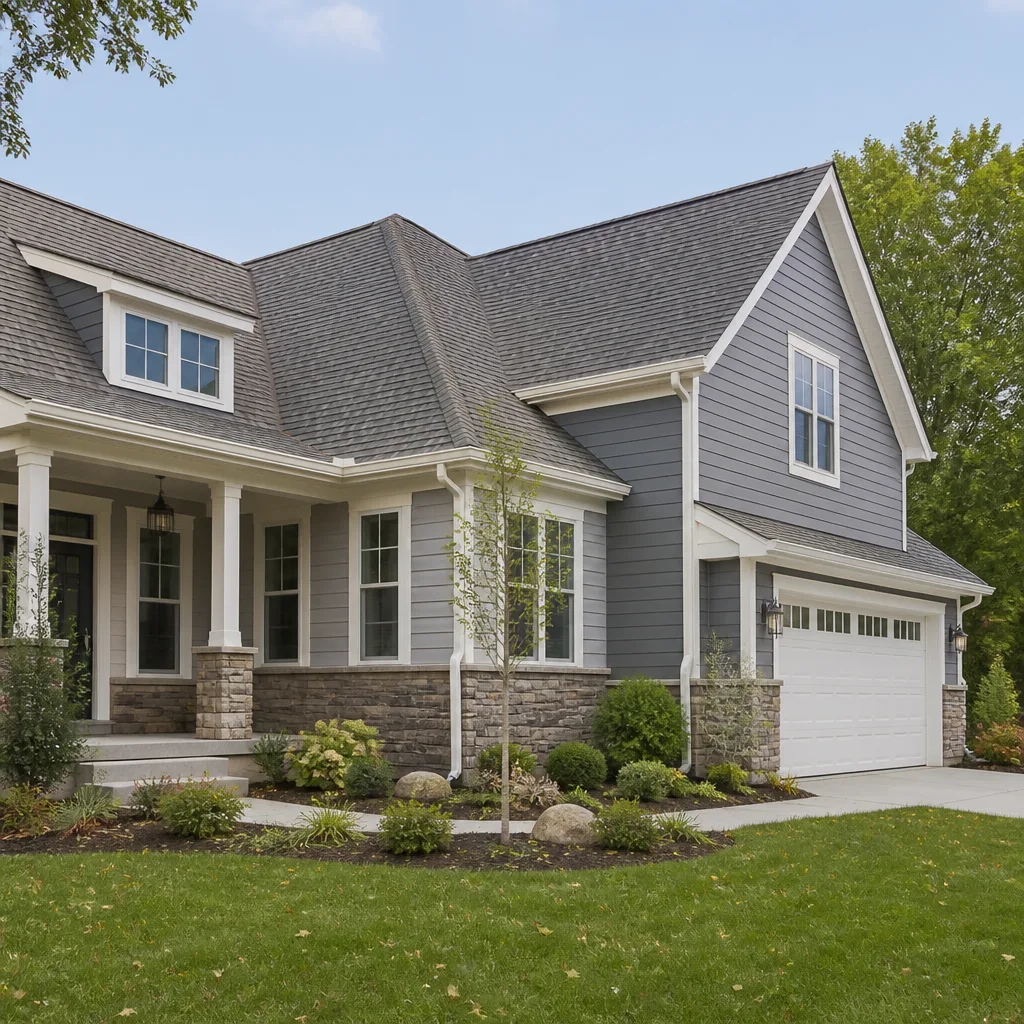
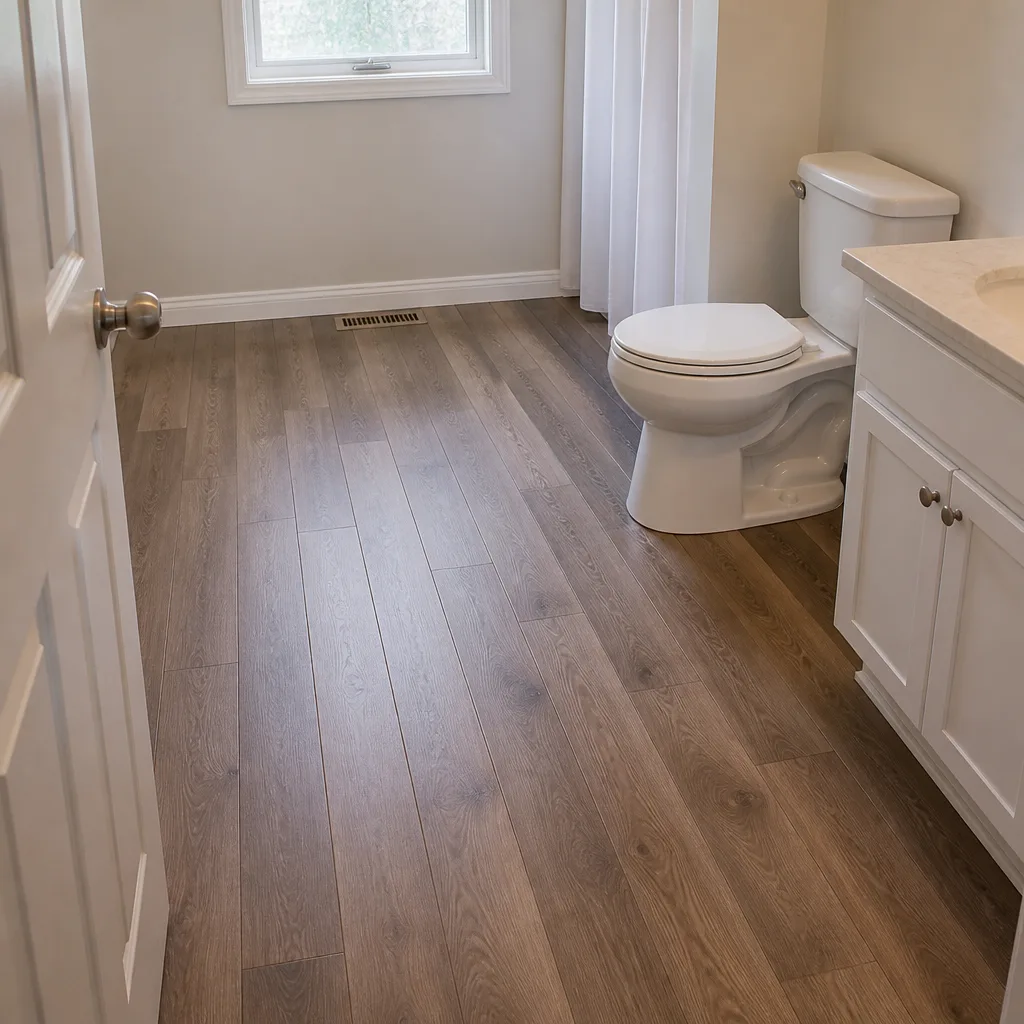
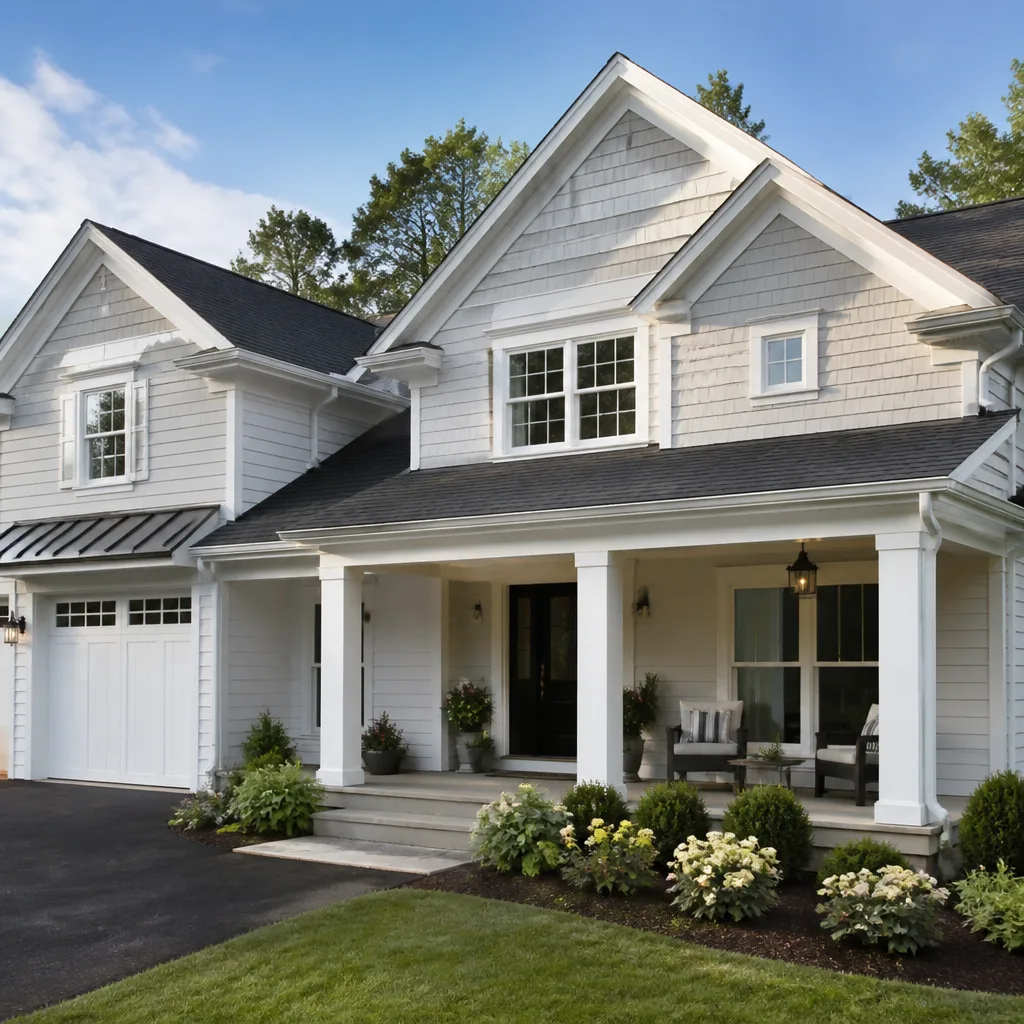
 Before
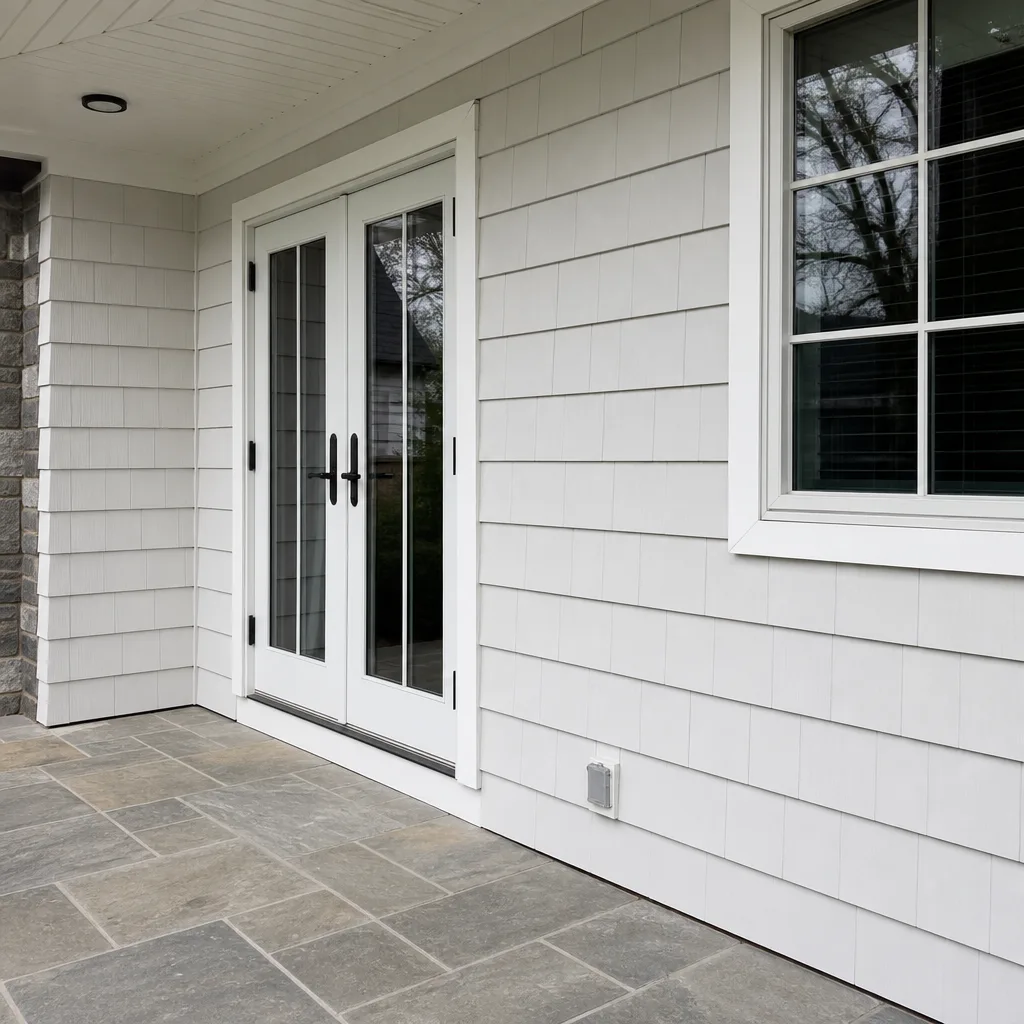 After
After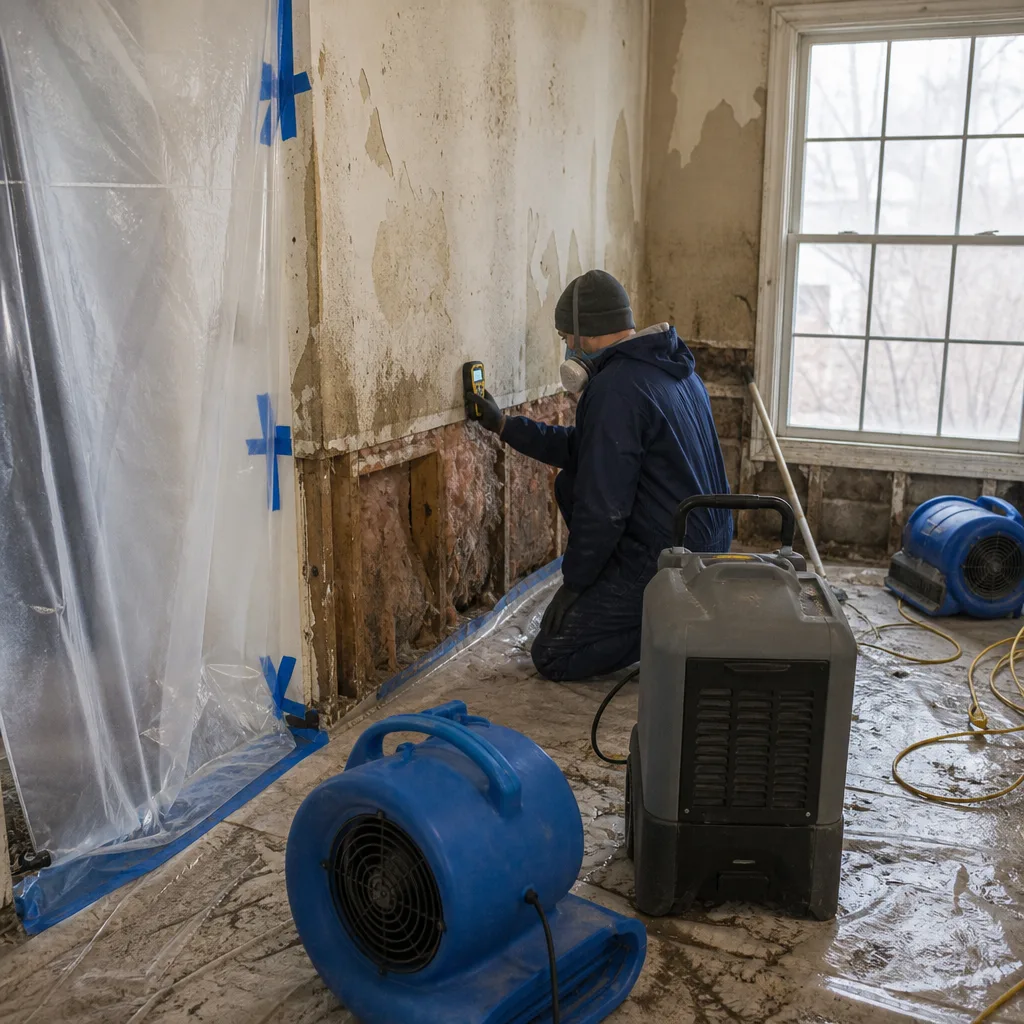 Before
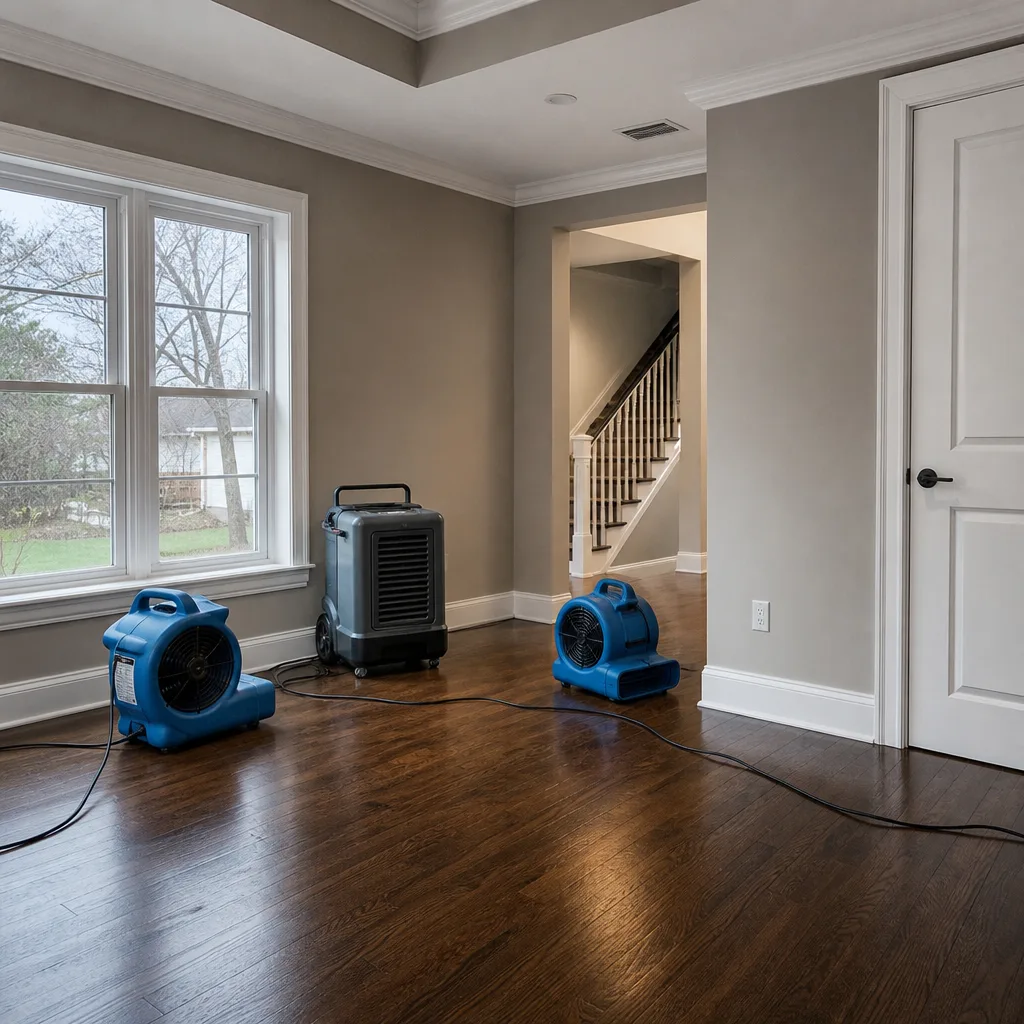 After
After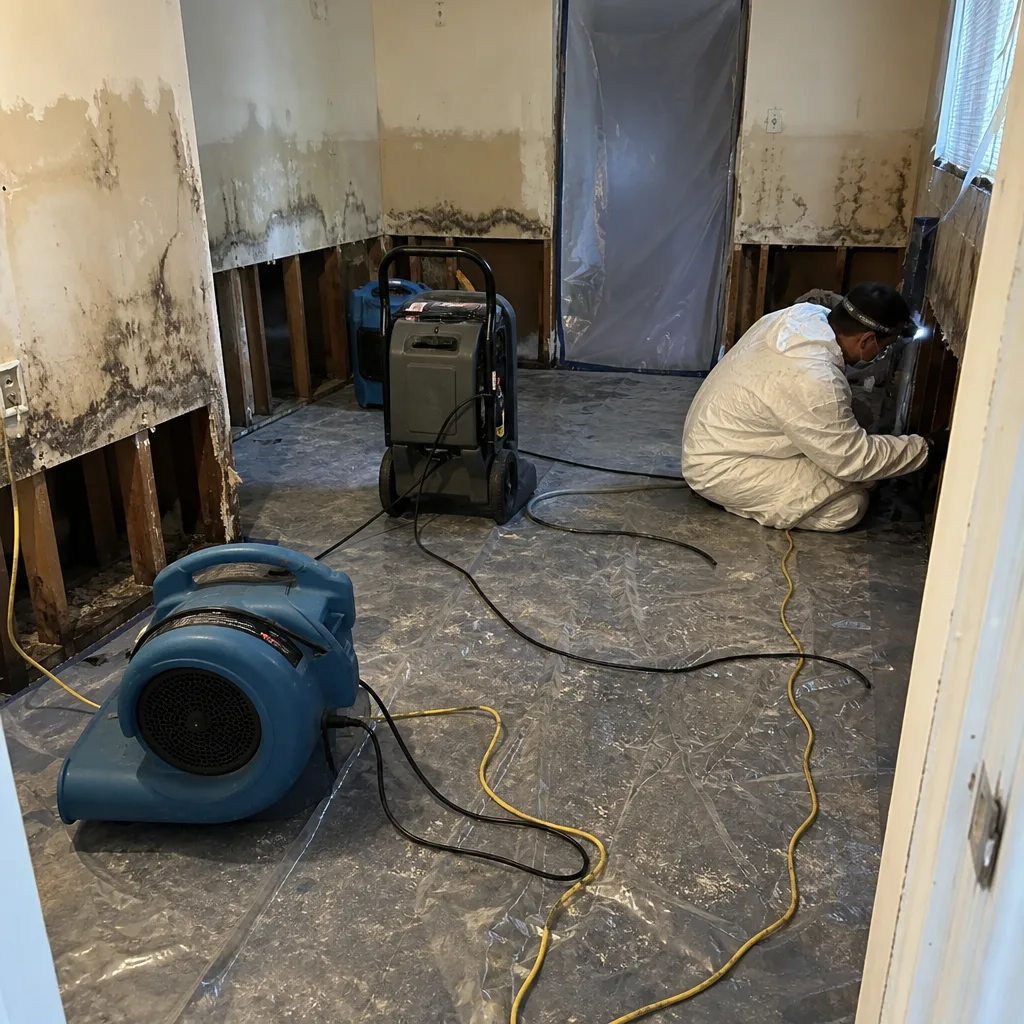 Before
 After
After24/7 Emergency Storm & Disaster Restoration in Port Washington
Storm and disaster restoration in Port Washington means answering the phone at 2 a.m. when a nor’easter has just shoved Manhasset Bay into your finished basement. We do. Call (518) 873-4306 and a live dispatcher picks up, not a recording. A certified crew can reach most Port Washington addresses within 45 minutes, and extraction usually starts on that same visit. The first hour matters more on this peninsula than almost anywhere else on Long Island because saltwater moving through your home is doing damage that compounds by the minute. Every hour salt sits in wall cavities is another hour it eats at wiring insulation and draws moisture deeper into framing. Call now, get a free visual inspection, and we’ll tell you exactly what you’re facing before any work begins.
Understanding Storm & Disaster Restoration Severity in Port Washington Properties
Storm damage in Port Washington splits into two very different conversations: wind damage and water damage. Wind damage is what you see from the street – shingles gone, siding peeled, a tree limb through a window. Water damage is what’s happening behind those surfaces. The restoration industry classifies flood water into three categories. Category 1 is clean water, like a supply line break. Category 2 is gray water, from washing machines or dishwashers. Category 3 is black water: sewage, bay water, saltwater surge – the stuff that carries bacteria and salt crystals into your wall cavities. Port Washington’s dual-harbor geography means many of our storm events push Category 3 water into homes from both directions at once. Older Gold Coast-era homes and Victorians near the waterfront were built before flood-resilient standards existed. Plumbing and electrical systems often sit at grade level. When saltwater reaches them, it’s not a mop-and-fan job. It’s full containment, salt-specific drying protocols, and sometimes mechanical replacement. Getting the category wrong costs homeowners months of hidden mold and re-remediation.
Why Port Washington Property Owners Choose Floodline Restoration Co.
- 45-minute response commitment: We dispatch from within the metro area, and our crews know Manhasset Bay and Hempstead Harbor flood patterns well enough to navigate even when roads are partially blocked.
- Live answer, 24 hours a day: A person picks up when you call (518) 873-4306 at any hour. No phone tree. No “leave a message and we’ll call you back.” A dispatcher who can actually send someone.
- IICRC-certified crews: Our technicians carry WRT, FSRT, and AMRT certifications and are trained to IICRC, RIA, and IFA standards. They’re background-checked and uniformed, and they’ll introduce themselves at your door.
- Free visual inspection: We look before we scope. You get a written explanation of what’s damaged, what can be dried in place, and what needs to come out, before you approve anything.
- Direct insurance billing: We coordinate with your carrier, provide the documentation they ask for, and bill them directly. You don’t play messenger between Floodline and your insurer.
- One crew, start to finish: The same certified team that does your emergency extraction also handles drying, logging, and the rebuild. No mid-job handoff to a crew you’ve never met.
Our Storm & Disaster Restoration Process
Inspection & Assessment
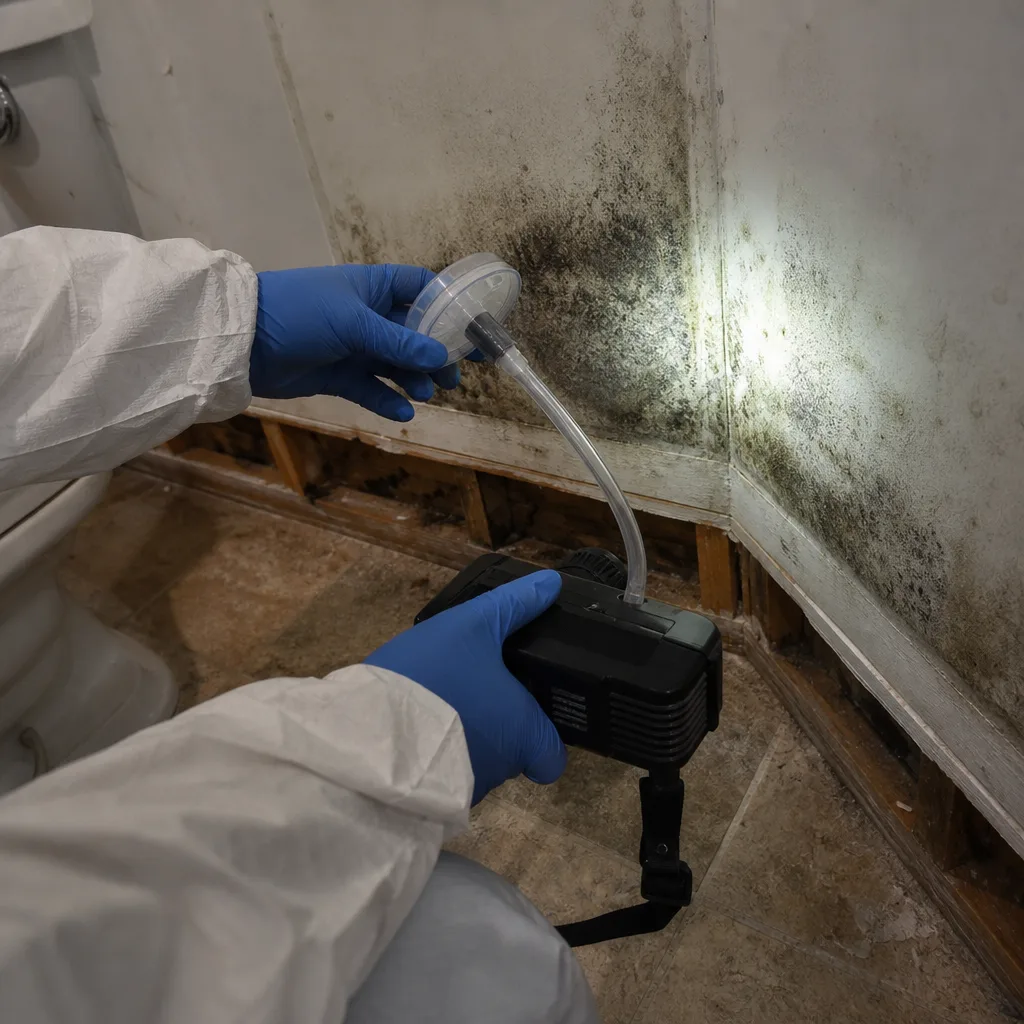
We start with a visual inspection plus thermal imaging and moisture mapping to find what the naked eye can’t. In Port Washington, that means probing wall cavities for salt crystal deposits even when drywall looks intact. You get a written scope before work begins.
Extraction & Stabilization
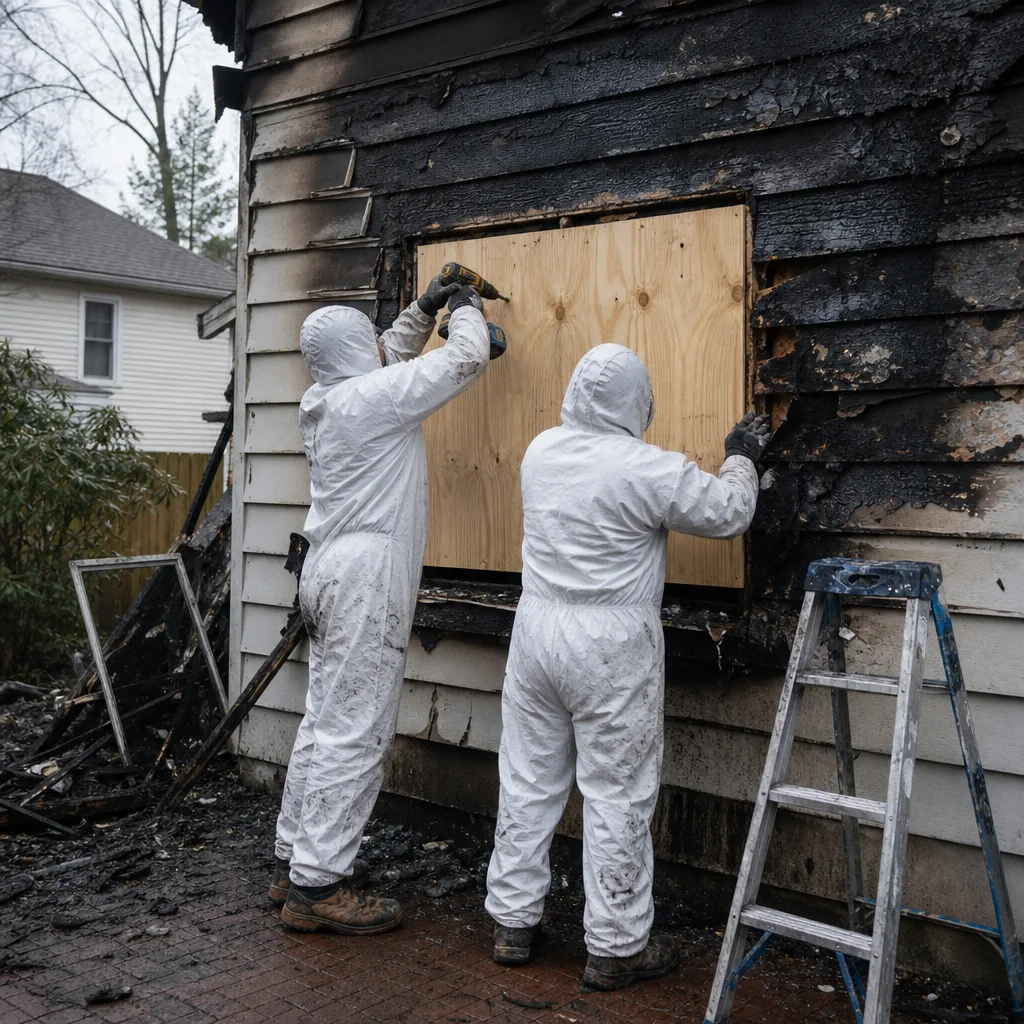
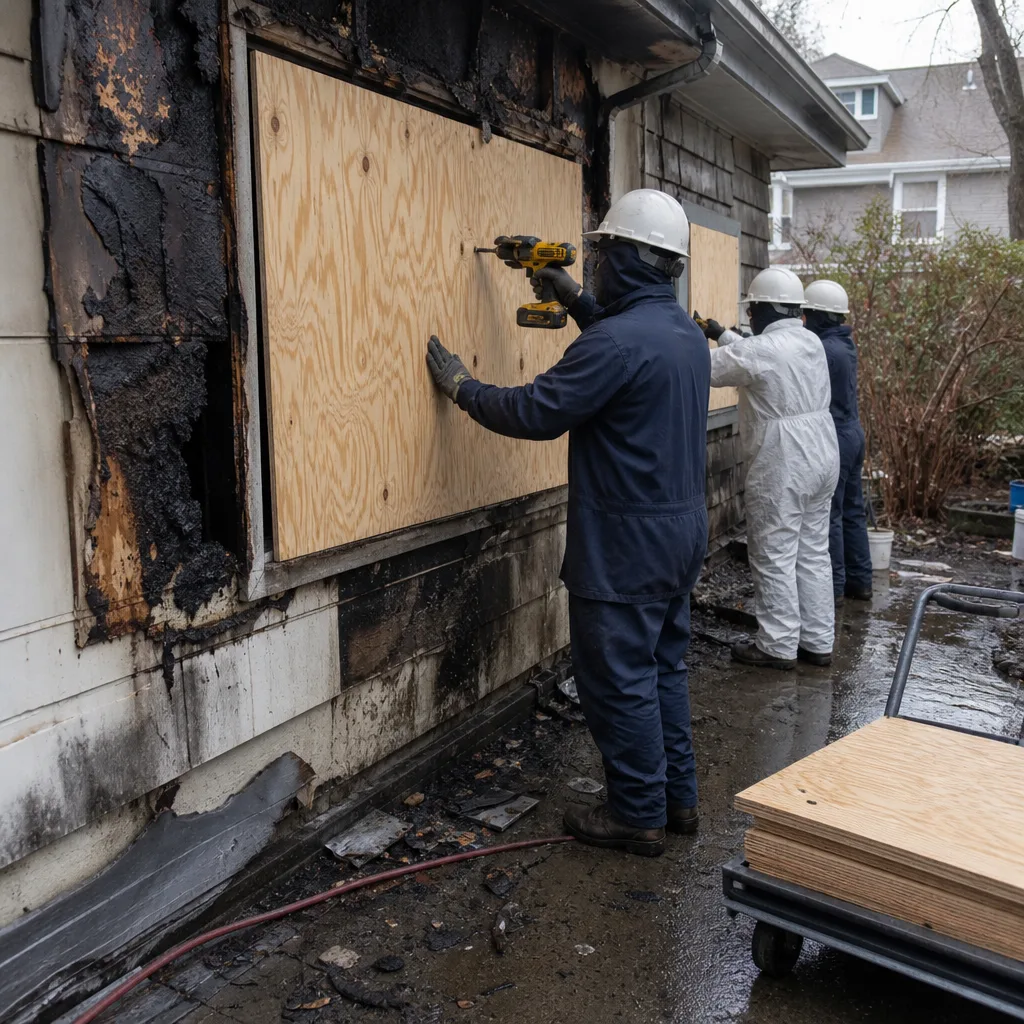
Standing water comes out first, fast, using truck-mounted extraction units and submersible pumps. We also stabilize what’s unstable: tarping roofs, boarding up broken windows, and securing structural hazards so the property doesn’t deteriorate further.
Drying & Dehumidification
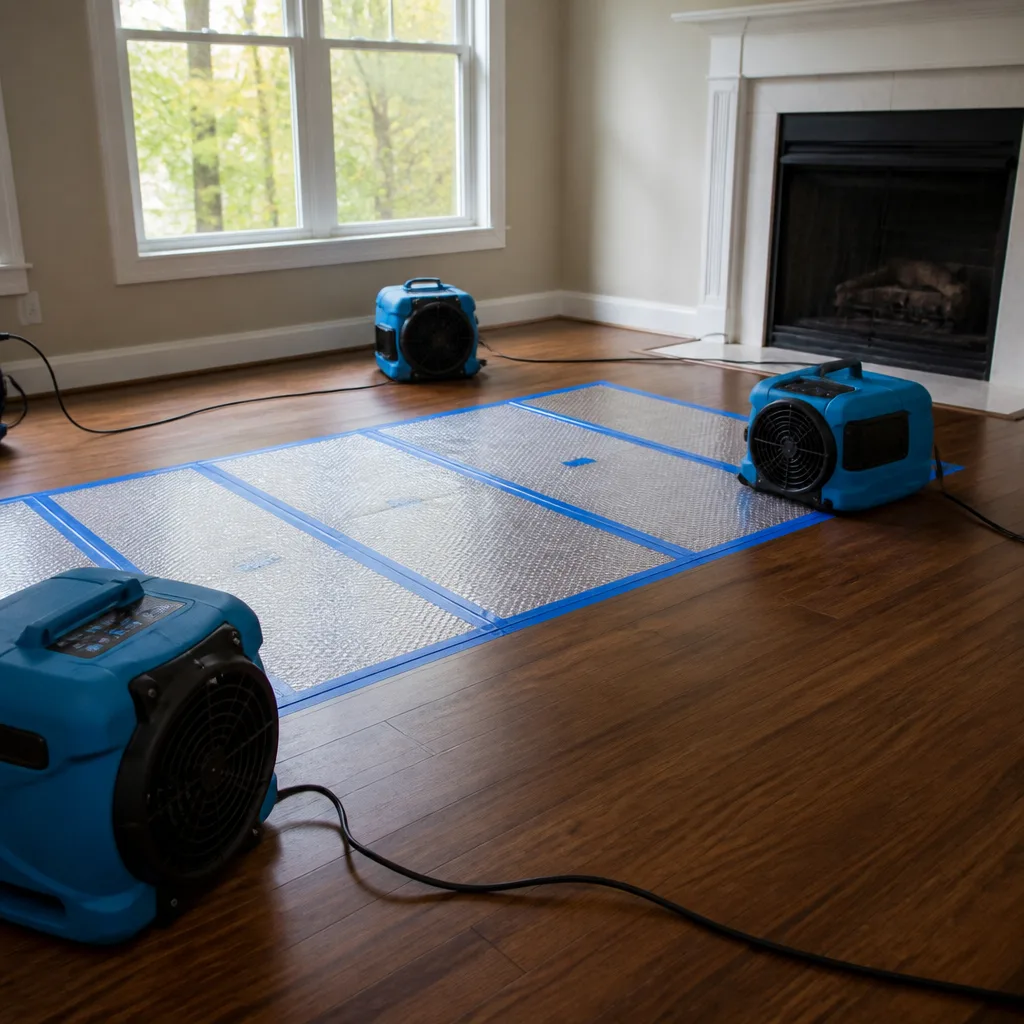
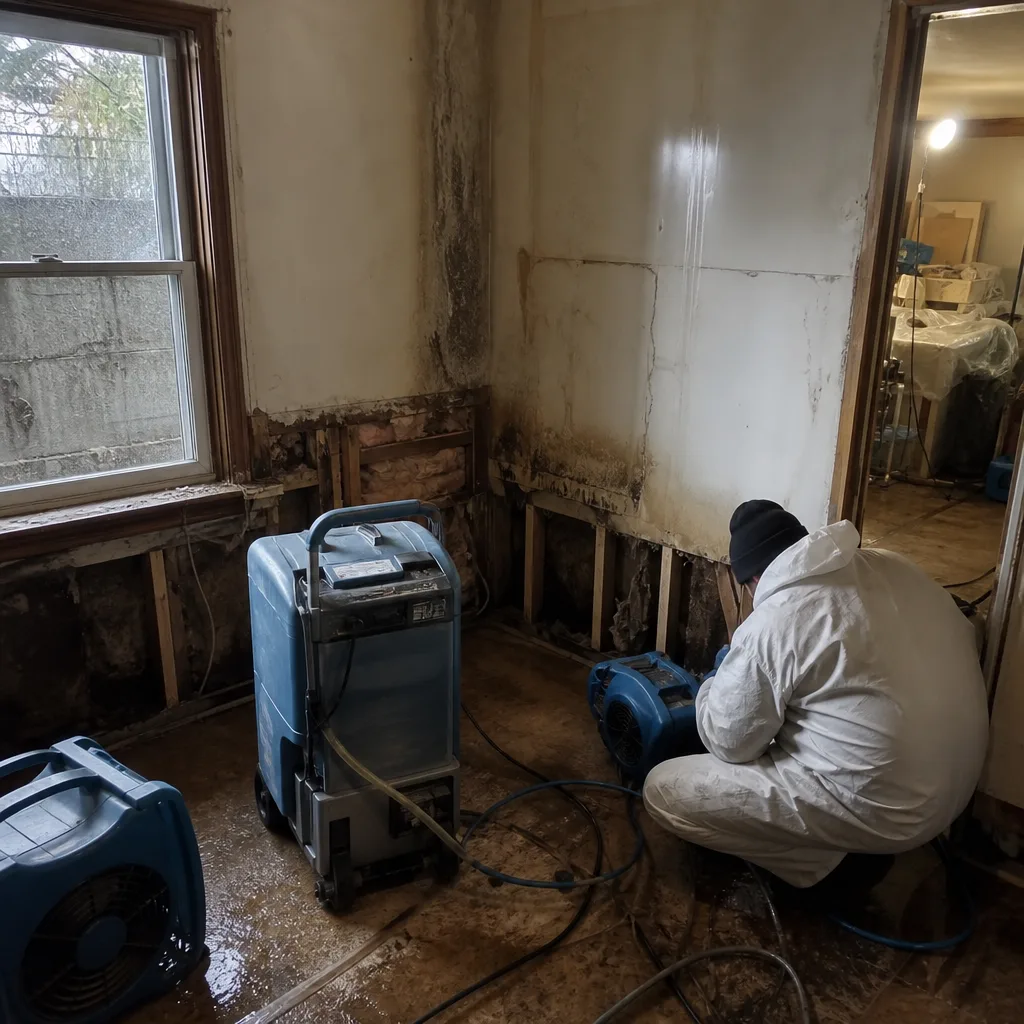
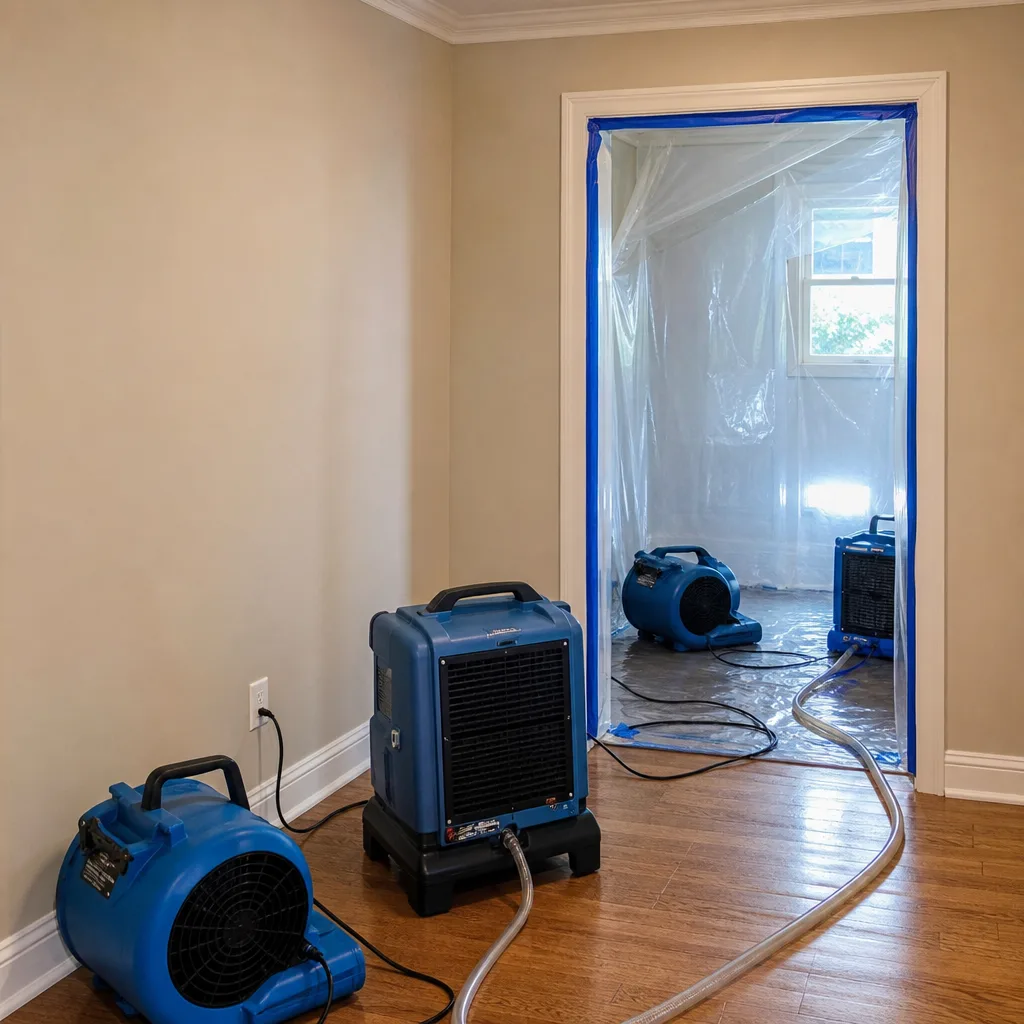
We set up commercial-grade air movers and dehumidifiers from Phoenix, Dri-Eaz, and XPOWER. In saltwater floods, we specifically position equipment to pull saline moisture from wall cavities and subfloor spaces. Daily moisture readings are logged until the dry standard is met.
Cleaning & Sanitization
Category 3 water means contaminated surfaces get antimicrobial treatment and HEPA vacuuming. Salt residue gets addressed specifically, because it’s hygroscopic: it keeps pulling moisture from the air long after the flood recedes.
Salt-Specific Treatment & Containment
In Manorhaven and other bay-front areas, we set up containment and remove salt-laden insulation and affected drywall where readings indicate hidden saturation. If we don’t cut out the salt, the next nor’easter just reactivates the same moisture cycle.
Repairs & Restoration
Once the structure is dry and documented, we rebuild: drywall, insulation, flooring, trim, paint, and structural repairs. The 90-Day Done Right Promise covers it all in writing. If something’s not done right, we make it right, no arguing.
Need Emergency Storm & Disaster Restoration in Port Washington Now?
Crews minutes away, answering live 24 hours a day. The sooner we start, the less it costs.
Working With Your Insurance Company
Storm damage claims in Port Washington are never simple, especially in the AE flood zones that FEMA remapped after Sandy. We’ve handled hundreds of them, and the pattern is the same: carriers respond faster when documentation starts on day one, not day four. From the first hour on site, we photograph every affected room, log moisture readings daily, and build a line-item scope of work that matches what your policy actually covers. We talk to your adjuster directly, in their language. You don’t chase paperwork. You don’t get stuck between “your contractor said this” and “your carrier said that.” We carry IICRC standards into every claim, because a scope written to those standards survives scrutiny better than a vague invoice. If your Port Washington home is in a flood zone, we’ll also document what NFIP or private flood coverage applies versus your standard homeowner’s policy.
What We Provide Your Insurer
- Thorough documentation of the loss
- Photos of all damage, room by room
- Moisture readings and drying logs
- A detailed, line-item scope of work
- Direct coordination with your carrier
Built for Port Washington’s Loss Calendar
Port Washington’s storm season doesn’t have a clean start and stop, because the peninsula gets hit from three angles. Nor’easters roll down the Sound from late fall through early spring, pushing saltwater into Manhasset Bay and up against Manorhaven’s low-lying blocks. Winter brings the freeze-thaw cycle that bursts old supply lines in those uninsulated Gold Coast crawlspaces. Summer thunderstorms dump two inches in an hour, overwhelming storm drains and forcing water into ground-level garages and finished basements. Then there’s tropical season. Sandy showed what a Category 1 storm can do to this specific piece of Long Island: dual-direction surge, from both Manhasset Bay and Hempstead Harbor, meeting in the middle of the peninsula. Crews who don’t understand that dual-surge pattern under-dry these homes. The visible damage looks handled. The hidden salt starts its slow work. We plan our equipment staging and dispatch response around these seasonal realities, not around a generic storm-restoration playbook. That’s what serving Port Washington actually means.
Storm & Disaster Restoration Across Port Washington’s Neighborhoods
Manorhaven sits right at the water’s edge, and its older split-levels take the worst saltwater hits from Manhasset Bay. We route crews there first when surge warnings go out, because the low elevation means even moderate flooding reaches electrical panels and HVAC ductwork. The bay-front blocks east of Main Street and the streets around Manorhaven Town Park have the same exposure profile, and we probe walls there for weeks after storms. Up in Port Washington’s higher inland sections – the mid-century colonials and ranches south of Northern Boulevard – the story is different: more wind damage, more roof and siding loss, more tree-fall through windows. Those homes need board-up and tarping fast, before rain gets into what wind exposed. The Gold Coast-era properties along Cow Neck Road and near the water carry their own particular burden: old plaster layered over lath, original wiring, uninsulated walls. Saltwater moves through those assemblies differently than through modern drywall, and you have to know which walls can be dried in place and which have to be opened up. The Storm & Disaster Restoration work changes block by block. That’s the point. A template approach fails here, and the homeowner pays for it twice.
Specialized Storm & Disaster Restoration Services We Offer in Port Washington
Flood Damage Restoration
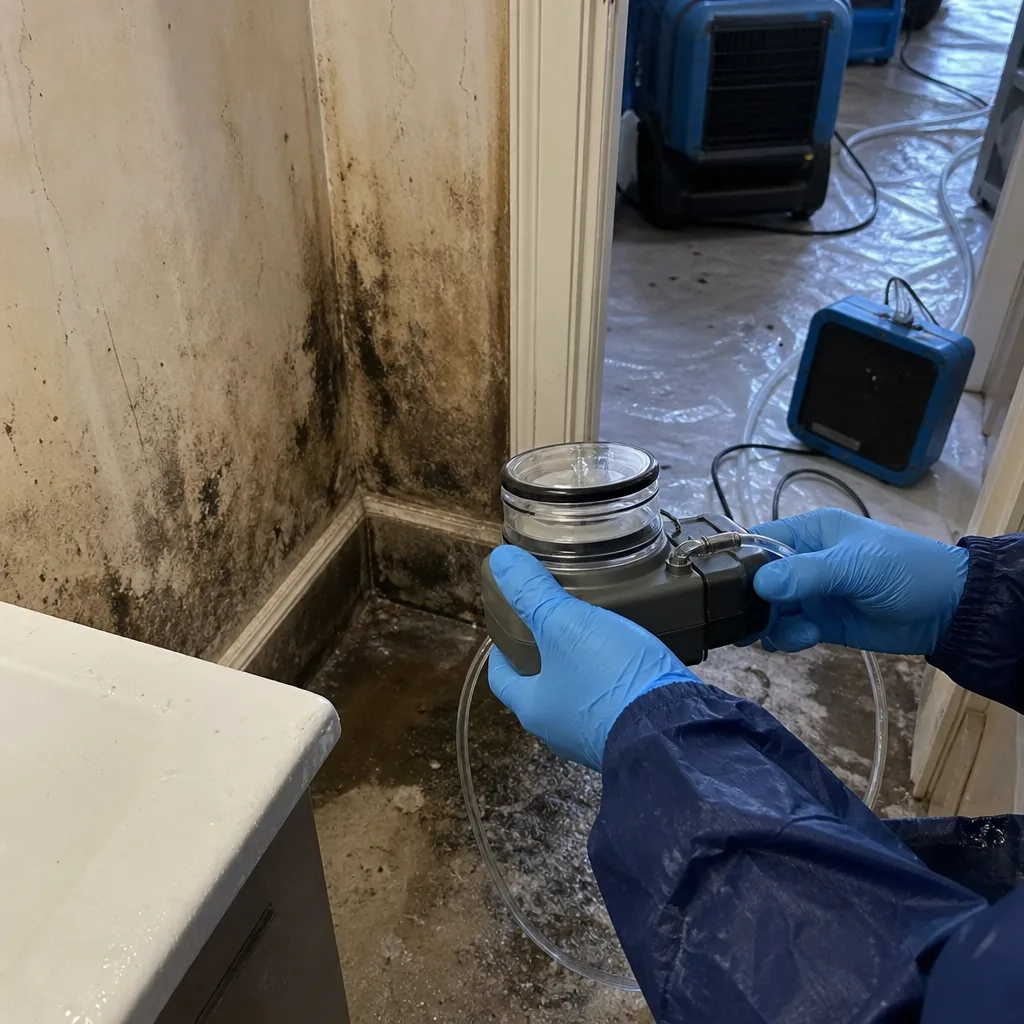
We treat every flood event in Port Washington as potential Category 3 water with salt-crystal contamination. The protocol is specific: rapid extraction, salt-specific drying with Phoenix dehumidifiers and XPOWER air movers, cavity probing behind drywall, and antimicrobial treatment. Standard freshwater drying leaves hidden problems in Manorhaven and bay-front homes, and we know exactly where those problems hide.
Storm Damage Cleanup
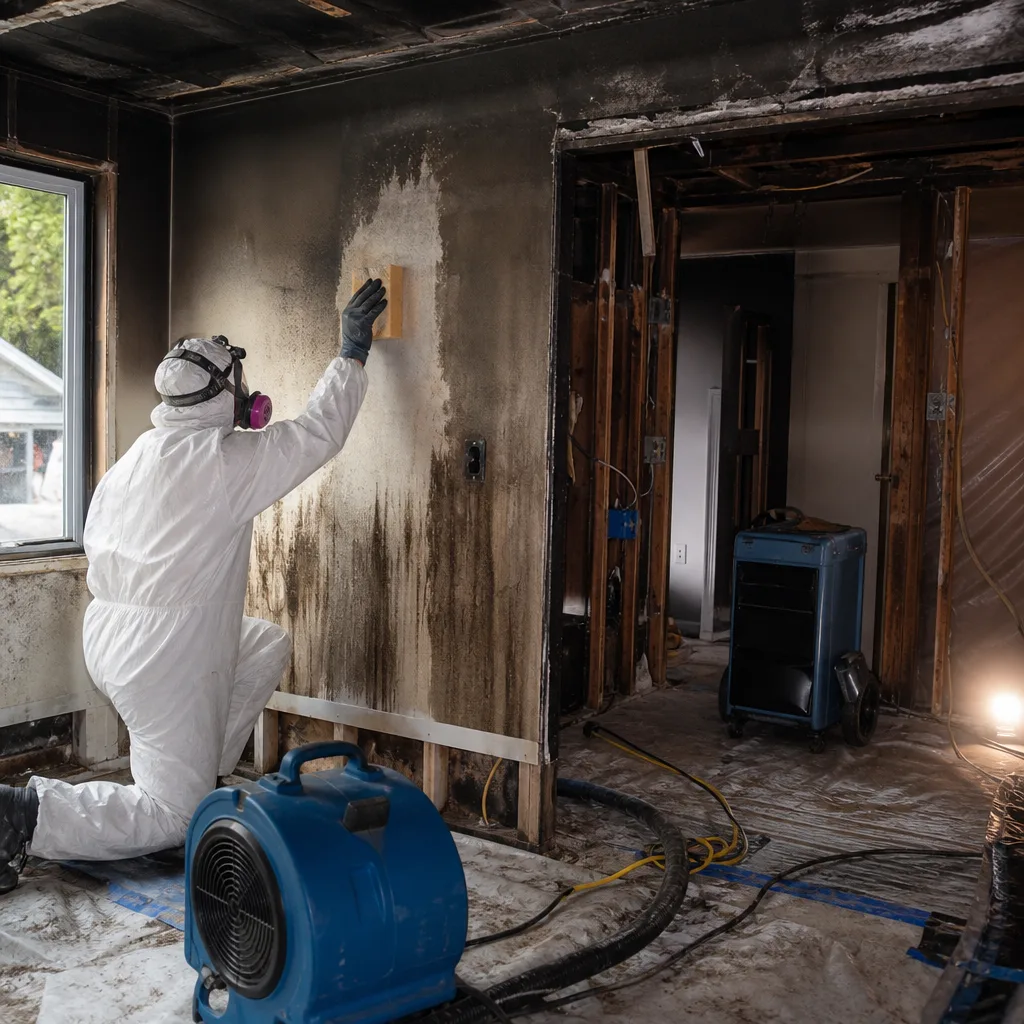
After a nor’easter or tropical system moves through, we remove fallen trees, clear storm debris, and start drying saturated materials the same visit. Our crews work downed-tree jobs and flooded-basement jobs with equal care, and we document everything for your insurer before anything gets thrown away.
Emergency Board-Up
A broken picture window facing Hempstead Harbor is an open invitation to rain, birds, and bad actors. We board up and secure the opening within hours of your call, not days. Port Washington’s older wood-framed windows on Gold Coast homes need careful fastening, because the trim and casement are often near the end of their service life. A careless board-up damages more than it protects. We don’t do careless.
Roof Tarping
Wind peels shingles from north-shore roofs every nor’easter season. We tarp the exposed section correctly, with fasteners that hold through the next blow. A tarp that lifts off in a 50-mph gust leaves your house open to the exact rain event you were trying to survive. We’ve seen it happen to homeowners who called the wrong crew first.
Debris Removal
Storm debris stacked at the curb draws fines in Nassau County if it’s not handled properly, and mixed debris full of saltwater-soaked drywall and insulation can’t just go out as regular trash. We remove, sort, and dispose of it in compliance with local requirements, and we document every load for your claim.
What happens when you call
- 1
A real person answersNo phone trees - you reach a local pro.
- 2
You get an upfront price rangeHonest numbers before anyone is dispatched.
- 3
A background-checked tech heads outLicensed & insured, dispatched right away.
- 4
You approve before work beginsNothing starts until you say go.
Storm & Disaster Restoration Costs in Port Washington, NY
So what does storm restoration actually cost in Port Washington? The honest answer depends on what the storm did. A basic storm damage cleanup with debris removal and drying starts around $1,200 to $2,800. A saltwater flood restoration in a Manorhaven basement, where we’re opening wall cavities, removing insulation, drying for five to seven days, and rebuilding, typically runs $7,000 to $18,000. Emergency board-up is $450 to $1,100 per opening, depending on size and access. Roof tarping averages $350 to $900 for a standard section. Full restoration after major surge damage – the kind where the first floor flooded and mechanical systems sat in saltwater – runs $25,000 to $65,000 or more. What moves the number: how fast you called, whether the water was Category 2 or Category 3, how much salt-laden material has to come out, and what your policy covers. The free inspection gives us the chance to tell you what’s actually needed, and a firm written scope before work starts means no surprises on the bill. We’ll bill your carrier directly where coverage applies. Call (518) 873-4306 to schedule your inspection.
We Also Serve Cities Near Port Washington
Floodline Restoration Co. serves the entire Port Washington peninsula and beyond. If you’re in Storm & Disaster Restoration in Port Washington or nearby, we respond to Sea Cliff, Manhasset, Great Neck, and Little Neck with the same 45-minute commitment and live 24/7 dispatch.
Serving Port Washington, NY - Our Local Coverage Area
We’re based in the Port Washington area and know this community well. Use the map below to see our service coverage - if you’re nearby, we can almost certainly help.
Port Washington Storm & Disaster Restoration Questions, Answered
After a nor’easter pushes Manhasset Bay water into my Port Washington basement, how do I know if it’s Category 3 and what has to come out?
If the water came from Manhasset Bay, it’s Category 3. Full stop. Saltwater carries marine sediment, sewage overflow from storm systems, and salt crystals that freshwater doesn’t. You can’t tell the difference visually from murky freshwater, but bay water has a distinct brackish smell and will leave a white, crusty salt residue on surfaces as it dries. If bay water touched it, it has to come out: carpet, pad, drywall that wicked up from the slab, insulation in wall cavities. We confirm with moisture mapping and thermal imaging during the free inspection, and we’ll show you exactly what we recommend removing and why, before any work starts.
What’s the difference between a freshwater flood from a burst pipe and a saltwater surge on the Manorhaven peninsula for restoration?
Freshwater is Category 1 or 2: unpleasant, but it dries predictably. Saltwater is Category 3 and behaves differently. The salt residue left in wall cavities and insulation is hygroscopic – it keeps pulling moisture out of the air indefinitely. Even after the cavity reads dry on a standard moisture meter, the salt is still there, and when humidity rises again, the wood re-wets from the inside. That’s how homes get black mold six months after a flood “dried completely.” Saltwater restoration requires opening affected cavities, removing salt-laden material, and running drying equipment longer than a freshwater job needs. Skipping those steps is how the next storm reopens the same wound.
Do Port Washington homes in AE flood zones need special documentation after a storm repair?
Yes. If your home sits in a FEMA-mapped AE flood zone – and a significant share of lower-lying Port Washington parcels do after the post-Sandy remapping – any substantial structural repair triggers Nassau County permit requirements and NFIP documentation obligations. That includes elevation certificates, proof of compliance for any repair work, and proper documentation of the pre-existing condition. We handle this documentation as part of our restoration scope. It’s not an add-on. We’ve seen homeowners get tripped up at re-inspection time because a previous contractor skipped the paperwork, and it’s one more reason we document every claim from the first hour.
How soon after a storm should I schedule moisture mapping in my Port Washington home to prevent hidden mold?
Within 48 hours, ideally within 24. Saltwater damage compounds, and the salt’s wicking action starts immediately. The longer saline residue sits in wall cavities, the deeper it migrates, and the more destructive the drying process becomes. In Manorhaven and bay-front locations, we’ve found hidden saturation weeks after the storm passed – and by then, the mold colonization was already underway in wall cavities that read 9% on a standard moisture meter. We recommend scheduling the free inspection as soon as the storm clears enough for us to reach you. Same day if we can, next morning at the latest.
What storm damage repair is most often missed on older Port Washington Victorians near the water?
Wind-load failure at doors and windows. Victorians and early-1900s homes in Port Washington were built for a different weather era, and their original doors and window frames are the weakest structural points in a nor’easter. The damage that gets missed: track and panel failure on sliding doors facing Manhasset Bay, forced-entry water penetration around window frames during wind-driven rain, and soffit damage that lets wind get into the attic and lift the roof deck. Standard storm cleanup companies don’t inspect for wind-load reinforcement, so the same damage repeats every storm. We inspect the entire envelope, not just the visible break points, and document what’s compromised for your insurer.
How fast can someone actually get to my Port Washington home after I call?
Most Port Washington addresses are within 45 minutes of our dispatch, and we answer the phone 24 hours a day, every day. In a major storm event when the whole peninsula is calling at once, we triage by severity: water actively rising inside the property goes first, then wind-exposed openings, then cleanup. But the dispatcher who answers your call will tell you exactly when to expect the crew. We don’t leave you guessing. Call (518) 873-4306 and find out for yourself.
Will my insurance cover Port Washington storm damage, or am I footing the bill myself?
Most standard homeowners policies cover wind damage and freshwater flood damage from broken pipes. Storm surge and bay water flooding – the kind that hits Manorhaven and bay-front Port Washington – typically requires a separate flood insurance policy, often through NFIP. We’ve seen every variation in 42 years of restoration claims. Our team documents your specific loss, builds a scope your carrier can’t ignore, and handles adjuster communication directly. You’ll know what’s covered and what isn’t before you approve any work, because we’ll walk through your policy with you.
What should I do in the first 30 minutes after storm water gets into my Port Washington home?
Turn off the power at the main breaker if you can reach it safely and the panel isn’t submerged. Then call us at (518) 873-4306. Don’t wade into standing water if it’s touching electrical outlets or appliances. Don’t turn on any appliance or light switch in the affected area. Don’t try to extract the water yourself with a shop vac – not because it’s useless, but because the contaminated water will spread salt and silt further into wall cavities if you push it into the wrong places. The best thing you can do in the first 30 minutes is stop the water at its source if it’s safe, kill the power, and make the call. We’ll handle everything from there.
Written by Curt Bowman, Owner at Floodline Restoration Co., serving Port Washington’s storm restoration needs with a 90-day written guarantee and live dispatch 24 hours a day.